
When professor of political science Emeritus Melissa Butler H’85 interviewed for a faculty position at Wabash College in 1976, she wasn’t sure whether the College was still all-male. The college catalog she consulted at the Library of Congress was out-of-date, and many men’s colleges had gone coeducational in the years since it was published.
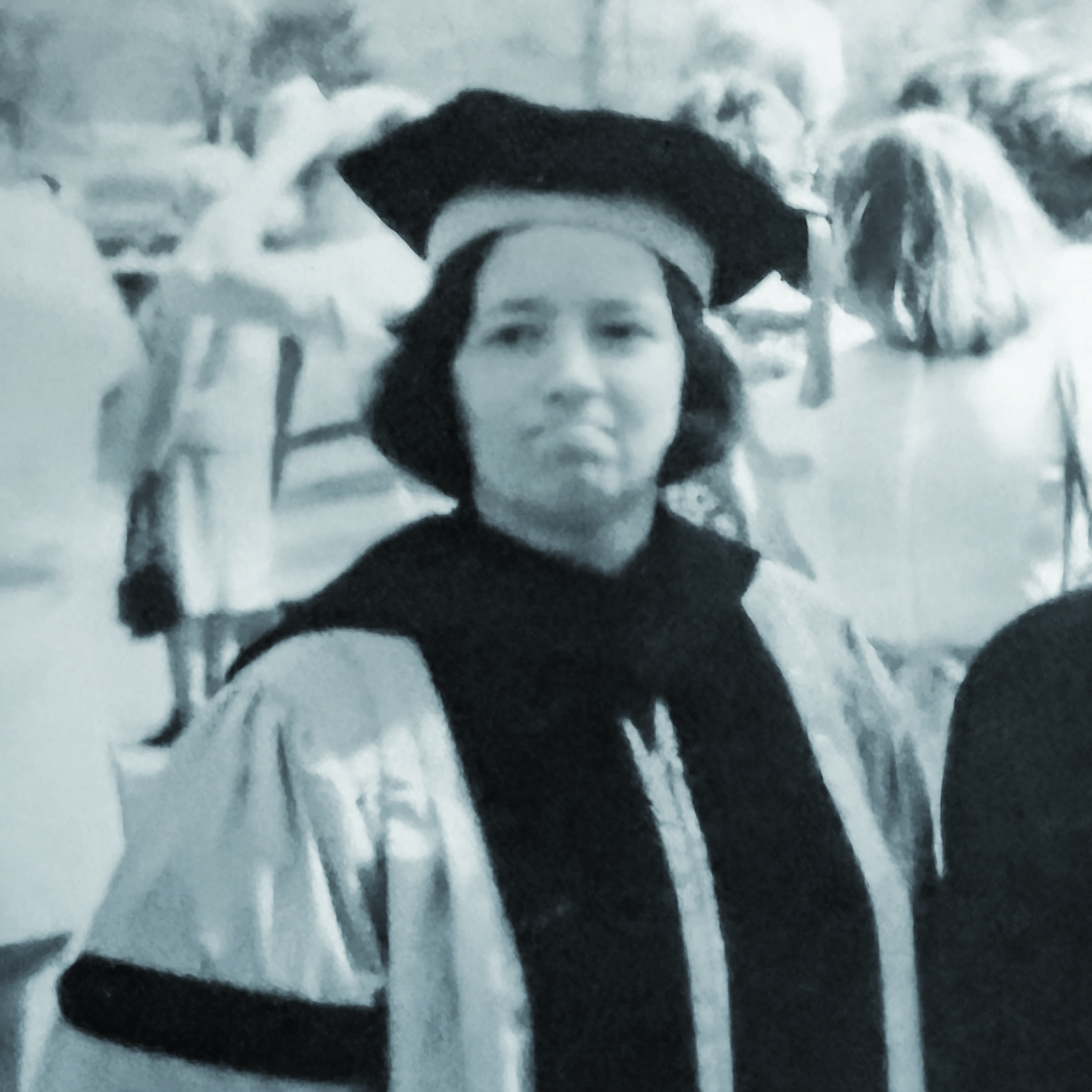 “Four of my classmates at Johns Hopkins were from Wabash College and they were all guys. But most people in political science were, so it didn’t occur to me that it was a single-sex college,” Butler says.
Women had taught part-time at Wabash during the world wars, but they did not attend faculty meetings and could not earn tenure. Butler’s appointment marked something different: permanence, and the slow evolution of who could stand at the front of a Wabash classroom.
She arrived as an instructor in political science, earned tenure and a promotion to associate professor in 1984—the first woman to do so at Wabash—and became a full professor in 1991. She joined Professor of Psychology Emeritus Brenda Bankart.
Butler’s office was located on the lower level of Baxter Hall, near the social scientists and a few classicists. She was also the youngest member of the faculty. Down the hallway was Jack Charles H’52, the oldest—a Classics professor who had already retired once and returned. Every morning after his 8 a.m. Greek class, he stopped by her office and walked her to coffee at the Scarlet Inn.
“Jack and I hit it off right away, and he took me under his wing,” Butler says. “He was full of stories about Wabash, but he was also ready with advice about how and why people did things the way they did them at the College and in small-town Indiana.”
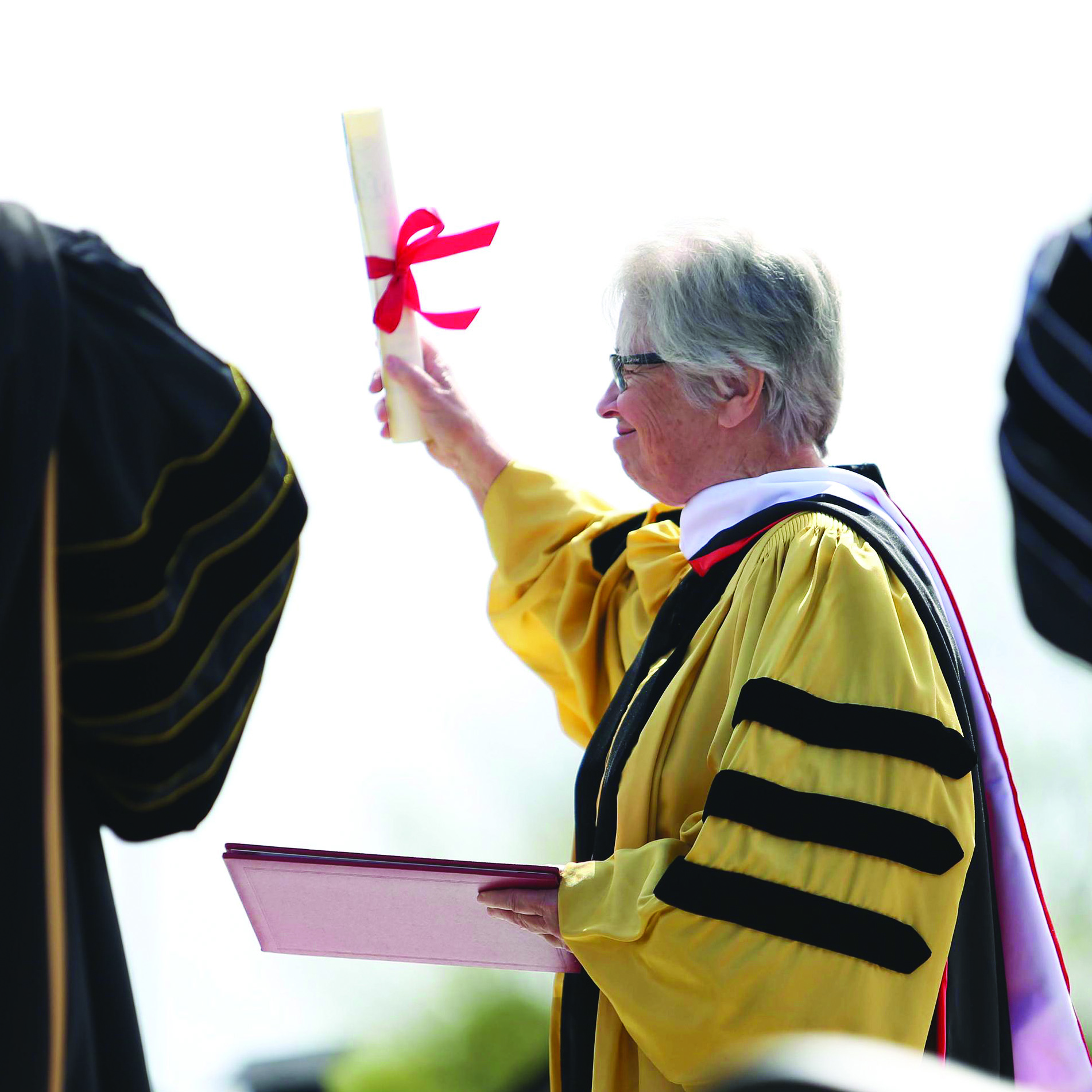 Coming to Wabash from Johns Hopkins University, Butler felt like a fish out of water in Crawfordsville. At JCPenney, a stranger recognized her.
“Oh, you’re that woman from the East coming to teach at the College,” Butler recalls the woman saying.
“That was a bit alarming,” Butler recalls, laughing now.
Charles became an interpreter of local customs and institutional habits—the unspoken rules of faculty meetings, the rhythms of Crawfordsville life, and the small rituals that never made it into any handbook. Years later, Butler drew on those conversations to design a formal orientation program for new faculty.
“Luckily, I did not feel I had to tread lightly with my colleagues. They treated me like a colleague,” she says. “The sexism typically came from the students. It was dumb—just a lack of awareness.”
During the coeducation debates of the early 1990s, tensions occasionally bubbled in Butler’s classroom. One day, a student came to class wearing a T-shirt that read, “At Wabash, we don’t need women. We have DePauw’s.” Butler gave him a choice: Leave, change it, or turn it inside out. “I’m not teaching if you don’t need me,” she told him.
Years later, the student apologized at an alumni event. “I didn’t understand it then,” he said. “I do now.”
As more women joined the faculty, Butler advanced into leadership roles, like department and division chair, and noticed inequities others missed. When she pointed out that a male and a female faculty member were paid unequally for equivalent work, the discrepancy was corrected swiftly. Her presence reframed what the rest at the table saw.
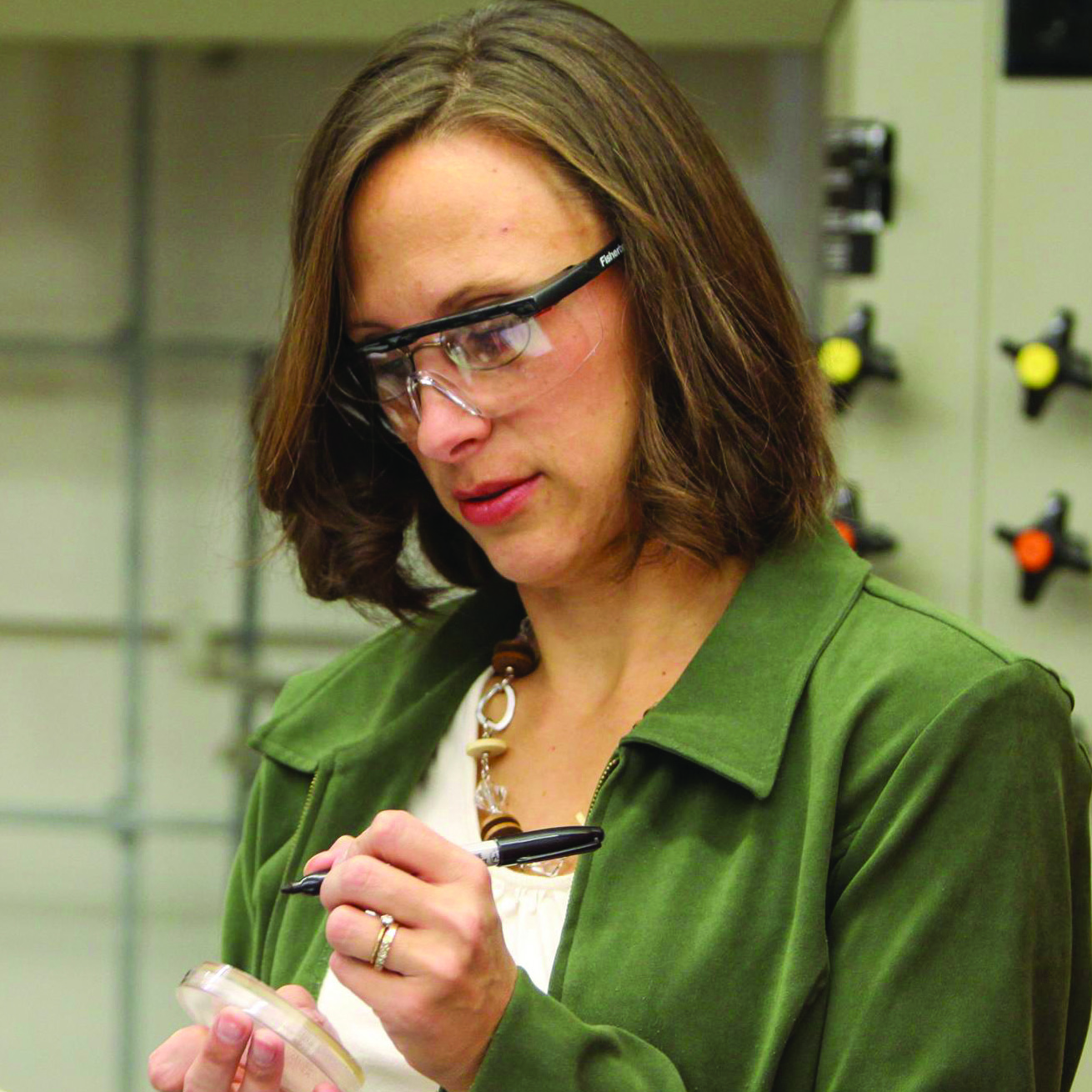 When Ann Taylor arrived in 1998, women were no longer, as Butler put it, “a feather in the cap of their department,” but they were still few enough to count. There were 14 women on the faculty and seven professors named David.
“We joke about the ratio,” Taylor says. “But those Davids, and many other faculty, mentored me in powerful ways.
“When I came to Wabash, all I really knew was that it was a liberal arts college for men,” Taylor continues. “What I experienced right away was how seriously the chemistry department took mentoring.”
Mentorship was embedded into daily practice. Taylor team-taught organic chemistry her first year alongside Professor of Chemistry Emeritus Bob Olsen, planning syllabi together, discussing student dynamics, and sharing responsibility in the classroom.
“It’s one thing to have someone observe you and evaluate,” Taylor says. “It’s another thing to stand side by side and talk through how you teach, how you structure assignments, how you respond when students test boundaries.”
Their support mattered.
“It helped to have colleagues behind me saying, ‘Yeah, you need to listen to her—she’s saying the right thing,’” Taylor says.
Students, she found, were more accustomed to women at the front of the classroom. “Many of their teachers in elementary and high school had been women,” she says. “Overall, students were a bit more open-minded.”
Even so, she sometimes felt pressure in male-dominated spaces.
“It took some time to get used to being the only female voice in the classroom,” she says. “You’d be asked, implicitly or explicitly, to represent all women. And of course, one person can’t do that.”
What empowered Taylor most as a leader was not being treated as a representative, but being treated as an individual.
“My mentors recognized what I was interested in and good at, and they cultivated those things,” she said. “They didn’t say, ‘We need a woman on this committee.’ They said, ‘You’re interested in how this place works—why don’t you serve here and learn more?’”
Taylor took that advice to heart, later serving as chair of the chemistry department. Along with her colleague Scott Feller, she developed the department’s rotational leadership model, one in which tenured faculty take turns in the role. Rather than having one long-serving chair to carry the institutional memory and much of the administrative weight, the responsibility is shared. The shift gave people a working understanding of how the department operates and therefore a deeper appreciation for the work their colleagues do behind the scenes.
In a similar vein, Taylor asks students in one upper-level course to step into unfamiliar roles. For their final project, students teach a local high school honors biology section about genetic engineering—designing lessons, planning activities, and learning to lead a classroom.
“It cements their understanding of the subject, and those teaching skills are valuable in a lot of areas,” Taylor says. “Teaching skills are leadership skills.”
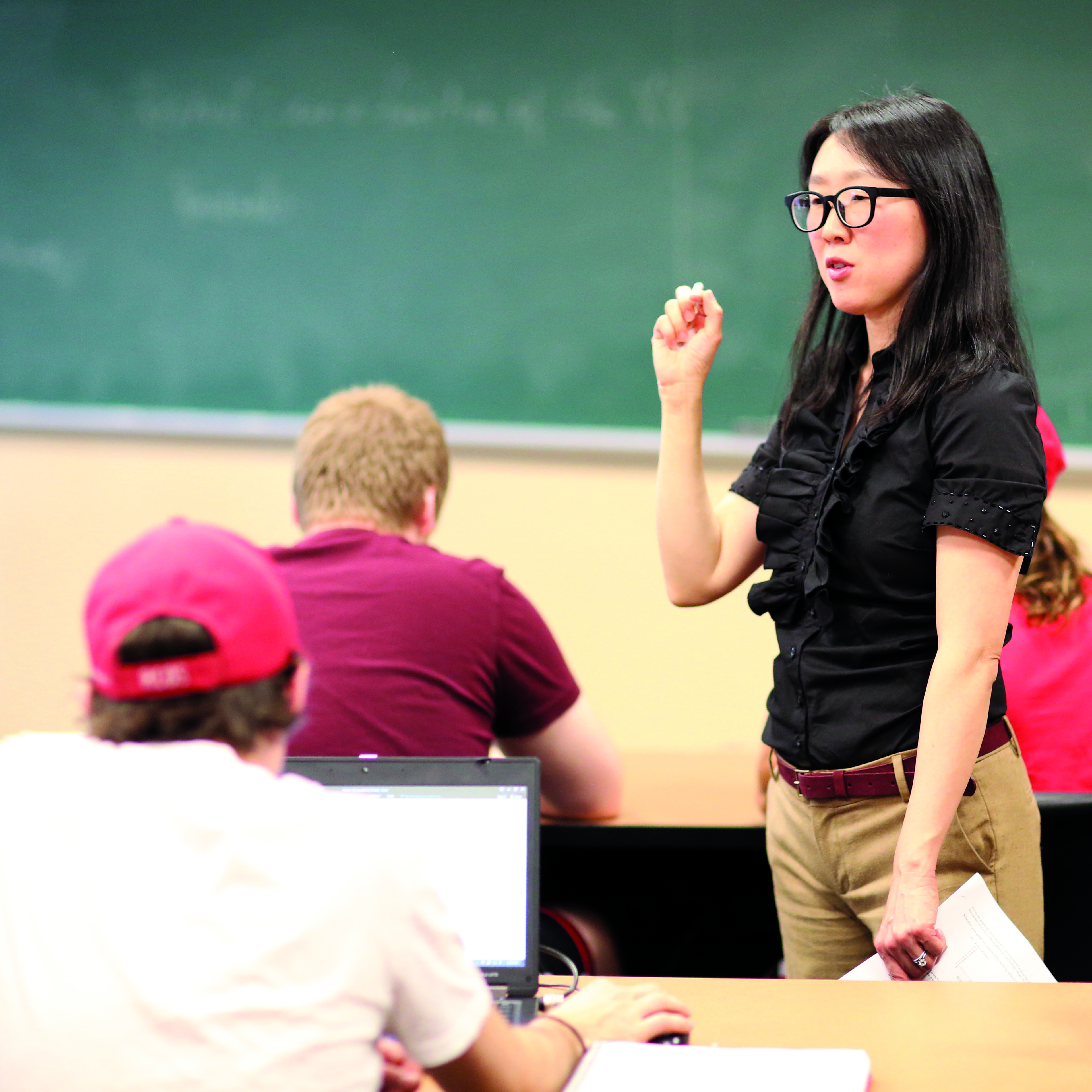 Associate Professor of Economics Christie Byun arrived at Wabash in 2007 as part of a generation that benefited from the groundwork laid by women like Bulter and Taylor, but she still felt the culture shock of an all-male campus.
“I just didn’t know how to fit in,” she says. “People told me students here love athletics, and I know nothing about sports. All I had was my academic subject.
“The advice that I give to new faculty coming in is students here are willing to give you a chance,” Byun continues. “They want to know who you are, and if you show them you care about your subject and their education, they’re really happy. I didn’t realize this at the time.”
When Byun proposed a course on the economics of fashion, some colleagues raised an eyebrow. Would Wabash students really enroll in a class on clothing and style?
“I thought, ‘You guys don’t realize how much interest there is here,’” she says. “Who’s more interested in their identity and how they present themselves than an 18-to-22-year-old college student?”
In her course, “Fashion, Innovation, and Entrepreneurship: How to Dress Like a Gentleman in the 21st Century,” Byun challenged students to consider fashion not as surface-level aesthetics, but as a system of international trade, production of fibers, and environmental impact.
“One student told me, ‘Whenever we’re learning about something, it always ends up being about so much more than I ever expected,’” she recalls. “Another added, ‘I’ll never view going to the mall the same way again.’”
Byun counts those moments among her proudest: evidence that students were learning to see familiar places, products, and processes through a more critical, expansive lens.
She also thinks deeply about masculinity in a single-sex environment.
“I don’t know if we have a contemporary language for what masculinity should be nowadays,” she says. “Wabash is a place where students feel they can step outside of prescribed gender roles—where men can study art, theater, or whatever without stereotype.”
Much of her guidance for students centers on destigmatizing failure while maintaining standards. She is careful to distinguish between standards and self-worth.
Academic performance matters, but it is not the sum total of who a student is or who he can become.
“Failure is where growth lives,” she says. “If you only do what you know you’re good at, then how can you ever get better at anything? I hope what I give them to think about—about how to be a successful human being—will be helpful.”
Today, women are no longer exceptions among Wabash’s faculty, but integral to how students learn and lead. The continuity of mentorship passed forward by each generation remains the most enduring part of the work.
Taylor says, “I’ve been blessed throughout my Wabash career with amazing mentors who showed me that just like there is no one way to be a Wabash man, there is also no one way to be a Wabash professor.”