
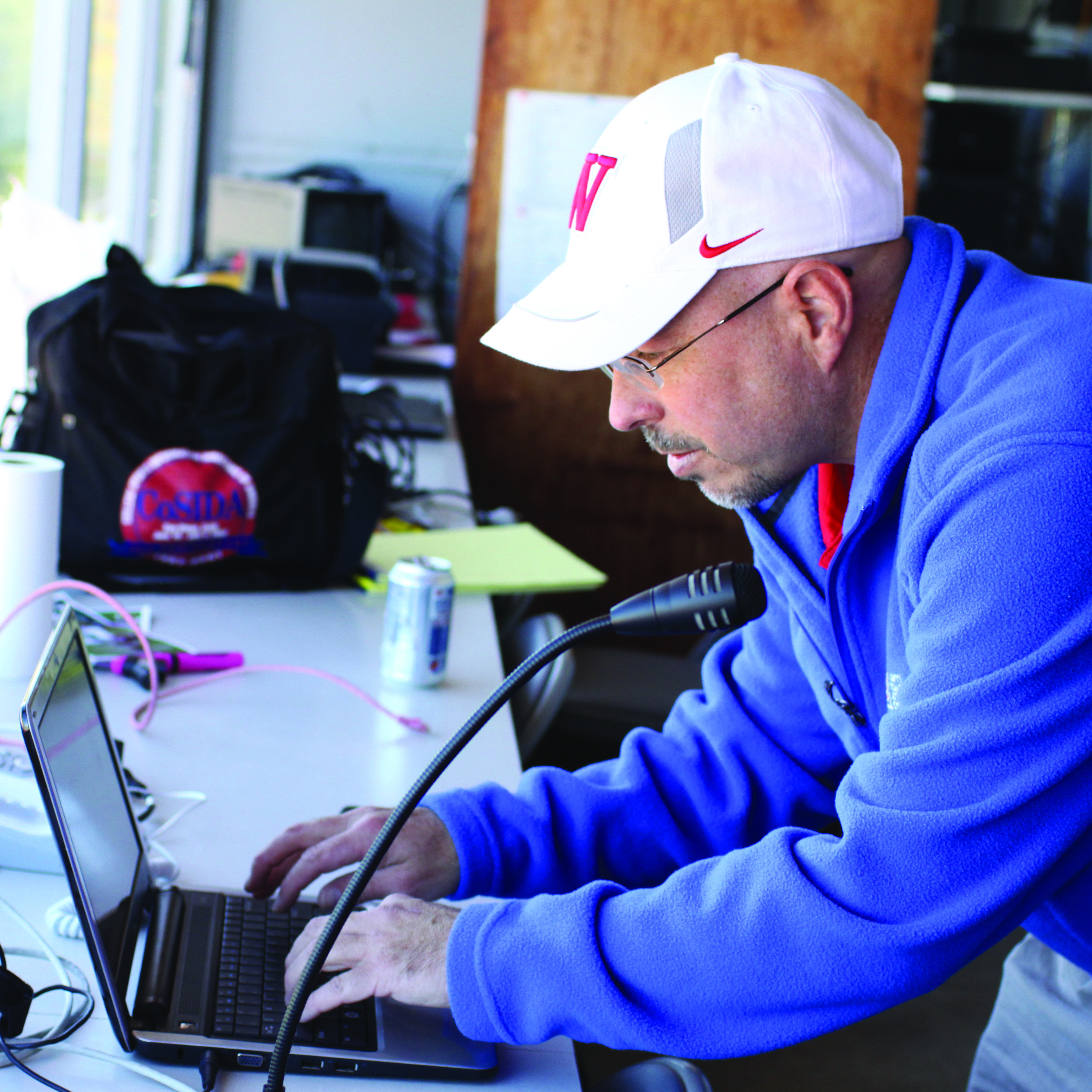
 Athletics and Recreation Communication Director Brent Harris H’03 has been keeping statistics and telling the stories of Wabash Athletics since 1999. The Crawfordsville native has worked in radio, newspaper, and television, including as a freelance technician with ESPN. Beyond Wabash, Harris has spent 31 seasons working with the Indianapolis Colts and the NFL and is a regular fixture on stat crews and game operations at Lucas Oil Stadium, including NCAA football and basketball tournaments. He is well connected in the world of sports communication at levels spanning the state, region, country, and globe. The impact he has on his student employees ripples just as far.
Despite his then-career-long field goal kick early in the game, Ian MacDougall ’14 sat in an empty Little Giant Stadium in 2012 carrying the weight of the team’s first loss to Allegheny College in eight years. He missed three other field goal attempts in that game, including one in overtime that could have kept the team alive.
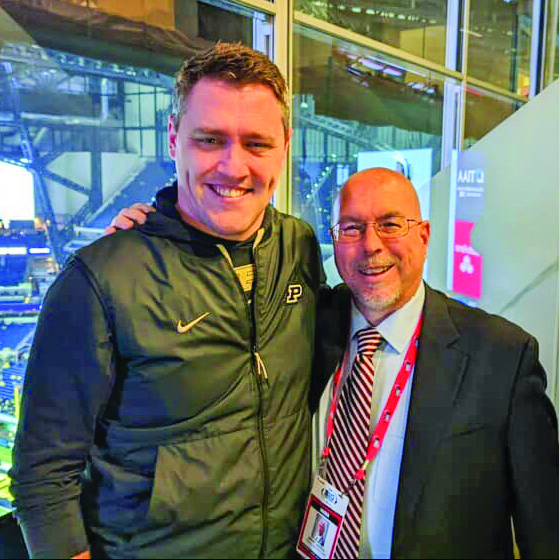 “Dejected and embarrassed, I felt like I let Wabash down,” MacDougall recalls. “I remember a hand coming over my shoulder and Brent sitting down next to me. He didn’t say anything at first. Then he gave me a few small words of encouragement, told me to keep my chin up, and gave me a warm embrace. The small gesture will stay with me forever and reminds me of why the people make Wabash such a special place.”
To the dozen students who work for him each year, Brent Harris H’03 is a mentor, a friend, and an example of the future professionals many of them want to become—a role in which Harris has excelled.
“When I was hired here, several of the coaches were excited to get the guy who’s on the computer for the Indianapolis Colts, so they’d have ‘the best stats in the world,’” Harris says. “I told them, ‘If I’m the person sitting at the computer, I haven’t set things up very well, and I’m not getting my students the training and the opportunities they need. I want to provide those opportunities to my students.”
Thanks to those opportunities, several have launched their own careers in athletic communications.
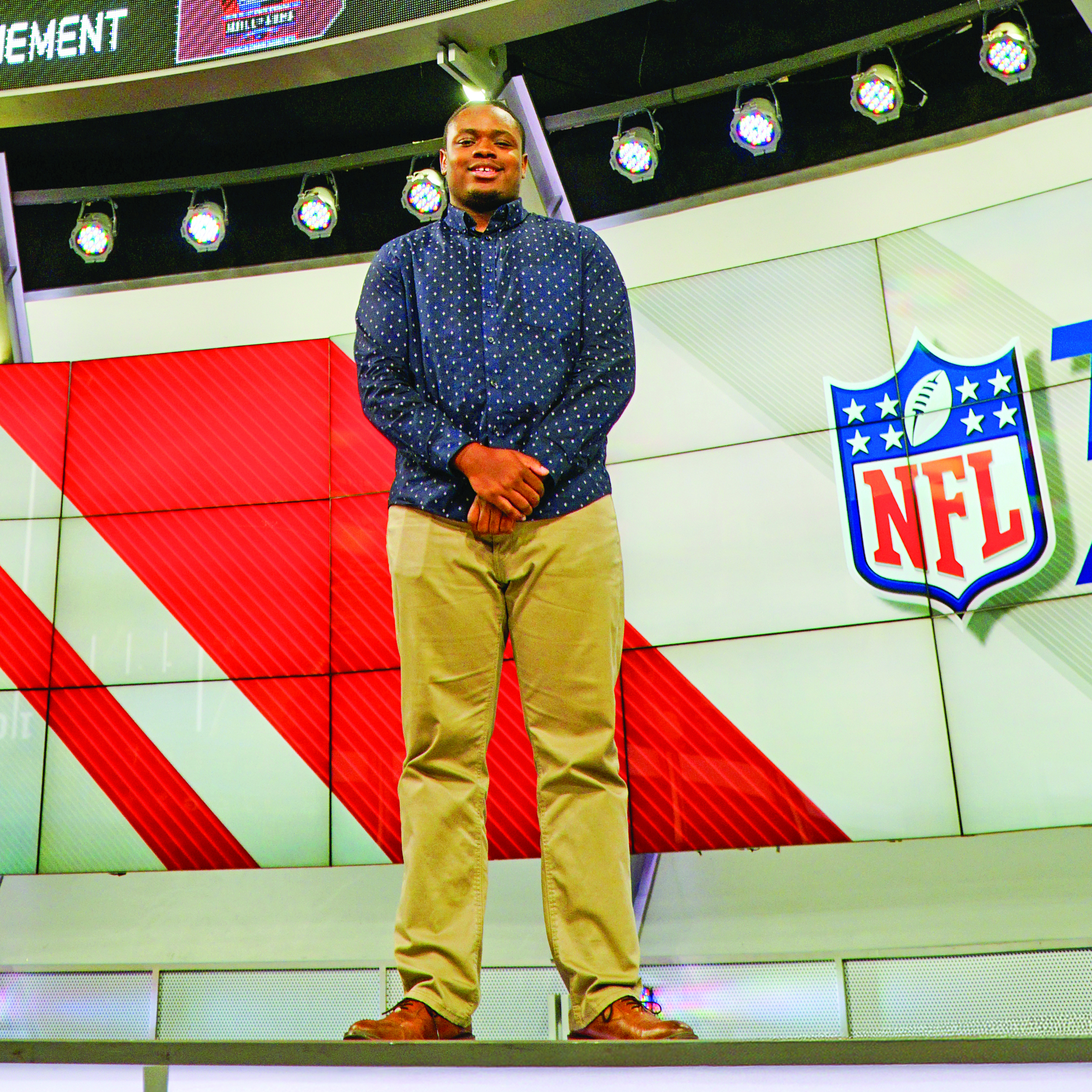 Jaleel Grandberry ’19 is a staff writer for the NFL Division of FanSided. Working alongside Harris gave him experiences many of his professional peers from other institutions did not receive.
“He’s one of the people who impacted me the most at Wabash,” Grandberry says. “Without him, I’m not sure I would be doing sports right now. Even without a sports journalism program at Wabash, to have the opportunity I had as an 18-year-old was unreal. I was doing work then that my peers do now as a career.”
Students are hands-on from the beginning and utilize the same statistics-keeping software that Division I schools, ESPN, the NBA, and the NFL utilize. And because of Harris’ vast network and experience, he often gets calls from other schools around the state, like Marian University, Purdue University, Indiana University, and Butler University, for assistance at events—more opportunities he passes along to the students, having confidence that they have been trained well.
President’s Chief of Staff and Director of Strategic Communications Jim Amidon ’87 saw the dedication and love of athletics when he hired Harris in 1999.
“Brent has deep knowledge about a lot of different things and he’s curious to learn more, whether that’s new statistics software, patching audio for livestreams, or dabbling in AI to augment his work,” says Amidon. “Fundamentally, he likes teaching. He doesn’t ask his students to do one thing and leave it at that. He teaches them how that one element of statistics gathering or live broadcast feeds into the whole to deepen their knowledge and abilities.
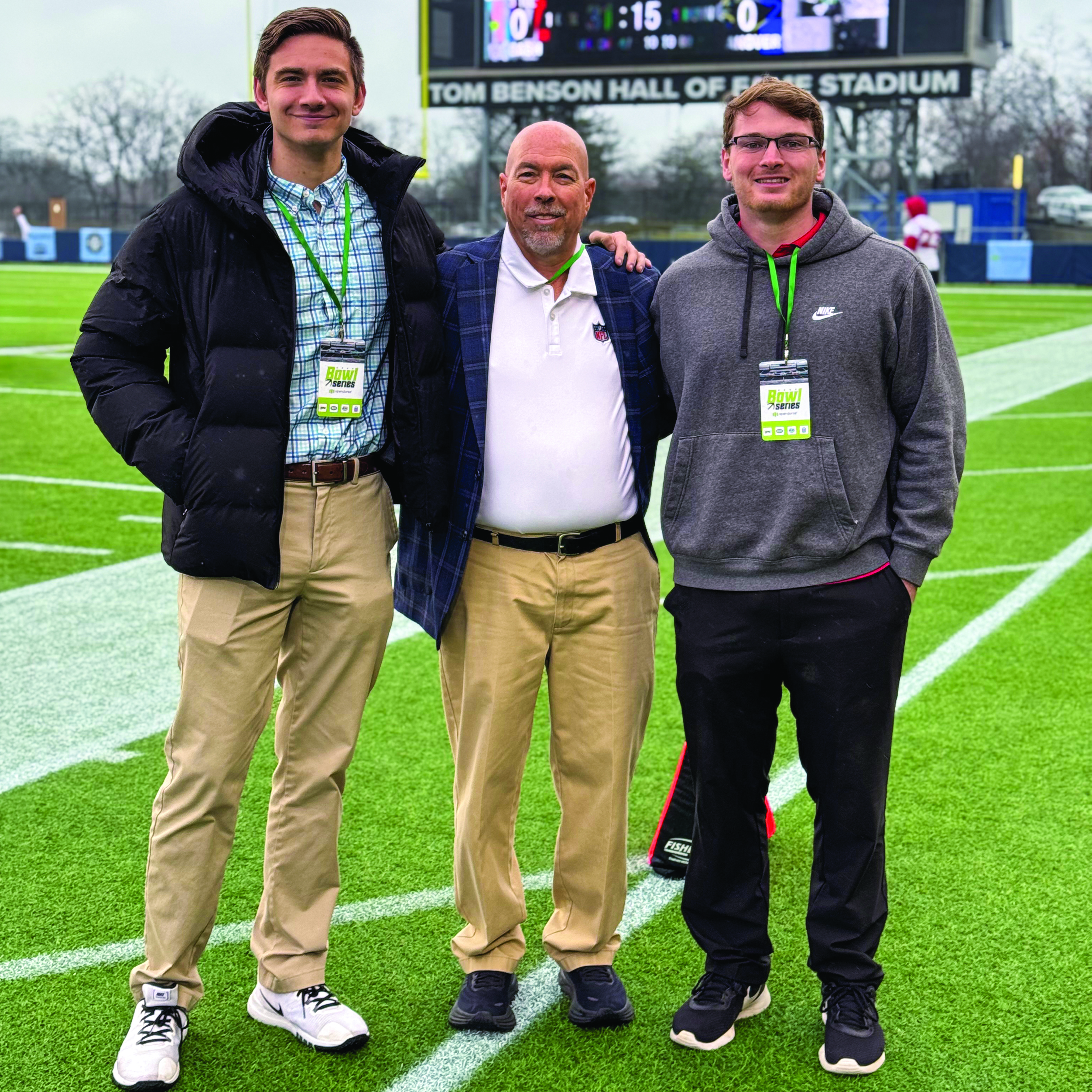 “And he’s not shy to put a student in charge,” he continues. “Brent knows he has taught them well, and he has faith they will shine courtside, in the press box, or in the broadcast trailer. He’s encouraging, but he also sets high expectations. When his four-year student workers graduate, they have an enormous skill set that makes them attractive for careers in sports.”
Students under Harris’ tutelage may update rosters and player images on the website; create game notes; assist with game setup; learn to keep player stats across all sports at Wabash; write press releases, player features, and post-game stories; work on the livestream broadcasts; announce at events; or assist with social media.
Harris does not sugarcoat the hard work it takes, the long hours required, or the importance of getting the details right.
“In the first conversation I have with students, I let them know if you want to get a job working with me because it’s going to be a great seat to watch a sporting event, this is not going to be the position for you,” Harris says. “It’s not all glory. My first job at a Final Four for the NCAA was at the base of an elevator, as far away from the floor as you could be. I saw 10 minutes of basketball over four days, but I loved it because I got to interact with people, and I got to be at the event. Eventually that led to better jobs.
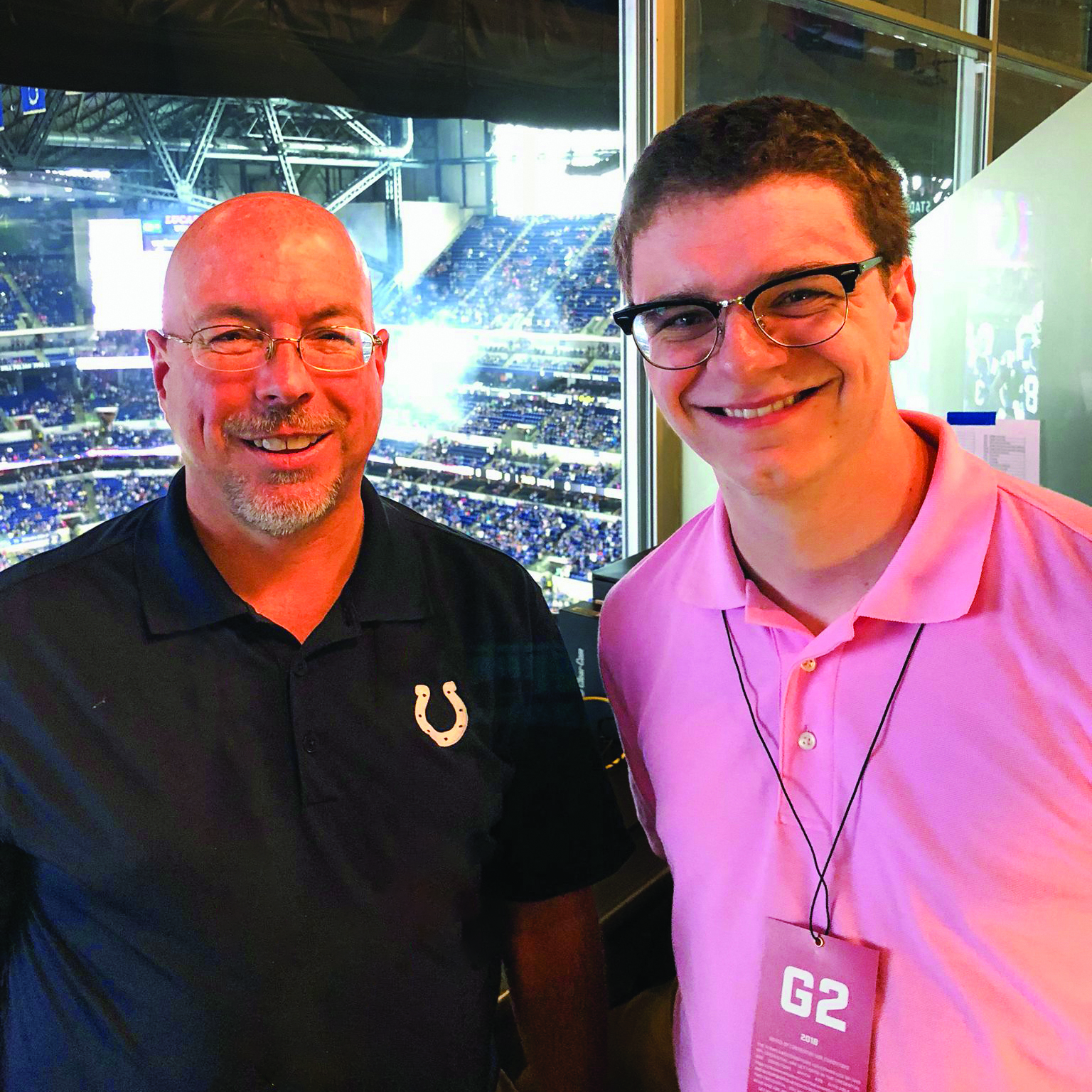 “When I work Indianapolis Colts games, I walk out of the game and I don’t know what the final score was, because the score is the least important thing in my world,” Harris says. “We don’t have an A, B, C, D, F grading scale. It was 100% right, or it was wrong. The information we gather and produce is a tool our coaches are using to help guide decisions on game preparation or in-game adjustments. The stats are used by media and assist in decision-making on weekly and national awards. When my students understand the value of the information we provide and the importance of making sure they are providing accurate information, they start taking pride in their work. They take what we do very seriously.”
MacDougall serves as the associate director for strategic communications at Purdue University, where he works primarily with women’s basketball and secondarily with football. He also oversees student internship programs in communications—positions much like those he held when he worked alongside Harris as a student at Wabash.
“Brent opened my eyes to the relentless work that goes into Division-III athletics,” he says. “He let me take ownership of stuff and said, ‘Go for it.’ Brent gave me lots of experience.”
Haiden Diemer-McKinney ’26 has gained confidence throughout his four years of “going for it” under Harris’ guidance.
“After one of the first press releases I did, we sat down and he did a whole copy edit in person. I was able to talk to him about my thought process and get feedback,” Diemer-McKinney says. “Repetition helps. Doing social media for the first time during a game, I was very nervous. But now it’s just another repetition. It’s helped me work under pressure when things go wrong, and to stay calm, levelheaded, and confident.”
In working with Harris, Abe Wade ’22, assistant director of business and finance for athletics at the University of Central Florida, learned the significance of staying one step ahead and in building relationships.
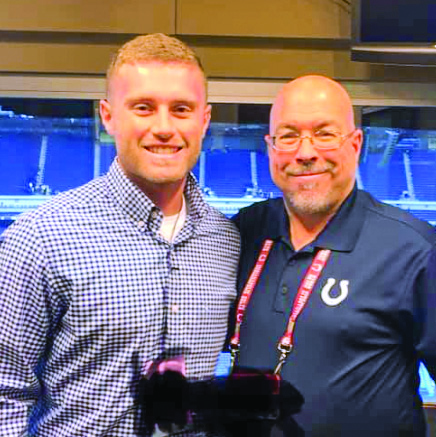 “What makes him good at his job is he’s always thinking and running different plans in his mind,” Wade says. “If this fails, we have this backup. He’s planning for everything to go wrong, so that if it does go wrong, he’s got the security of knowing he’s prepared.
“Brent also talks to athletes like no other,” Wade continues. “Whether they are star players or someone on the team who doesn’t play, he knows them. He asks how they’re doing and cares about them. Something he takes very seriously in his job is making a genuine connection with the student athletes and knowing their stories.”
Grandberry says, “Watching how civilly he interacted with folks who would mess up the stats, which is inevitable, helped set a foundation for my professional career. He respects relationships so much. He always has a story and a connection. And I think that’s important.”
Keeping the stats is a big part of his gig, but he knows the job is much more than that.
“I want to help my students understand that each stat is a person,” Harris says. “There’s a person, a family, a community there. Every number is a Wabash student—a person. If you can remember that as you’re doing the work, it’s a lot more fun as well.”
“Coming to Wabash, I knew I wanted to get involved in sports in some way,” Diemer-McKinney says. “I didn’t know at the time exactly what that avenue was going to be, but after meeting Brent I figured if I were to work with him, he’d be able to show me some different things, and I’d be able to learn under his leadership. It’s evolved even more than I could have imagined.”
“Working in athletic communications is like being the kicker on the football team. When you’re successful, no one has a clue what you do. They only know when you screw up,” MacDougall says with a laugh. “A foundational piece of my time at Wabash was learning that people rely on you. You just try to power through figuring it out, keep your dedication, keep your care, and keep your focus.
“I’m appreciative of the impact Brent had in my life, not just pointing me in the direction of a career that I love and is rewarding every day, but he really helped me see what success looks like,” MacDougall continues. “A lot of people tie their worth to the success of their teams. Brent helped me understand, you don’t tie it to how the team is doing, you tie it into how well you’re doing to help your team. Make sure you give your all so nobody can ever question your dedication.”
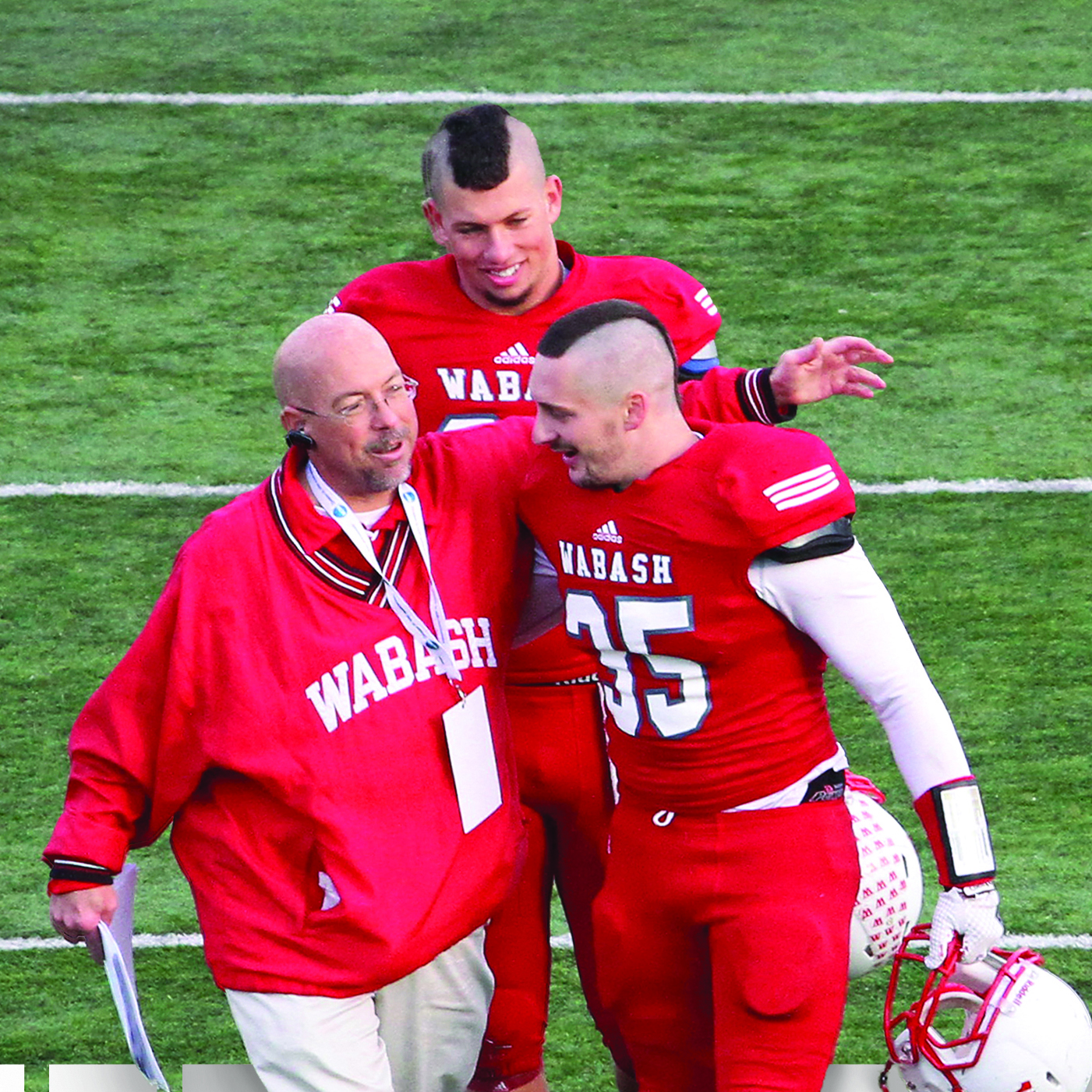 MacDougall’s thoughts return to that night on the quiet football field when Harris came along beside him.
“It’s a small thing. He’s not paid to do that. He didn’t do it because I was one of his student employees,” MacDougall says. “He would have done that for anyone who was on the field. That’s a moment people don’t see. But it was something that kept my path at Wabash straight. That next week at practice was rough, but having had that moment with Brent helped me power through. When I got my shot to get my spot back, I made my first kick. I knew I was ready for the opportunity.
“As far as my career, I’ll forever be grateful for him, but that’s a moment that sticks out from my Wabash experience that nobody will ever truly understand.” .