
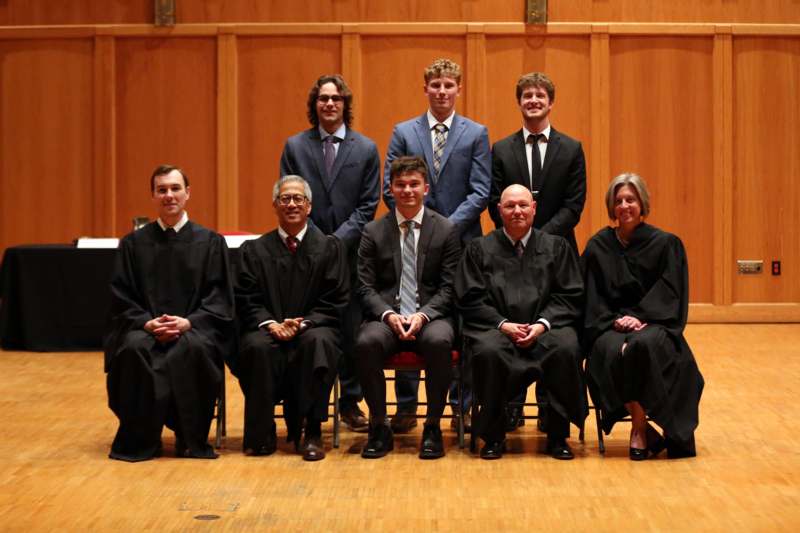
The 2026 Wabash College Moot Court Finalists and Judges. Front row (l to r): Jacob Calhoun, assistant professor of history; James A. Joven ‘89, Marion Superior Court judge; Owen Smith '27, top advocate; James R. Sweeney II, Chief Justice, United States District Court for the Southern District of Indiana; and M. Kendra Klump, U.S. Magistrate Judge United States District Court for the Southern District of Indiana. Back row: finalists Wade Wisler '27, John Jarosz '28, and Elijah Wetzel '27, the Floyd Artful Advocacy Prize recipient.
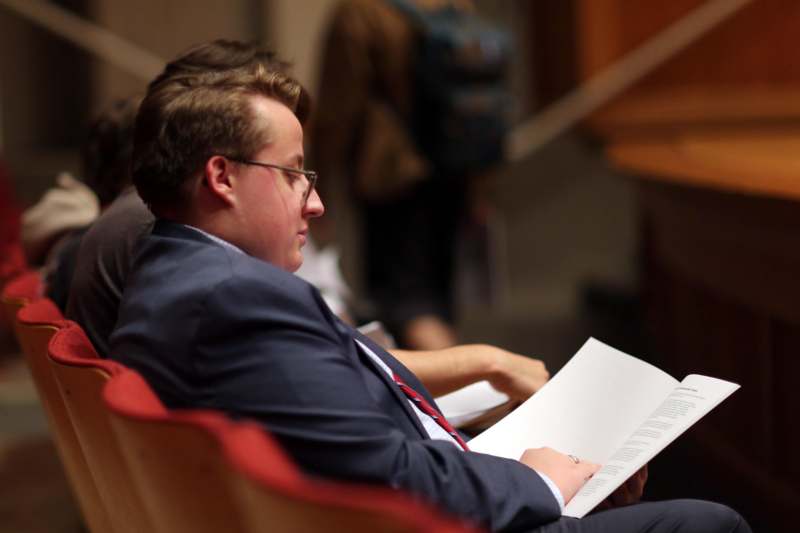
Connor Phillips '28 reviews the event program.
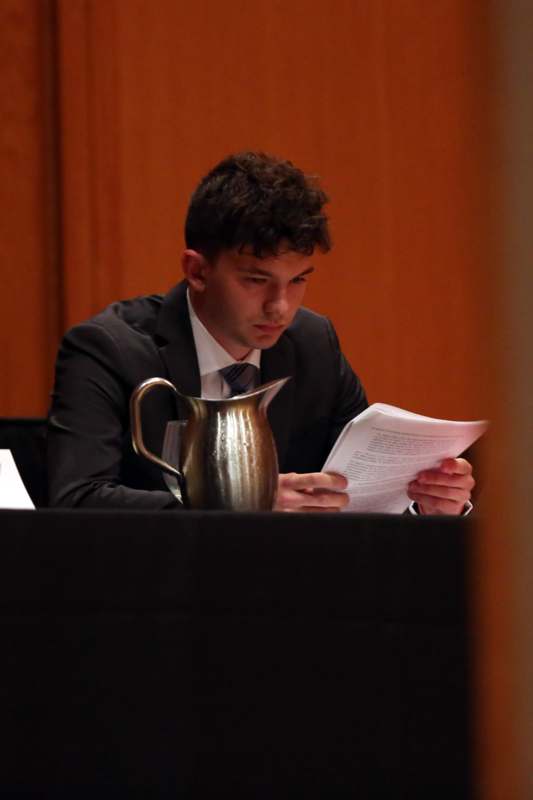
There is never enough time for competitors to review materials before the competition, especially for Owen Smith.
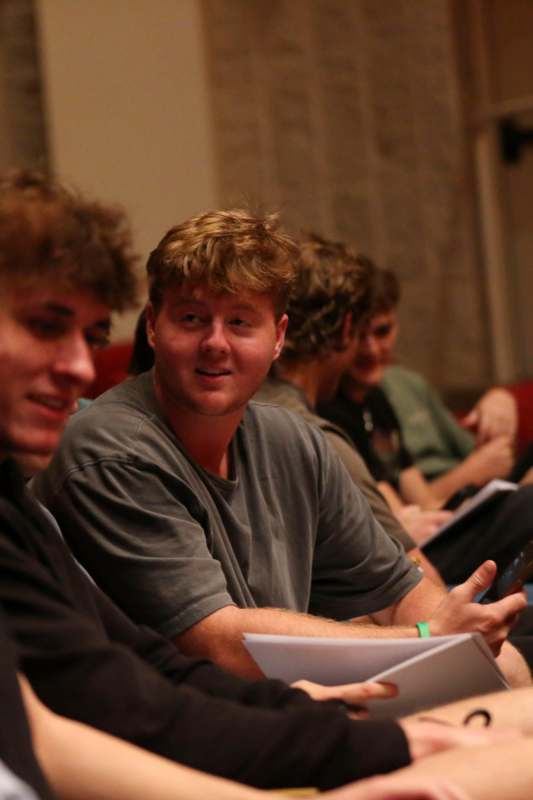
The mood was light in Salter Hall.

Dean of the College and Professor of Rhetoric Todd McDorman welcomes attendees to the Moot Court finals.
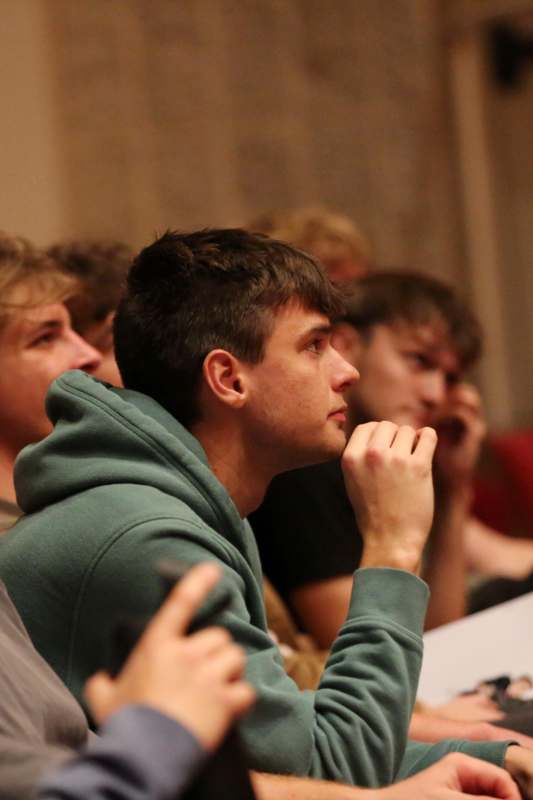
This student was ready for the competiton to begin.
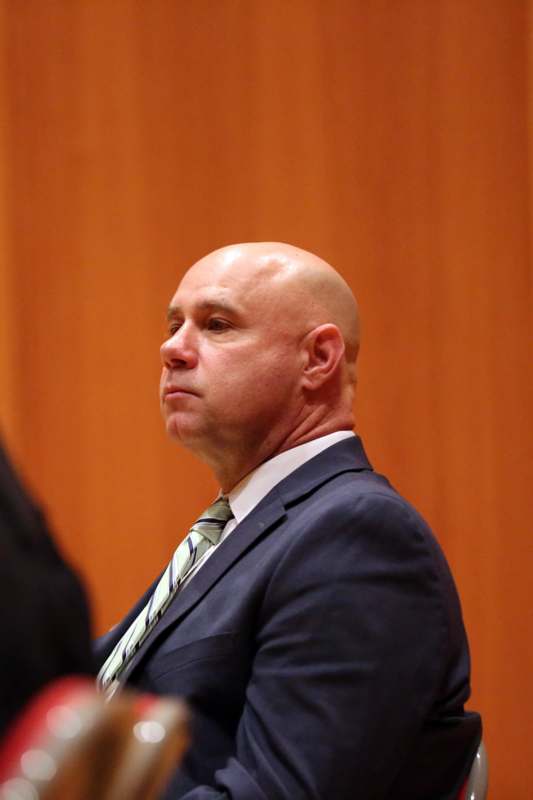
Matthew Griffith '89 served as the Moot Court bailiff.
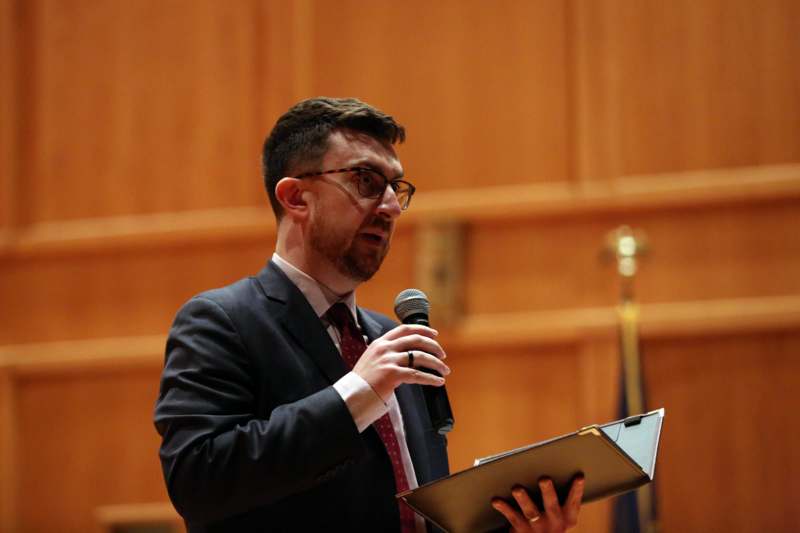
Andrew Dettmer '15, a former Moot Court top advicate, delivers introductions.
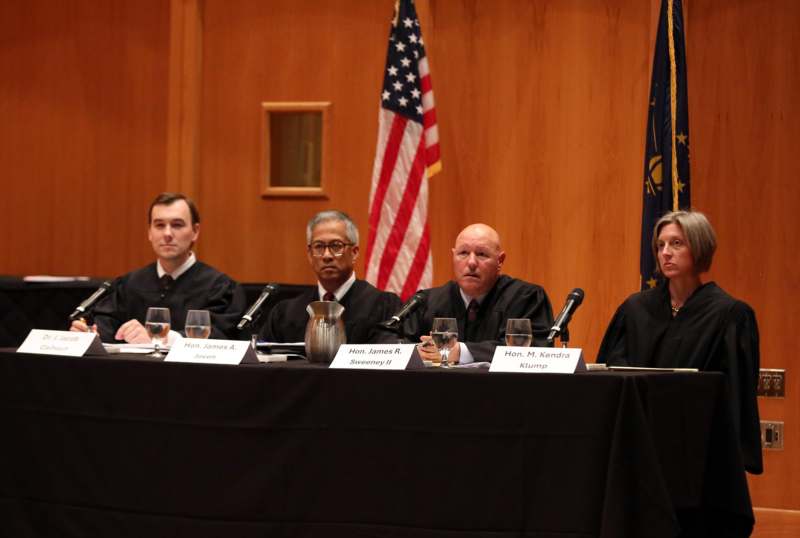
The judges take their places on the bench.
The featured case examines whether states have the authority to ban AR-15-style rifles and large capacity magazines to prevent mass shootings. Arising from a law enacted by the fictional State of Blue following a mass shooting at an elementary school in response to growing concerns about gun violence, the state legislature adopted the Act Addressing Gun Violence (Act A123), which prohibits the sale and possession of AR-15-style rifles and magazines capable of holding more than ten rounds of ammunition.
There are questions before the court that deal with both the Second and Fifth Amendments to the U.S. Constitution.
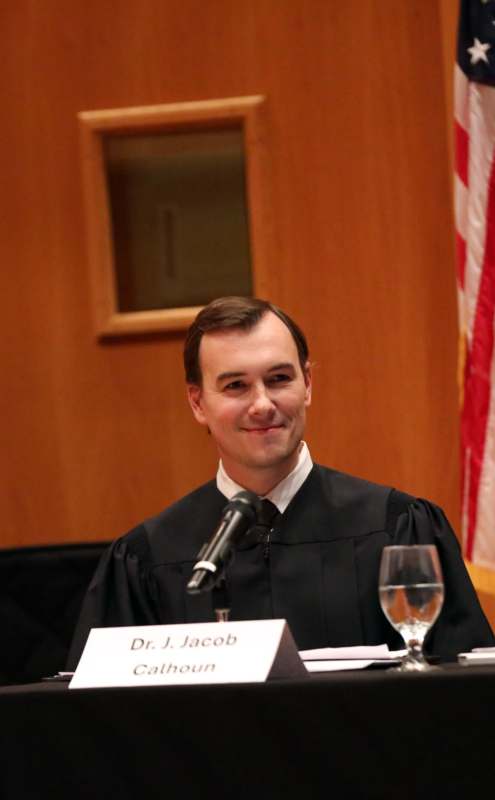
For an event as intense as Moot Court, smiles are commonplace as well, inlcuding this one offered by Calhoun.
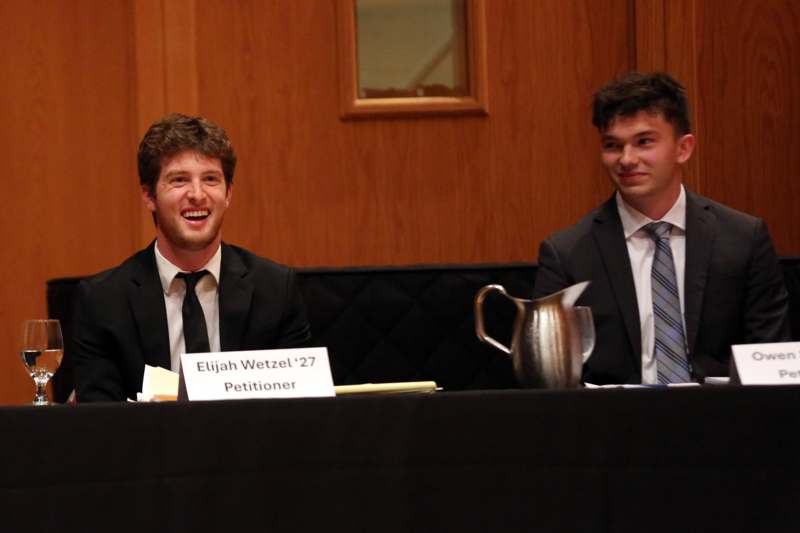
Counsel for the petitioner, Elijah Wetzel and Owen Smith, enjoy a light moment before court is in session.
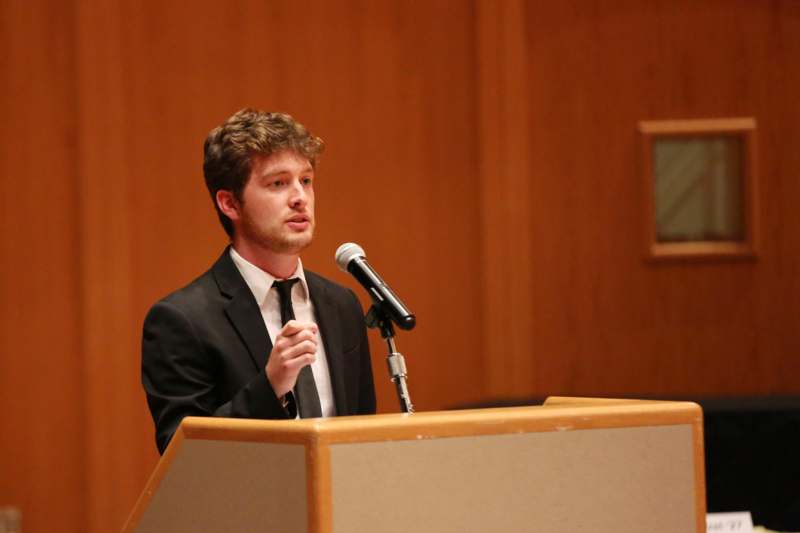
A senior from Lafayette, Indiana, Wetzel is a religion major and political science and Global Health double minor.
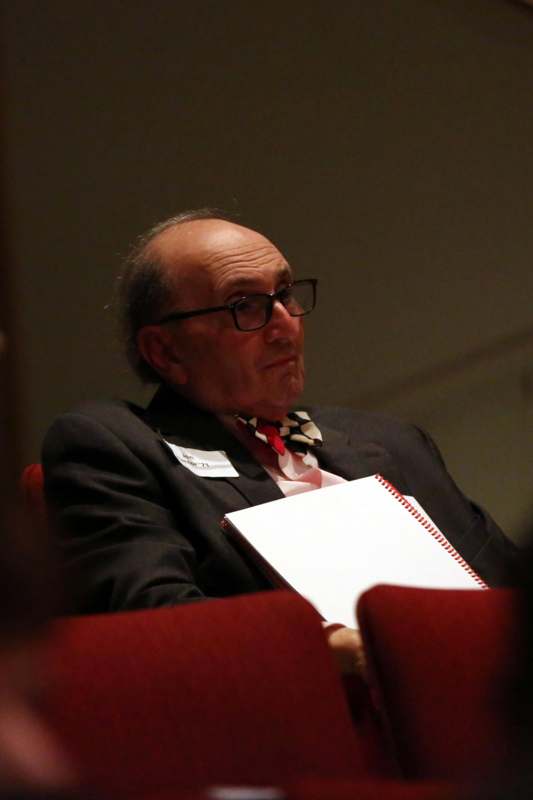
Jon Pactor '71 was among the attendees.

Wetzel makes a point.
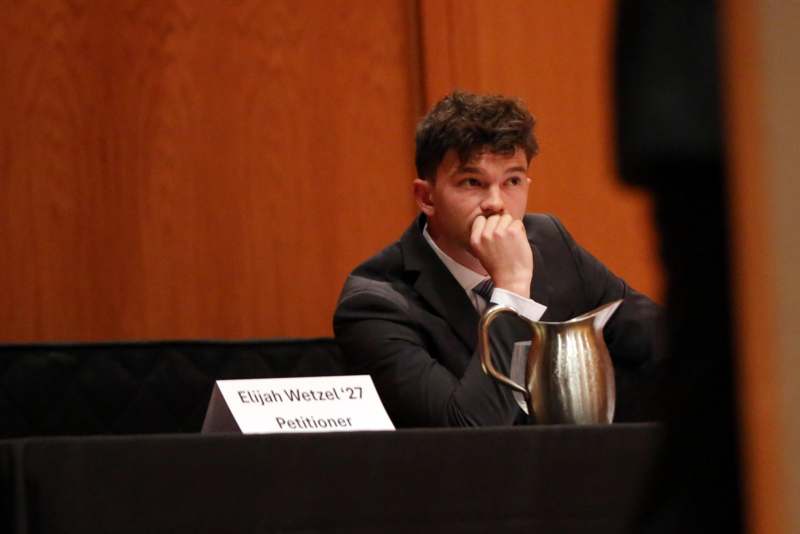
Smith listens intently.
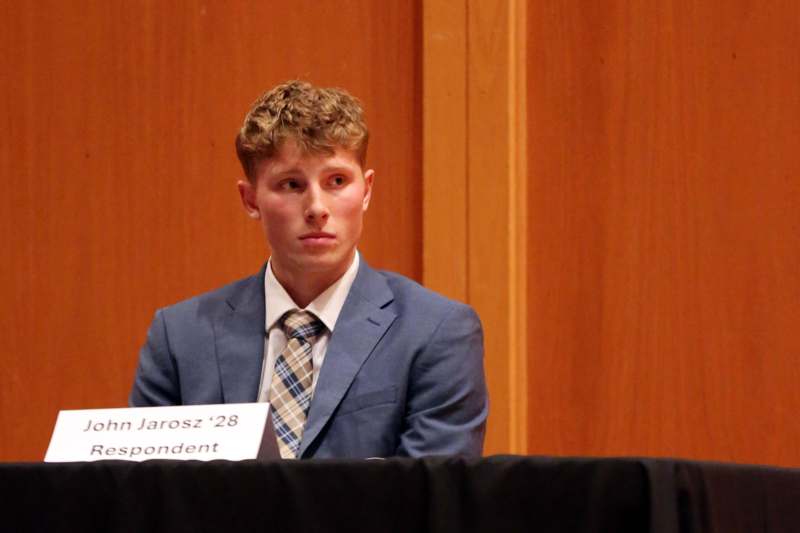
John Jarosz '28, counsel for the respondent, is locked in.
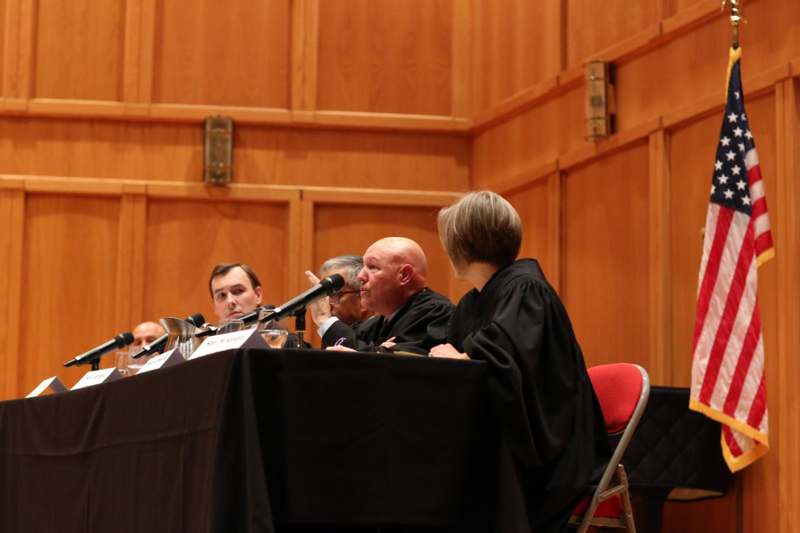
Judge Sweeney (second from right) got the questions going early.
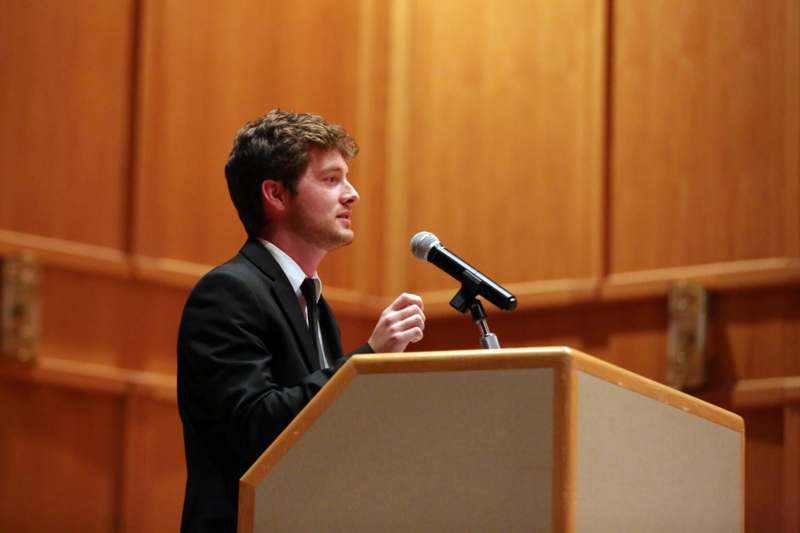
Of the questions faced from the judges, Wetzel said, "The questions really let you know what the judges are thinking about, what they care about in the case, and what they're curious about. When you get a question, you have to have the mindset of, 'This is here to help me. This is an opportunity, not some sort of attack from the outside.'"
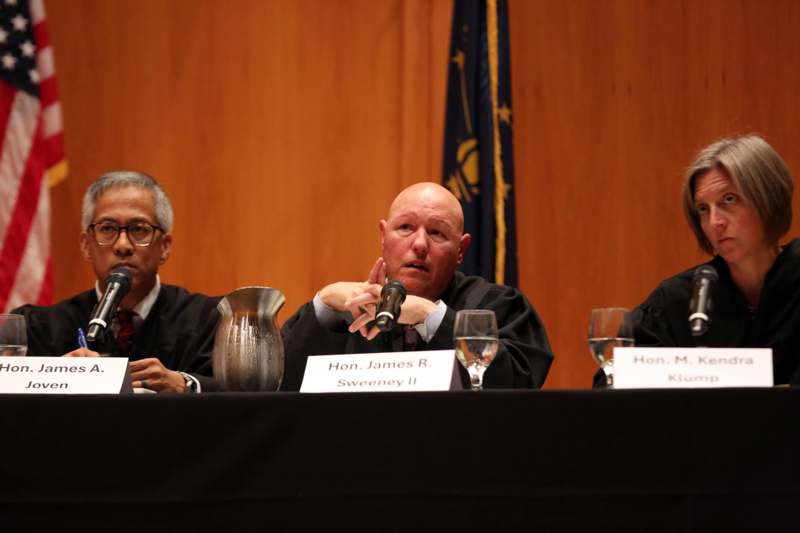
At times, the stream of questions from the judges was relentless.
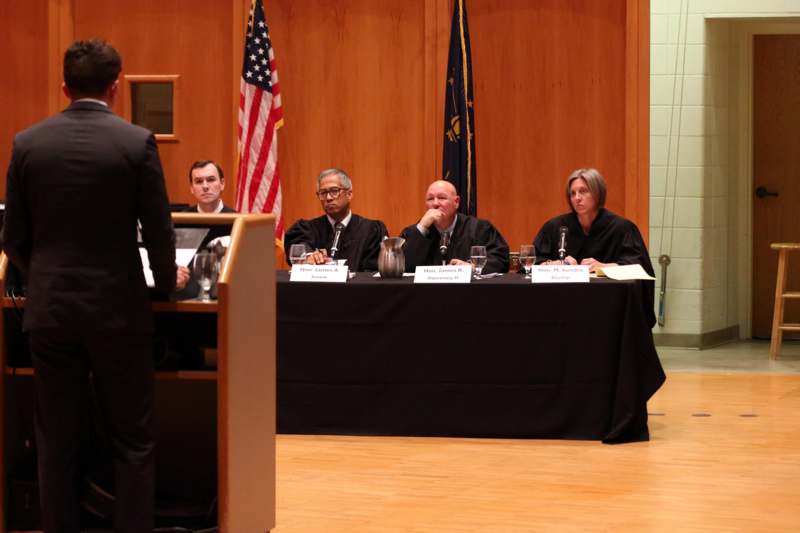
The panel of judges can be imposing.
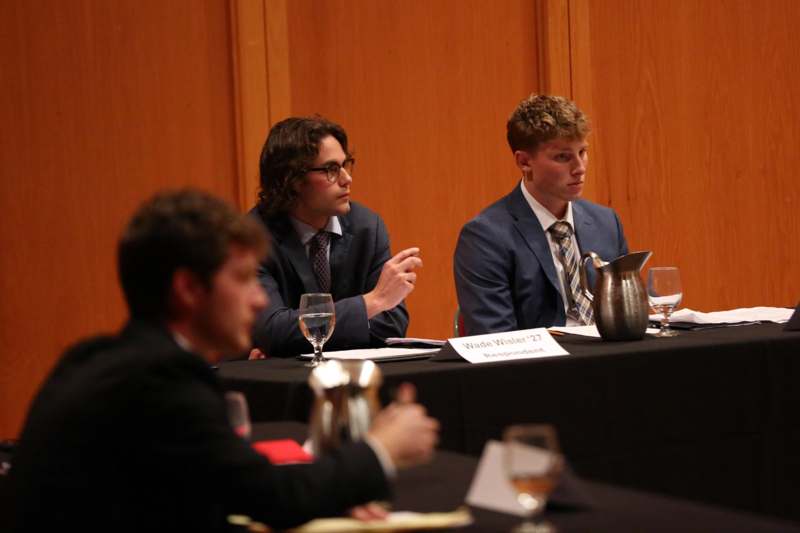
As Smith argues his case Wetzel (near), counsel for the respondent, Wade Wisler '27 (center) and John Jarosz '28 focus in the judges.
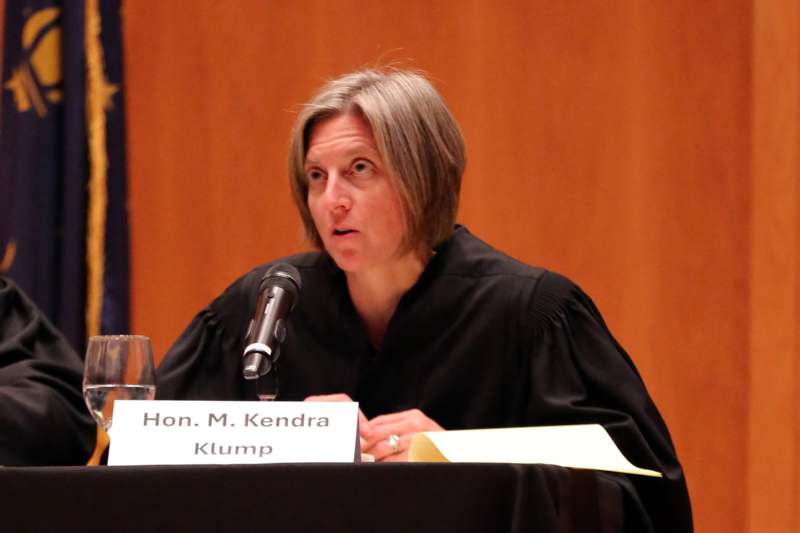
Judge Klump poses a question.

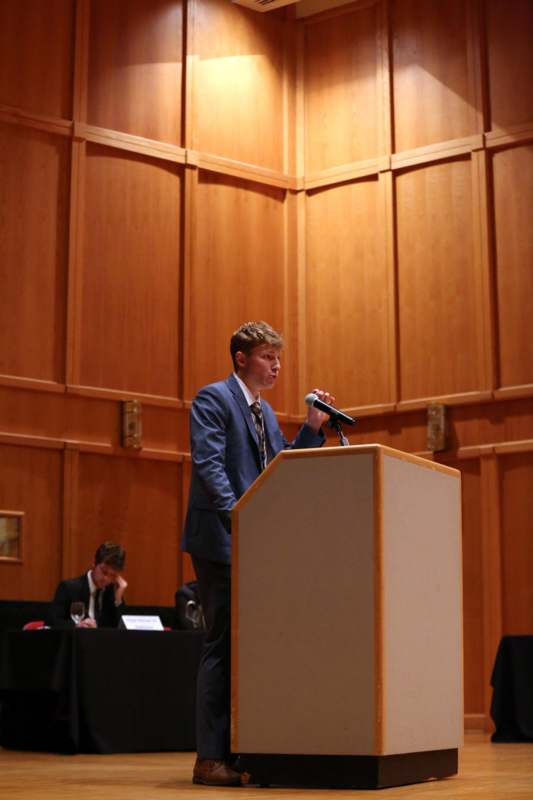
Smith takes to podium to present his case.

Smith is a math and computer science double major with a minor in political science.

Smith makes a point.
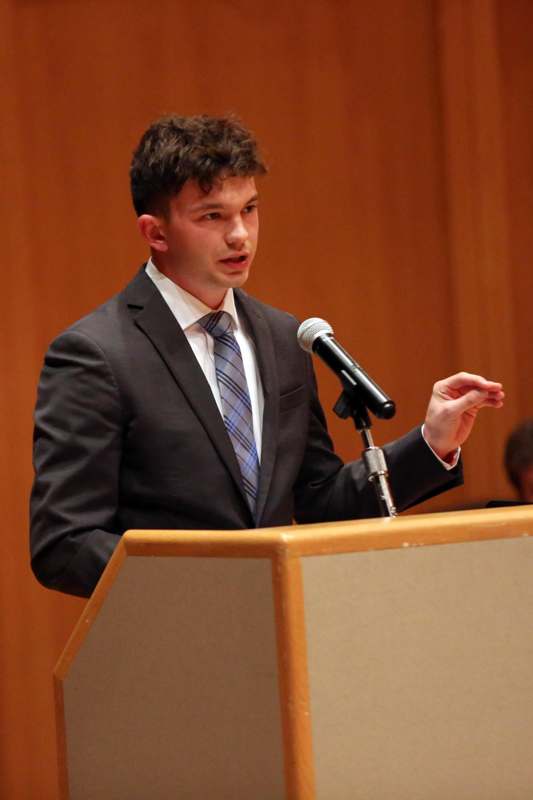
Smith's delivery was calm and measured.
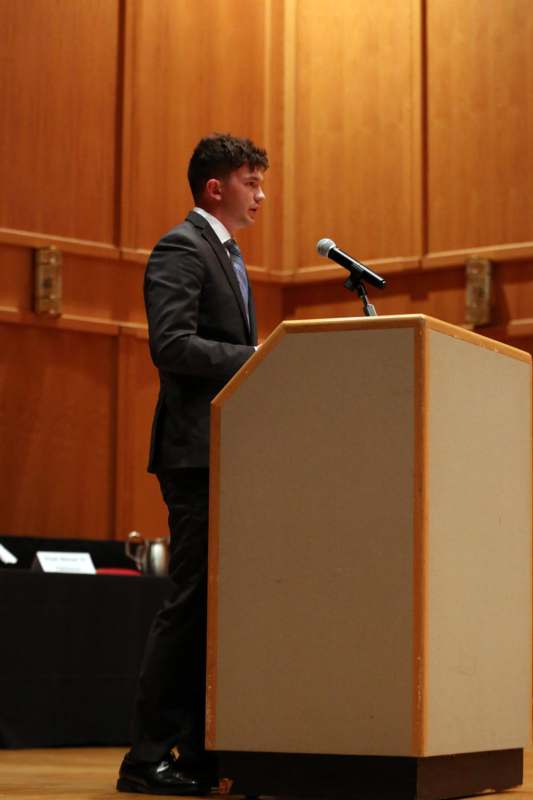
Smith listens to a judge's question.

Smith appreciated the competition and the skills that are sharpened within, saying, "The ability to spend so much time on a problem and try to dissect both sides -- to think on your feet when the judges ask you a question you're not prepared for -- and kind of work through it all and come up with a relatively good answer is a lot of fun. Being able to like answer questions on the fly, isnot only a great skill for classes or the law, but it's also a great life skill."
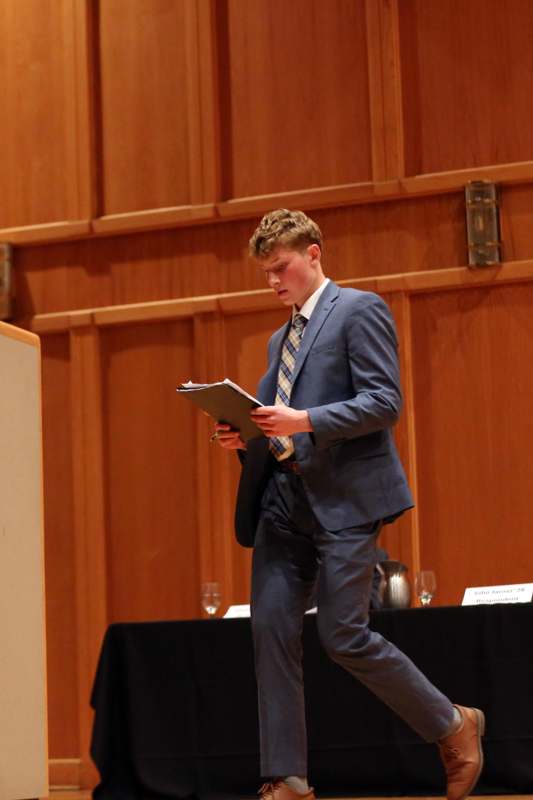
Jarosz heads to the podium.

Jarosz delivers his case.
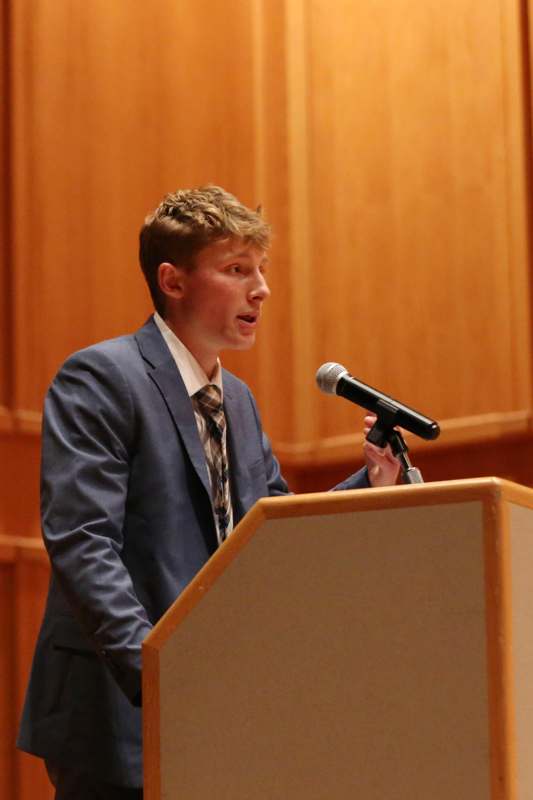
Jarosz handles a question.
Wetzel (rear) takes notes as Jarosz faces the judges.

Jarosz emphatically responds.

Jarosz pauses to get a little clarity.

On advancing to the Moot Court finals, Jarosz said, "It's a different type of pressure than the prelims and semifinals. You're out here in front of all your your classmates, professors, and people who came out to support you. Then you have a very hot bench of of judges who do this stuff for a living. It's definitely intimidating and it's definitely something that you have to mentally work through."
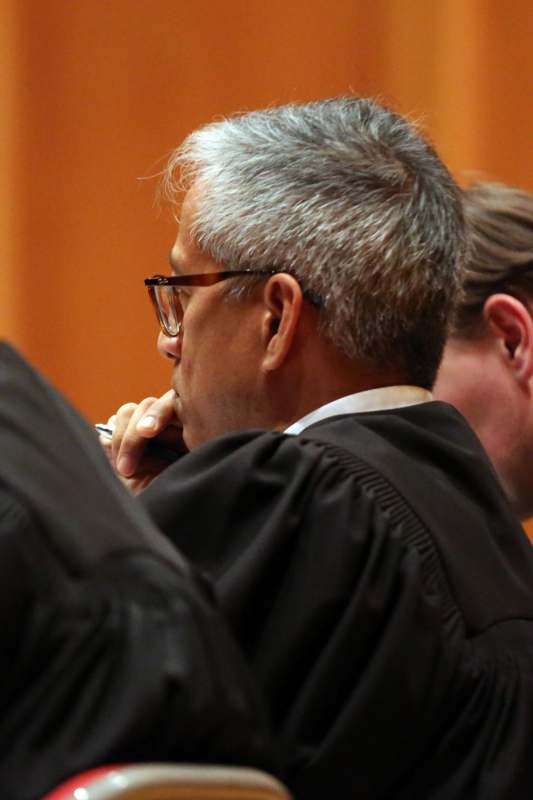
Judge Joven listens thoughtfully.
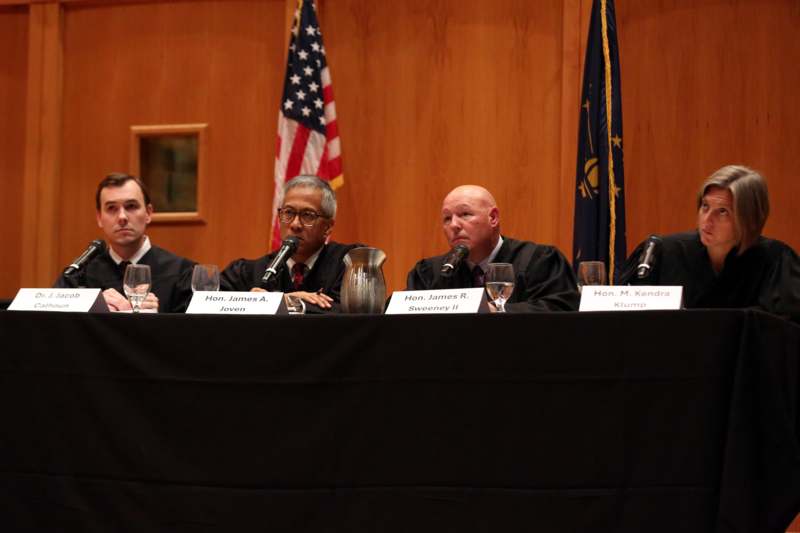
The panel was thoughtful in its challenges deliverd to the advocates.
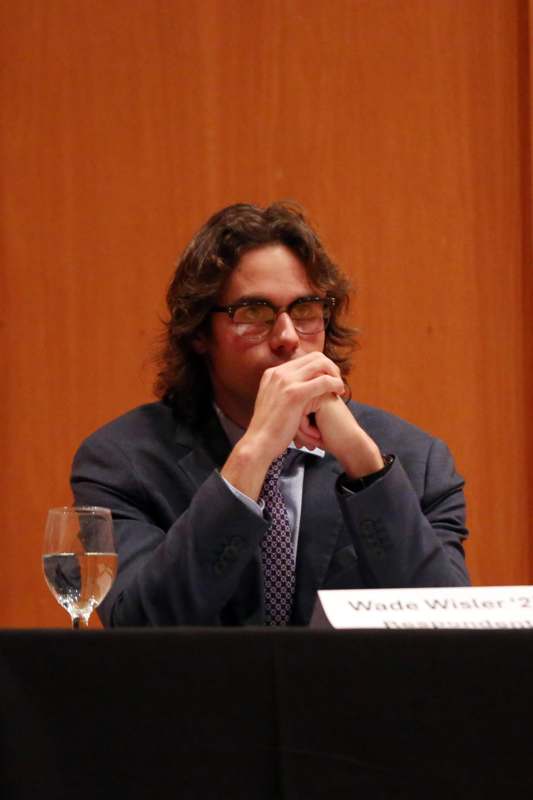
Wisler pays rapt attention.
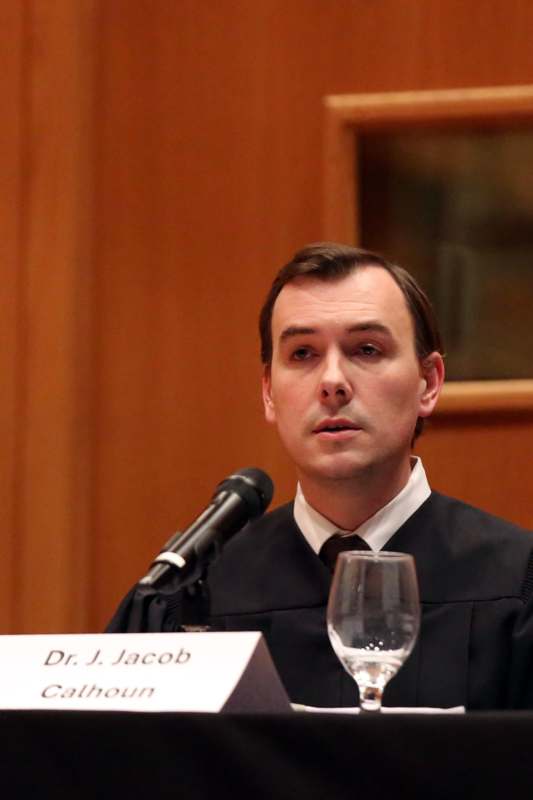
Calhoun readies a question.
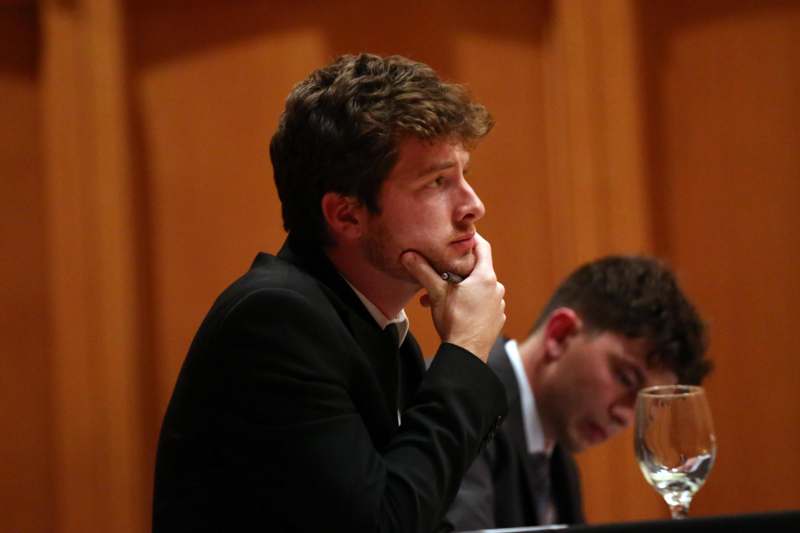
Wetzel takes in the courtroom conversation.
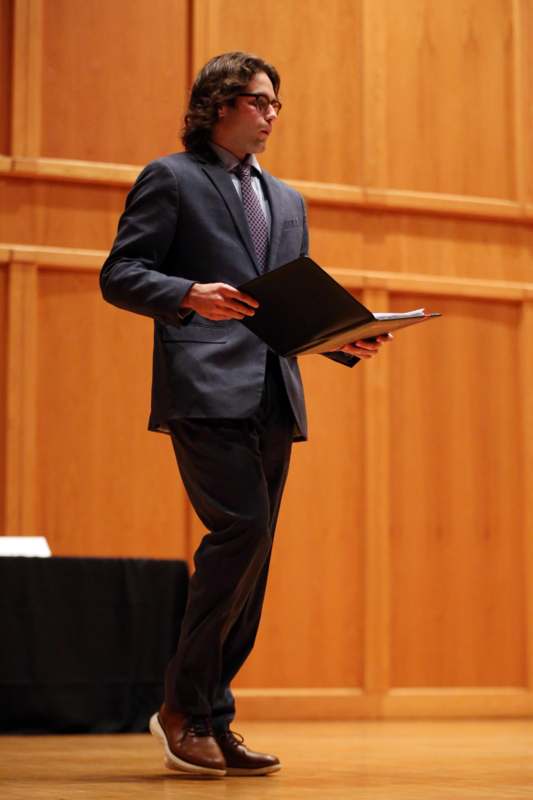
Wisler prepares to deliver his case.
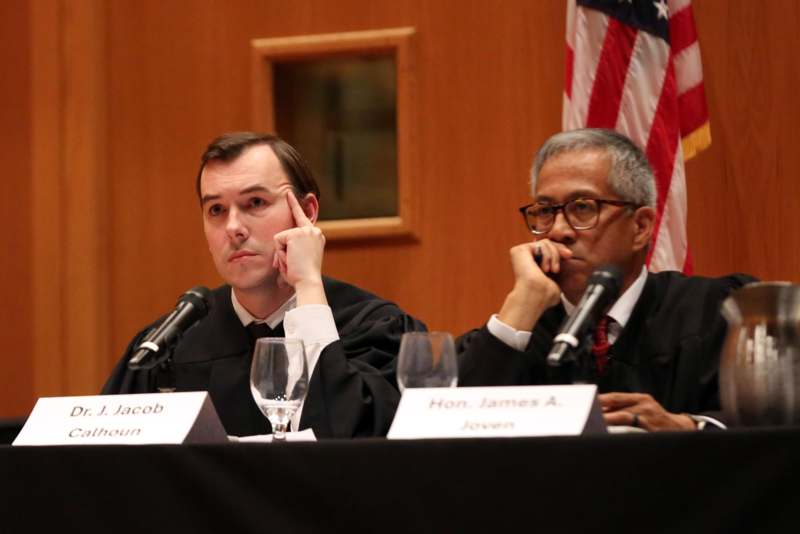
Judges Calhoun (left) and Joven pay particular attention.
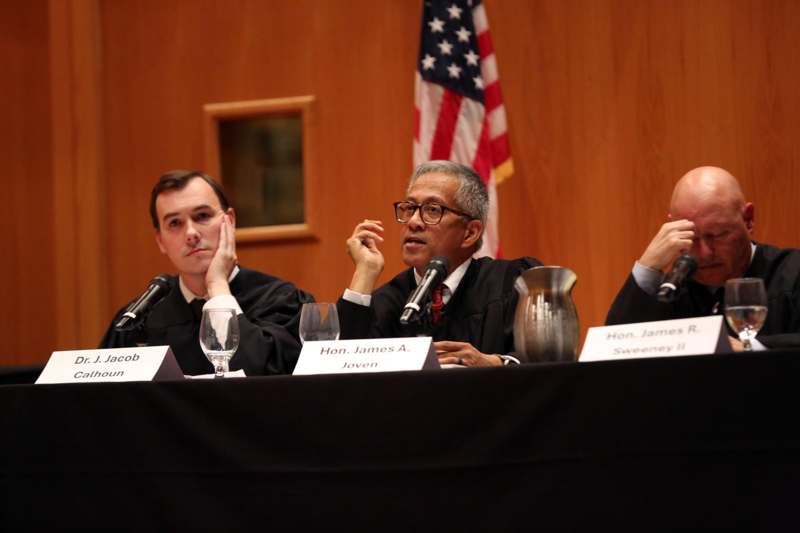
Joven (center) delivers a question to Wisler.
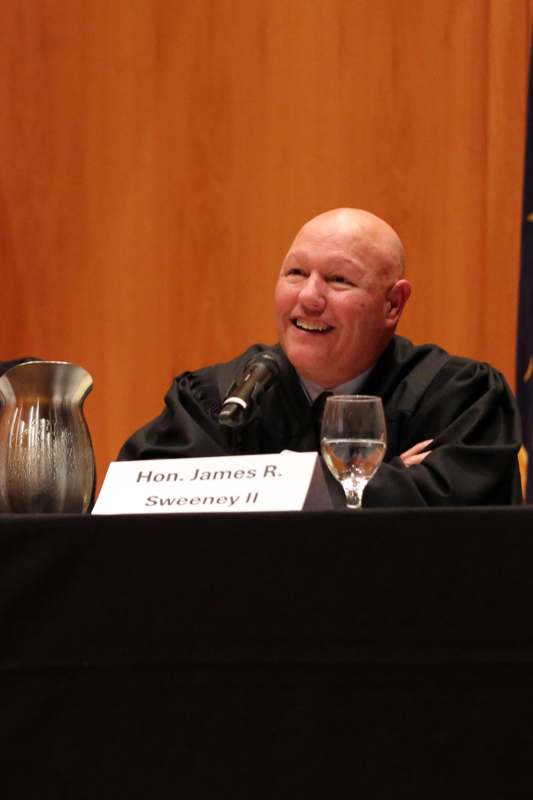
Judge Sweeney offers a supportive smile.

Stundents in the audience paid particular attention.
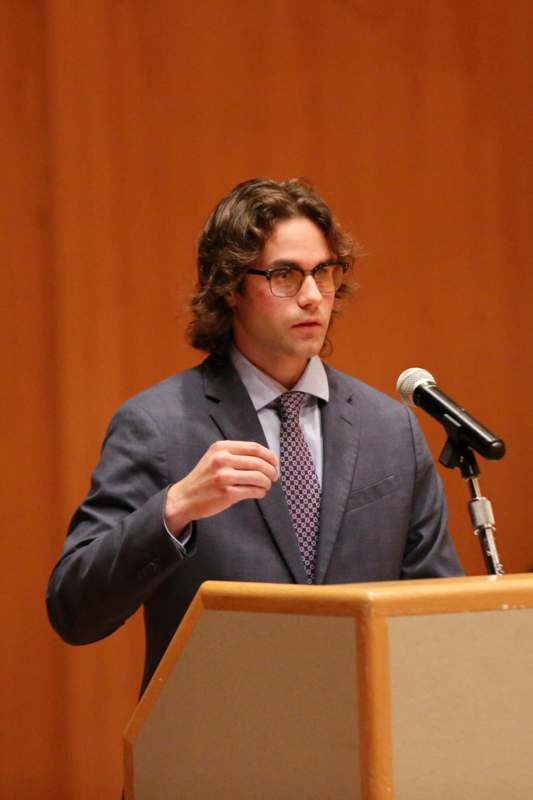
Wisler is a PPE and art double major from Bloomington, Indiana.
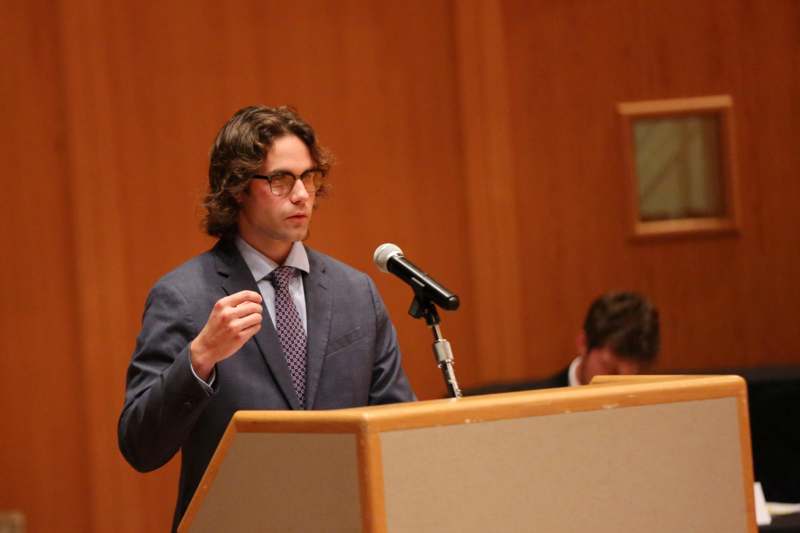
Wisler delivers a point.
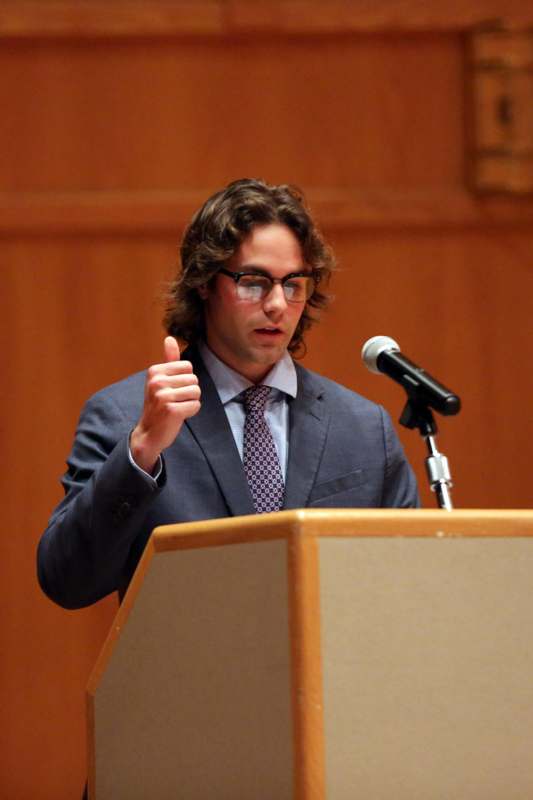
Here, Wisler emphasizes a point.
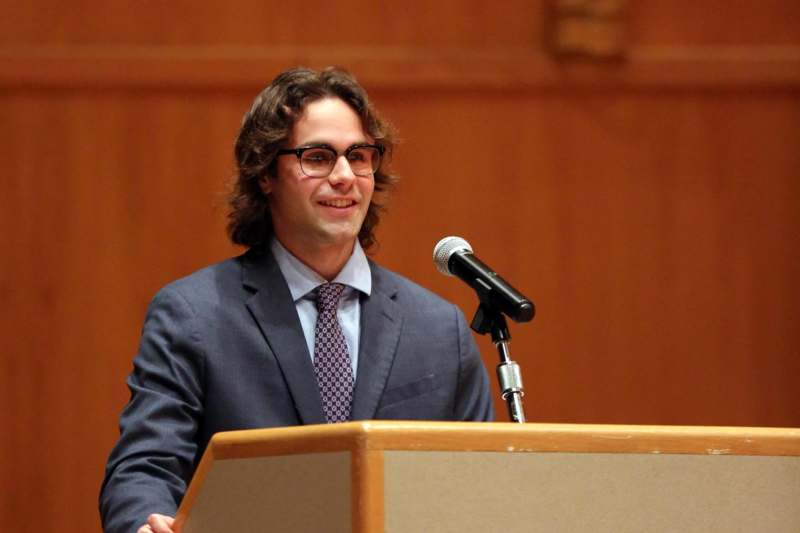
Wisler feels goos during this exchange.
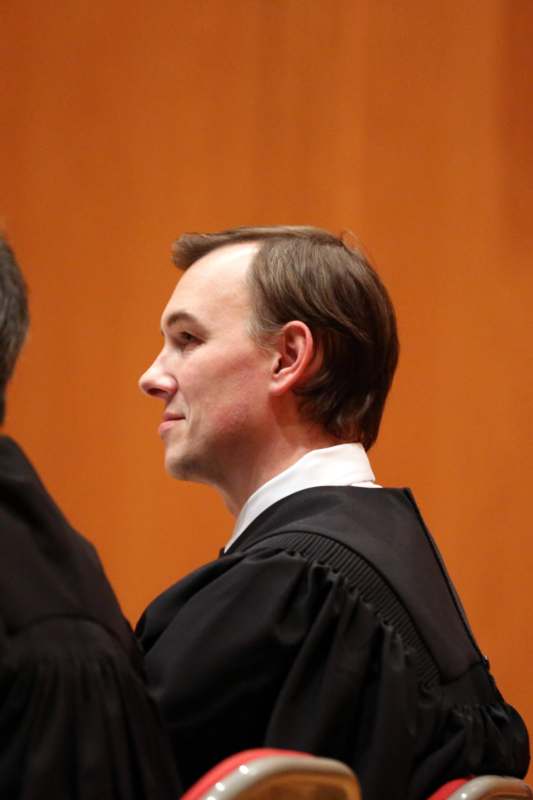
Judge Calhoun listens as Wisler makes his case.
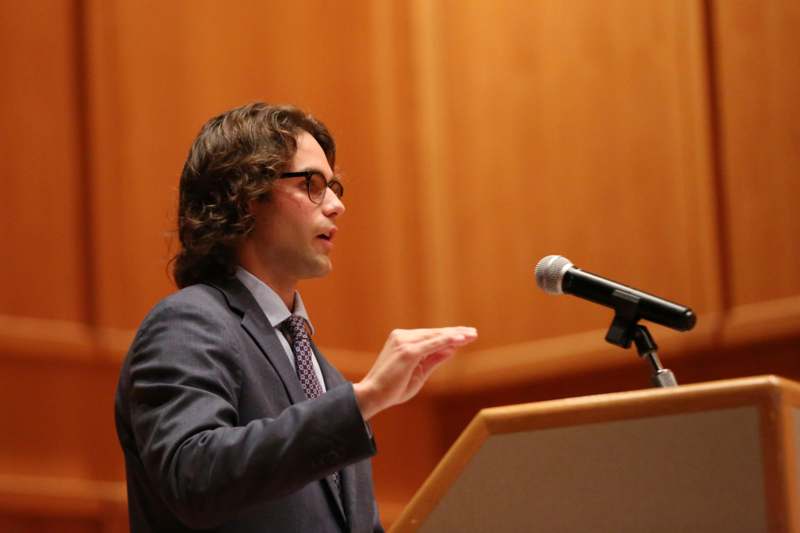
"I'll remember the camaraderie the most," Wistler said of his Moot Court experience. "I always enjoy conversations with fellow competitors about how they've approached their arguments, the hours they've spent preparing, and the tough questions they got from the bench. Moot Court is always rewarding as an individual, but most enjoyable when shared with colleagues."
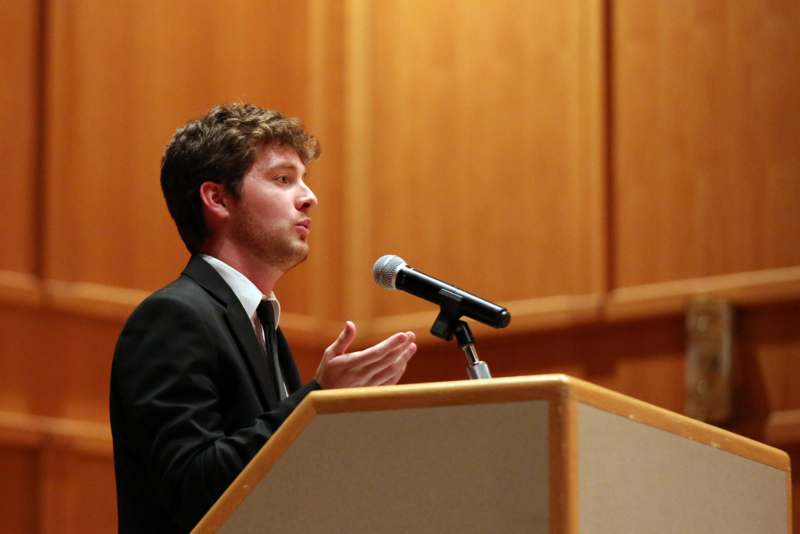
Wetzel delivers his rebuttal.
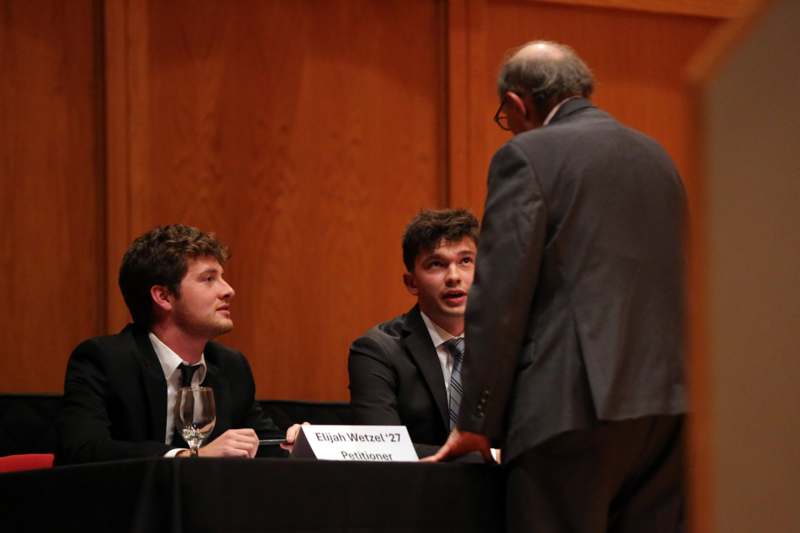
Jon Pactor chats with Wetzel (left) and Smith while the judges make their deliberations.
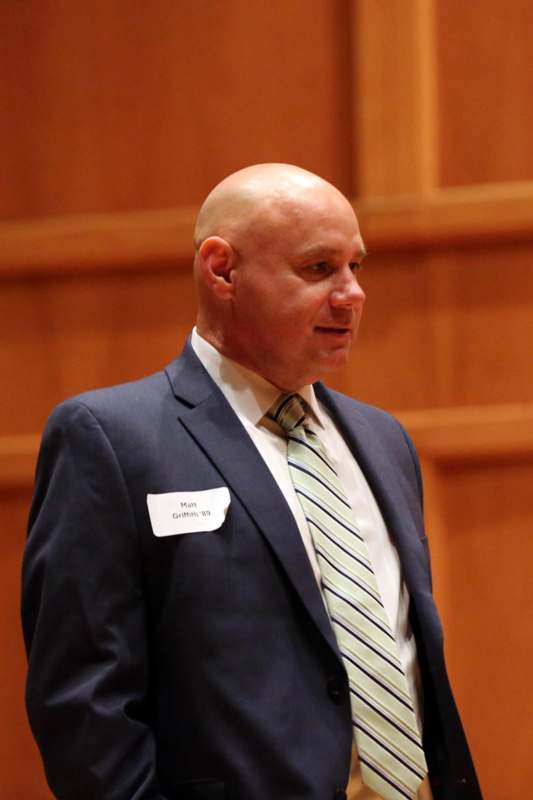
Griffith awaits the decision.
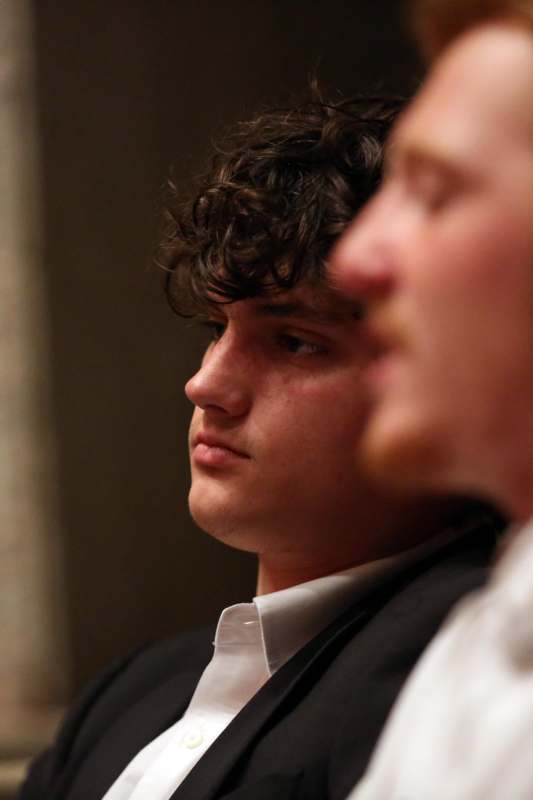
A final decision draws near.
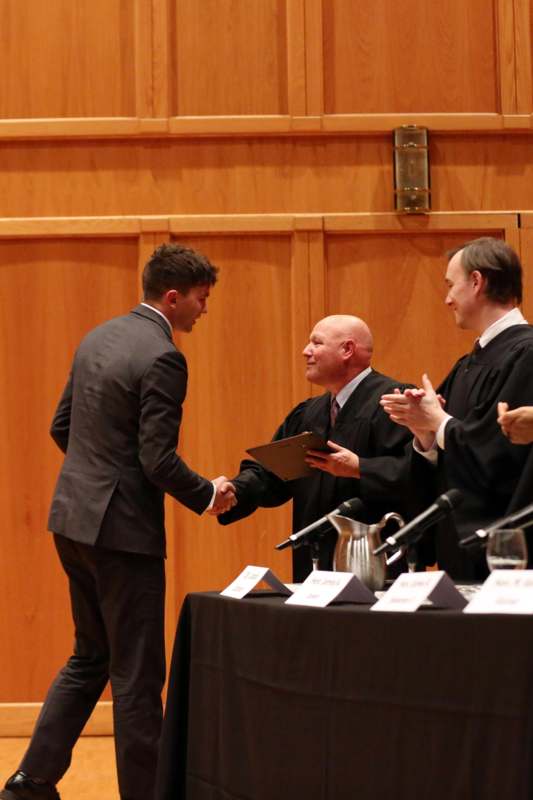
Smith is congratulated by Judge Sweeney as the 2026 Top Advocate.
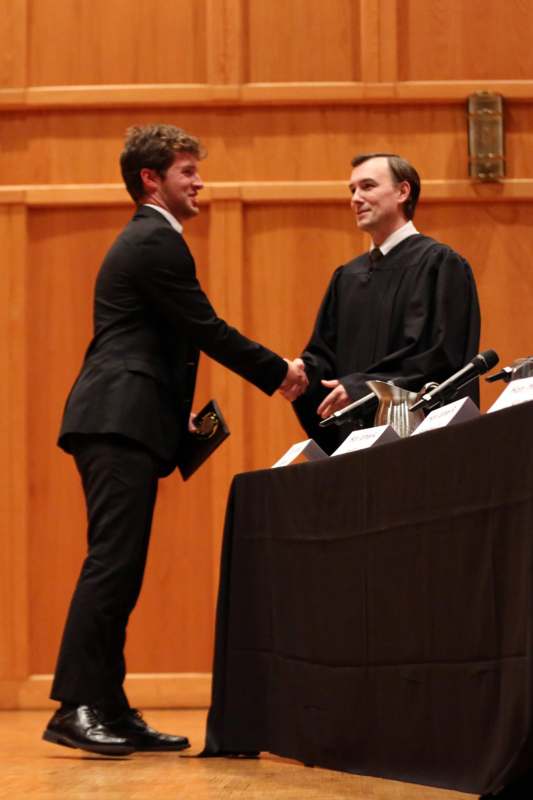
Wetzel is congratulated by Judge Calhoun.
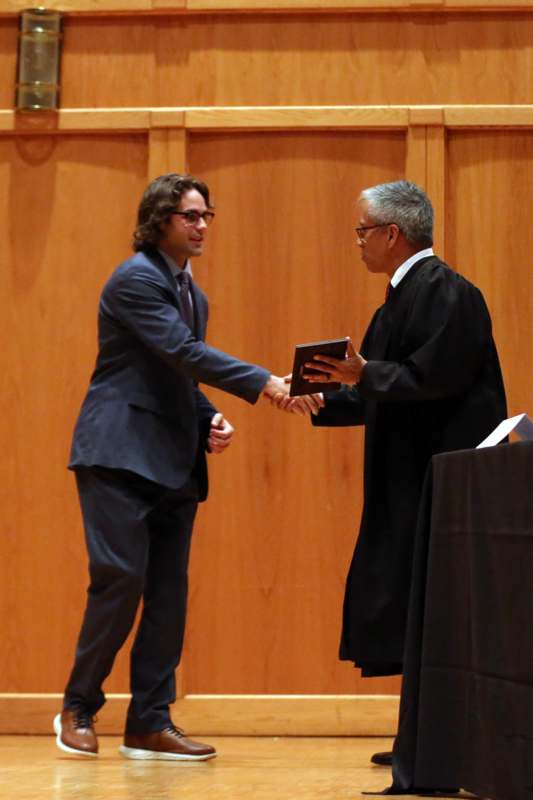
Wisler is congratulated by Judge Joven.
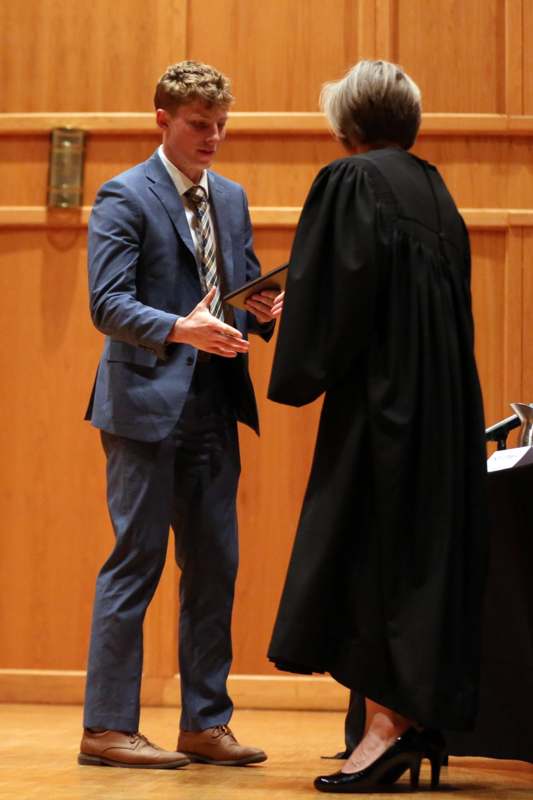
Jarosz is congratulated by Judge Klump
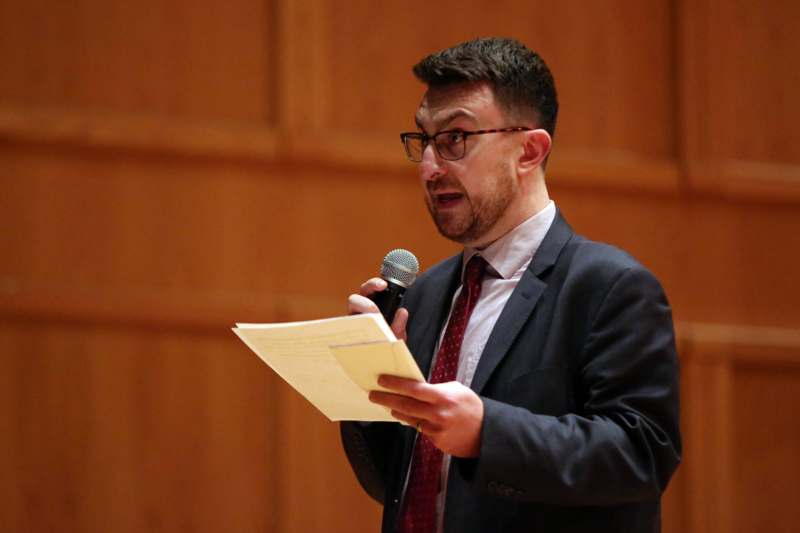
Dettmer announces the winner of the Floyd Artful Advocacy Prize. This year's recipient was Elijah Wetzel.
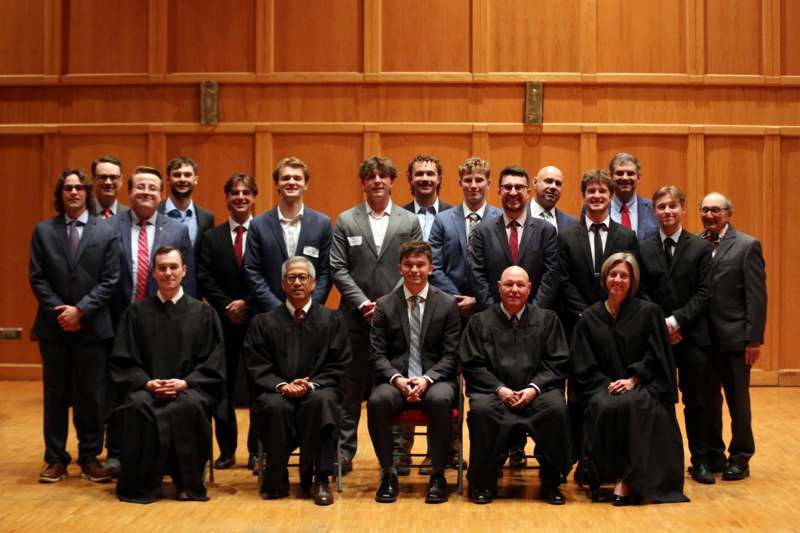
Judges and finalists pose with the Moot Court semifinalists and Wabash alumni preliminary round judges.
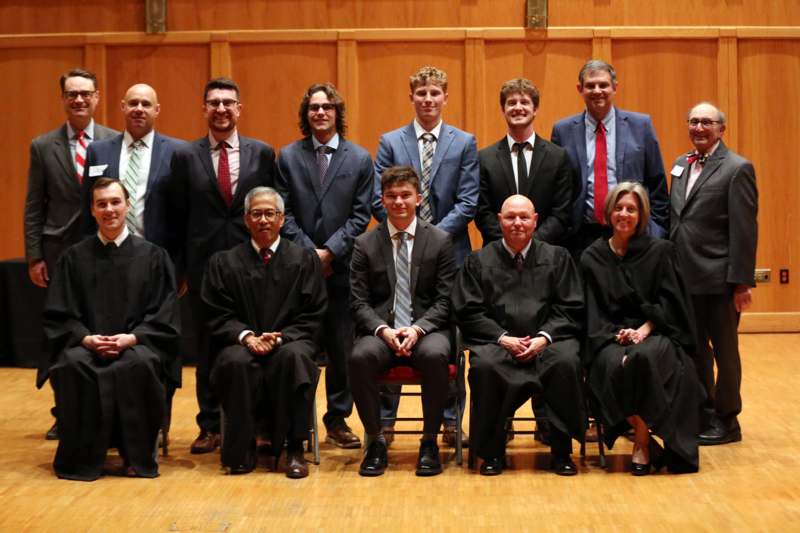
The participants and administrators of the Moot Court finals.
After the fact, the moot court finalists all talked about wanting a hot bench. Well, they got their wish.
In moot court parlance, a “hot bench” is one where the judges’ questions come in rapid-fire succession. It can feel unrelenting.
Four words. That’s how far finalist Elijah Wetzel ’27 got before the first question came.
 “There’s always going to be some nerves just because this environment creates that,” Wetzel said. “The questions are kind of reassuring. They let you know what the judges are thinking about, what they care about in the case, and what they’re curious about. When you get a question, you have to have the mindset, ‘This is an opportunity, not some sort of attack from the outside.’”
Fellow finalist John Jarosz ’28 also welcomed the relentless questioning and revealed an underlying truth.
“We don't have enough material written down and I don’t think anyone would want to hear us just read off what we have for 12 minutes,” he explained. “Getting to answer those kinds of questions and piggyback off what the judges say allows us to maneuver and make our own points. That is where the magic happens.”
The featured case had issues that dealt with both the Second and Fifth Amendments to the U.S. Constitution. It examined whether states have the authority to ban AR-15-style rifles and large capacity magazines to prevent mass shootings. Arising from a law enacted by the fictional State of Blue following a mass shooting at an elementary school and in response to growing concerns about gun violence, the state legislature adopted the Act Addressing Gun Violence (Act A123), which prohibits the sale and possession of AR-15-style rifles and magazines capable of holding more than 10 rounds of ammunition.
Judge James R. Sweeney, Chief Justice, United States District Court for the Southern District of Indiana, praised the authors of the case in crafting a balanced case for both sides. Then he praised the participants for handling the case well under stressful conditions.
“What a great job the writers of this problem did to try to make it even on both sides,” Sweeney said. “That’s a tough thing to do, and invariably, it’s not enough. What we look at is how you did in playing the hand you were dealt. Overall, the competition was strong, especially when you are on the clock, which adds additional pressure.”
Owen Smith ’27 was named top advocate by the judges. Participants often have to argue both sides of the case as they advance through the competition. The mathematics and computer science major appreciated the challenge of studying this case from all angles.
“It's a lot of work in the beginning, especially the prelims, being able to differentiate what side you like more, or how best to attack both problems,” he said. “I had to switch my argument when I got to the finals, so I’m going back and forth, deciding which hill I’ll die on. The ability to spend so much time on a problem, to dissect both sides, and think on your feet is not only a great skill for classes or the law, but it’s also a great life skill.”
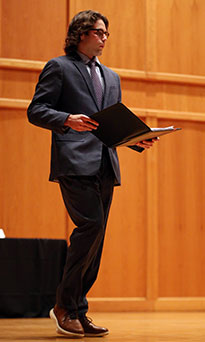 Justice James Joven ’89, a Marion Superior Court judge, cited the opportunity for growth in what many involved in moot court call the quintessential liberal arts experience.
“This is a growth opportunity that I hope many more of your classmates and those to come will partake in,” said Joven. “I am constantly amazed with the quality of the arguments that students put forth during these moot court competitions. You never let me down.”
The rewards of this experience extend beyond the judging. Smith appreciated the competition and being tested on the skill that Wabash prides itself most.
”If you look at the four pillars of Wabash, the first one is to think critically,” he said. “Nothing tests you on that aspect any better than moot court does. I’m an analytical thinker put in an environment where I can apply it to a real-world problem in the eyes of the law and work through it. You take all these skills you have for this one big moment, and you put it together and do the best you can.”
Finalist Wade Wisler ’27 pointed to something different.
“I’ll remember the camaraderie the most,” said the PPE and art double major. “I always enjoy conversations with fellow competitors about how they’ve approached their arguments, the hours they’ve spent preparing, and the tough questions they got from the bench. Moot court is always rewarding as an individual, but most enjoyable when shared with colleagues.”