
Transportation is about more than just getting from point A to point B. It is about building the conditions for people and communities to thrive economically, socially, and sustainably.
After majoring in physics at Wabash, Mike Gallagher ’68 completed his Ph.D. in nuclear engineering at Stanford University. He began his career in the middle of the 1970s oil crisis.
“That immediately gave purpose to my work. In the U.S. and Europe, there were long lines of people trying to get gasoline for their cars,” says Gallagher. “It instantly converted my interest in energy technology to wanting to spend my career working on ways to replace or at least reduce our dependence on oil.”
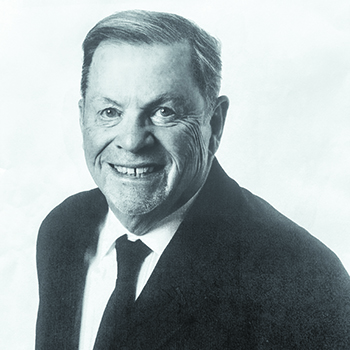 In the following years, Gallagher spent four years developing a large-scale energy model of the United States to advise government officials on what it would take to build out the nation’s supply of all types of energy region by region. The extensive report projected how much capital would be required for the next 30 years, calculated how many engineers and pipe fitters they would need to build a nuclear power plant, and even included an environmental database to predict future emissions. This “labor of love” was adapted by 20 countries.
Gallagher led the first two modifications for Peru and Egypt before he joined Westport Innovations the early 2000s. Westport, a then-startup based in Vancouver, partnered with Indiana-based company Cummins to redesign diesel engines to run on natural gas—offering fleets a quieter, cleaner alternative fuel.
“We couldn’t just sell a truck that had one of these special engines if the customer didn’t have a refueling station nearby,” explains Gallagher. “But over time, the technology took off. Now there are thousands of Cummins and Westport natural gas-powered buses in China and across North America.”
Through further research and development, Gallagher and his colleagues designed engines that ran on biomethane, or renewable natural gas—created by biological sources like landfills or dairy farms.
“We’re essentially recycling gas, thereby creating a system with no carbon impact,” he explains. “Instead of sending the methane into the atmosphere, we capture it and put it in trucks and buses, and it doesn’t require drilling into the ground. It’s 90% to 100% renewable in that respect.”
He expects steady growth in the use of natural gas for trucks and buses in the future, especially as scientists discover more ways to extract it from renewable resources.
While Gallagher focused on innovating the fuels to keep vehicles moving, others aim to reshape the systems that move people.
Jacob Sheridan ’14 works as a transit scheduler for Cincinnati Metro, mapping out bus routes that connect thousands of riders to their jobs, schools, health care, and daily life. He oversees nearly 4,000 bus stops—ensuring their correct location, route run times, and signage.
Public transportation is inherently more sustainable than private car ownership, Sheridan points out. “A diesel bus still emits carbon, but when it’s carrying 40 people instead of 40 cars on the road, the emissions per rider are far less. And beyond that, transit helps keep cities more walkable, which makes biking and walking more practical. That’s a huge sustainability benefit people often overlook.”
In theory, large public transit systems are the most efficient way to support mobility in highly populated areas, but in practice, bus routes require detailed strategies and planning months, and even years, in advance. Even then, factors like traffic changes, new housing developments, and surges in ridership require minute-by-minute scheduling tweaks.
“Public transportation is such a big piece of the equation when it comes to building sustainable communities. Citizens have a greater quality of life when they can get places quickly and safely,” says Sheridan. “Our goal is always reliability, meaning the bus shows up when we say it’s going to show up. We are constantly adjusting route run times to match reality.”
Sheridan and his team managed a major scheduling change this August as Cincinnati public middle schools transitioned from transporting students on traditional yellow school buses to Metro buses.
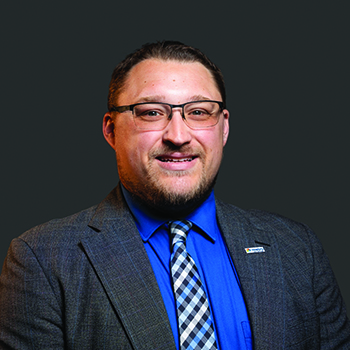 “We have served high schools for a long time, but the district has added middle schools this year in a budget-saving move,” explains Sheridan. “The news of this change didn’t come out until this summer, so we had to quickly adapt to add stops to existing routes and figure out how to safely maneuver our 40-foot vehicles down narrow neighborhood streets while considering all the other restraints of buses.”
Today, sustainable fuels and powering systems are being integrated into existing transportation systems. Cincinnati Metro has also begun experimenting with hybrid buses that combine diesel engines with electric batteries. Using GPS-based geofencing, the vehicles automatically switch to electric-only mode in targeted areas, such as downtown business districts or neighborhoods with high pedestrian activity.
“Technology like this ensures that when buses are moving through densely populated or environmentally sensitive areas, they’re quieter and cleaner,” Sheridan explains. “We’ve already seen savings on fuel and maintenance, along with measurable reductions in emissions.”
“Our buses can only run on electric for about 40% of their daily service now,” Sheridan continues. “But it will be interesting to see how this technology improves in the coming years and how public transportation as a whole evolves.”
Matters of transportation service expansion are not limited to dense metropolises. Smaller communities like Crawfordsville, Indiana, are also adapting transportation and infrastructure to better serve residents. The Sunshine Van program, which has provided donation-based transportation within Montgomery County for decades, plans to scale up its service offerings in January of 2026.
“Until now, the Sunshine Vans were restricted to seniors and people with disabilities,” says Crawfordsville Mayor Todd Barton ’00. “With new funding, we’re transitioning into a public transportation system anyone can use beginning in January, called Crawfordsville Area Transit. It won’t be bus routes and bus stops—at least not yet—but an on-demand service where people call and get picked up for a very nominal fare.”
This expansion is a direct response to what local employers have been telling city leaders: Reliable transportation is a major barrier for entry-level workers. “Too often, new hires depend on a friend or neighbor for a ride, they miss a few shifts, and then it unravels,” says Barton.
“Once we started studying transportation locally, we realized the need went well beyond workforce,” he continues. “People told us they couldn’t get to doctor’s appointments, to church, or even to buy groceries. That really broadened our thinking about what this service could provide.”
By offering more consistent and reliable transportation for residents, Barton hopes to bolster the community’s quality of life and economy.
“This is workforce-driven first and foremost, but it also makes sense from a sustainability standpoint. The more we
can combine trips and reduce the number of cars on our streets, the more we save—economically and environmentally.”
The transportation landscape will continue to transform for as long as people have someplace to go. Like other
Wabash alumni, Gallagher appreciates the opportunity he has had to drive the conversation.
“It’s been really fun for me to contribute to the growth of a major part of the energy system—one that’s environmentally cleaner, more sustainable, and can reduce geopolitical risk,” says Gallagher. “I never would have thought, sitting in a Wabash physics class 50 years ago, that it was all going to lead to anything like this.”