
46th LaFollette Lecture: Bobby Horton
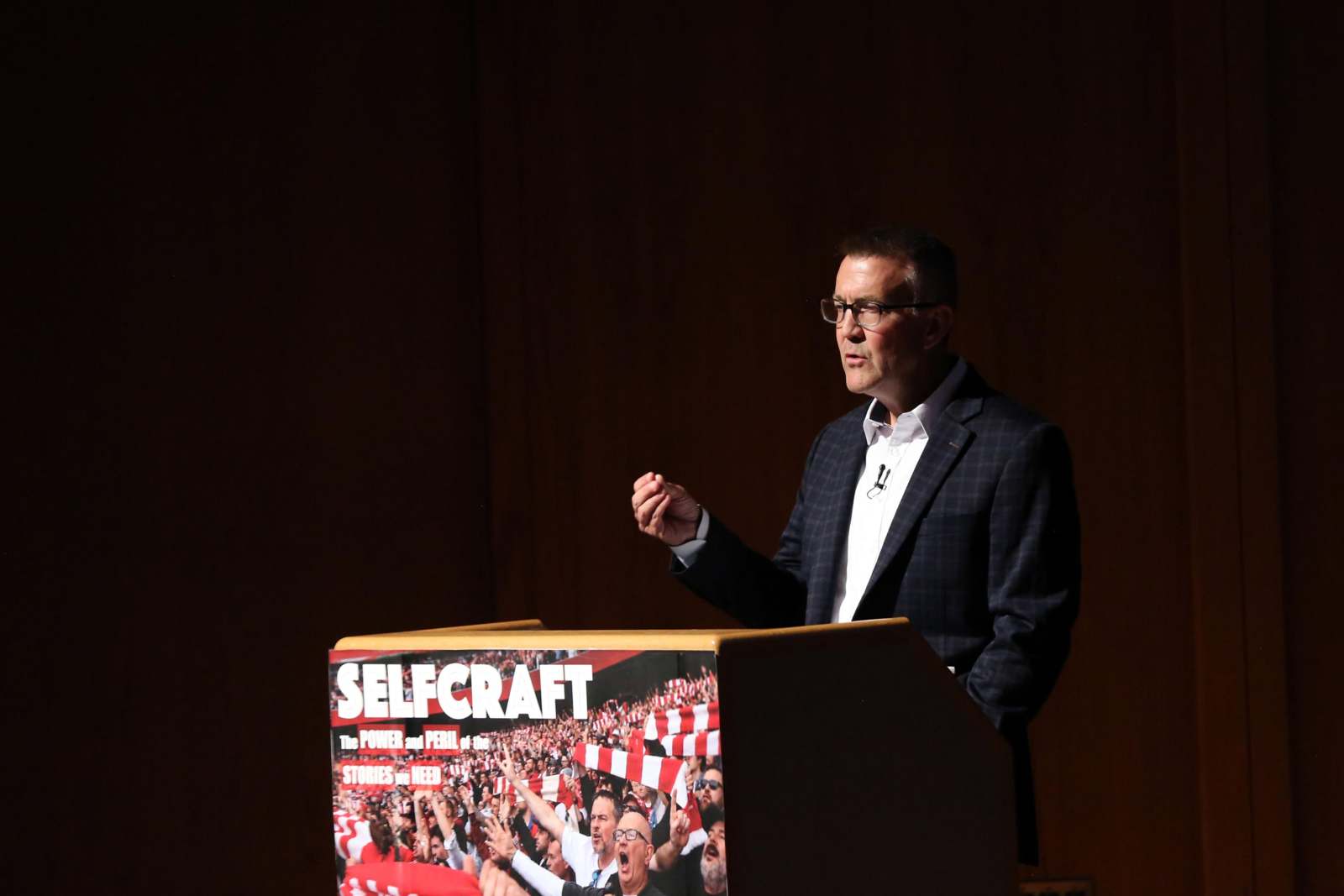
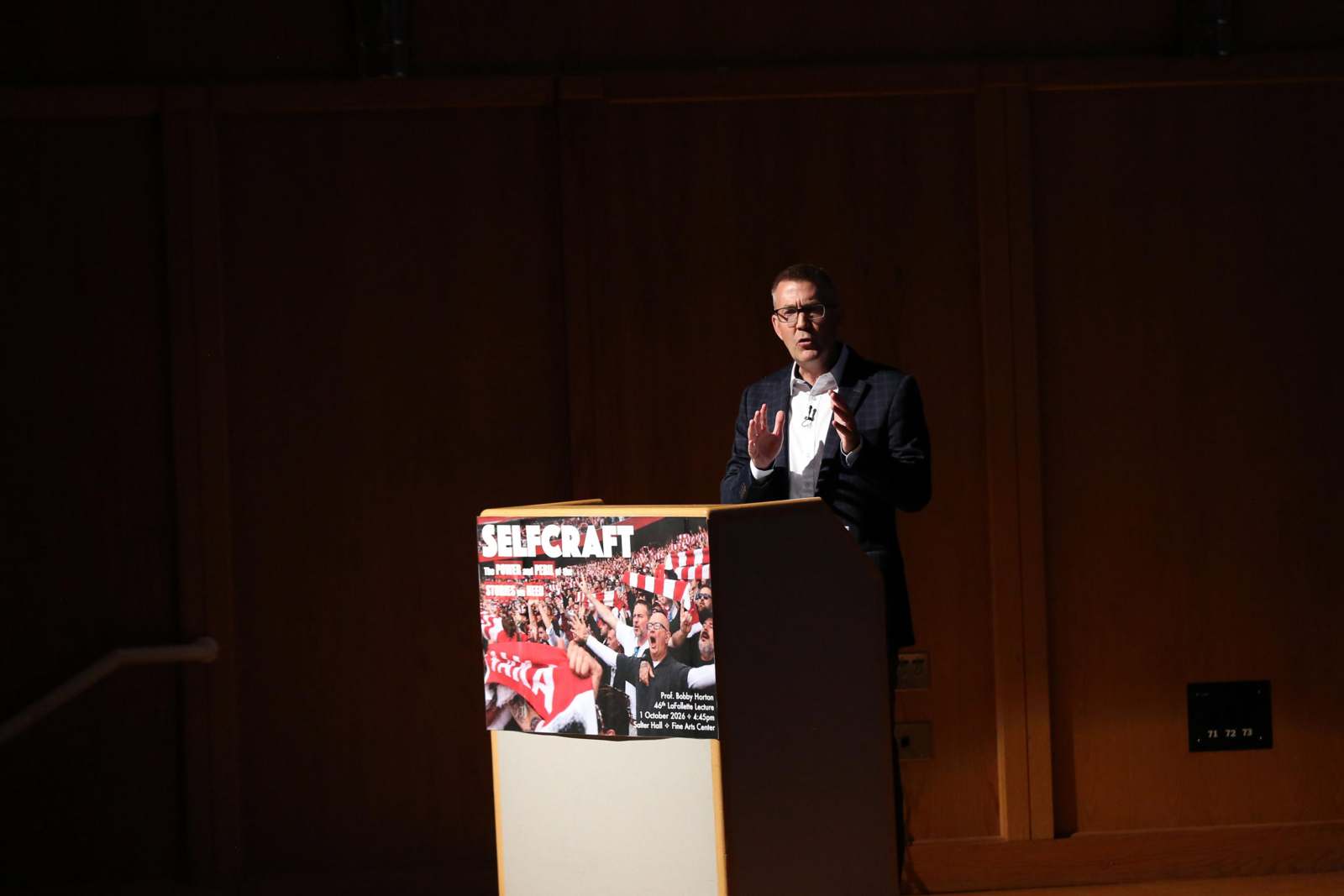
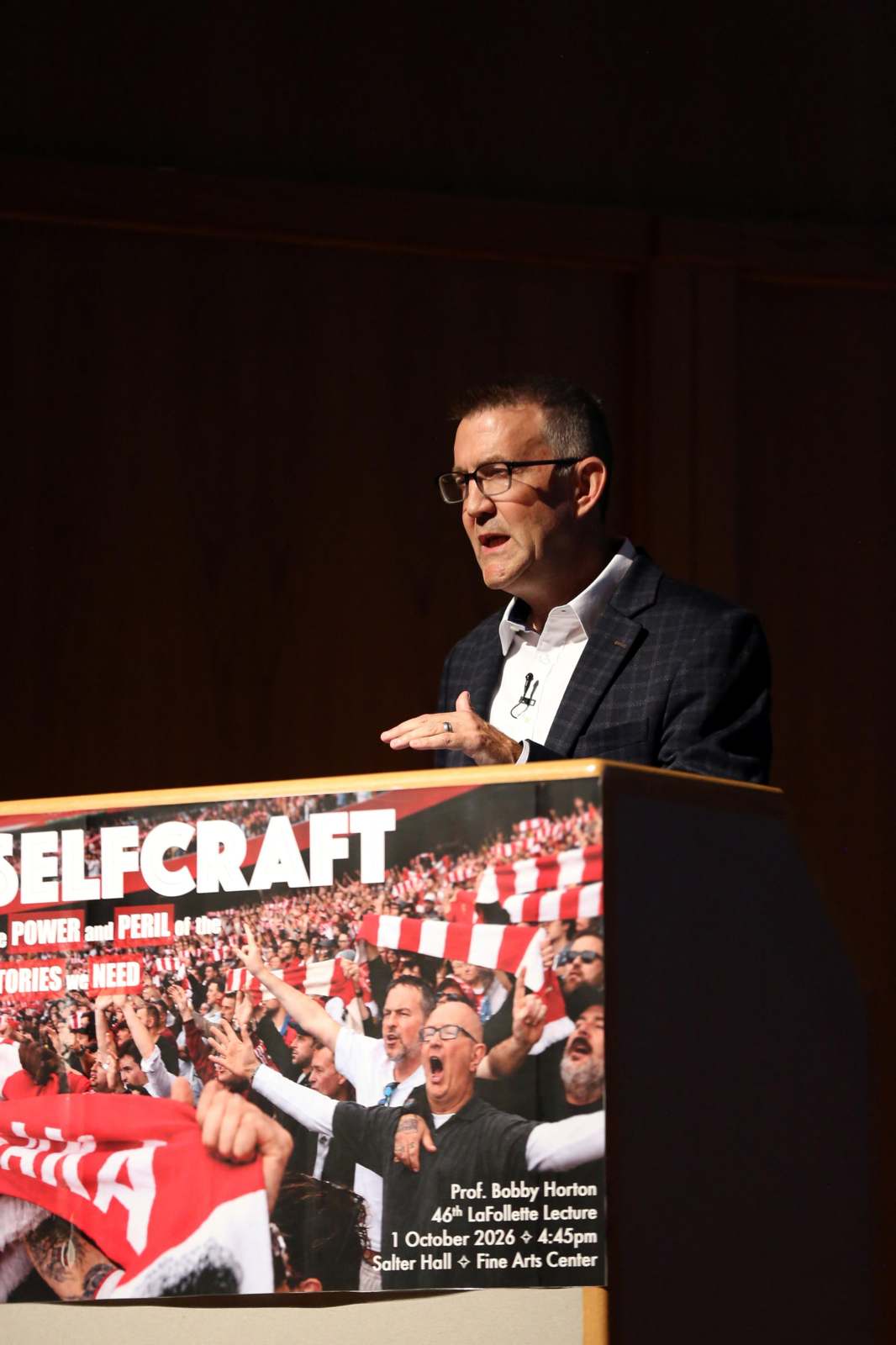
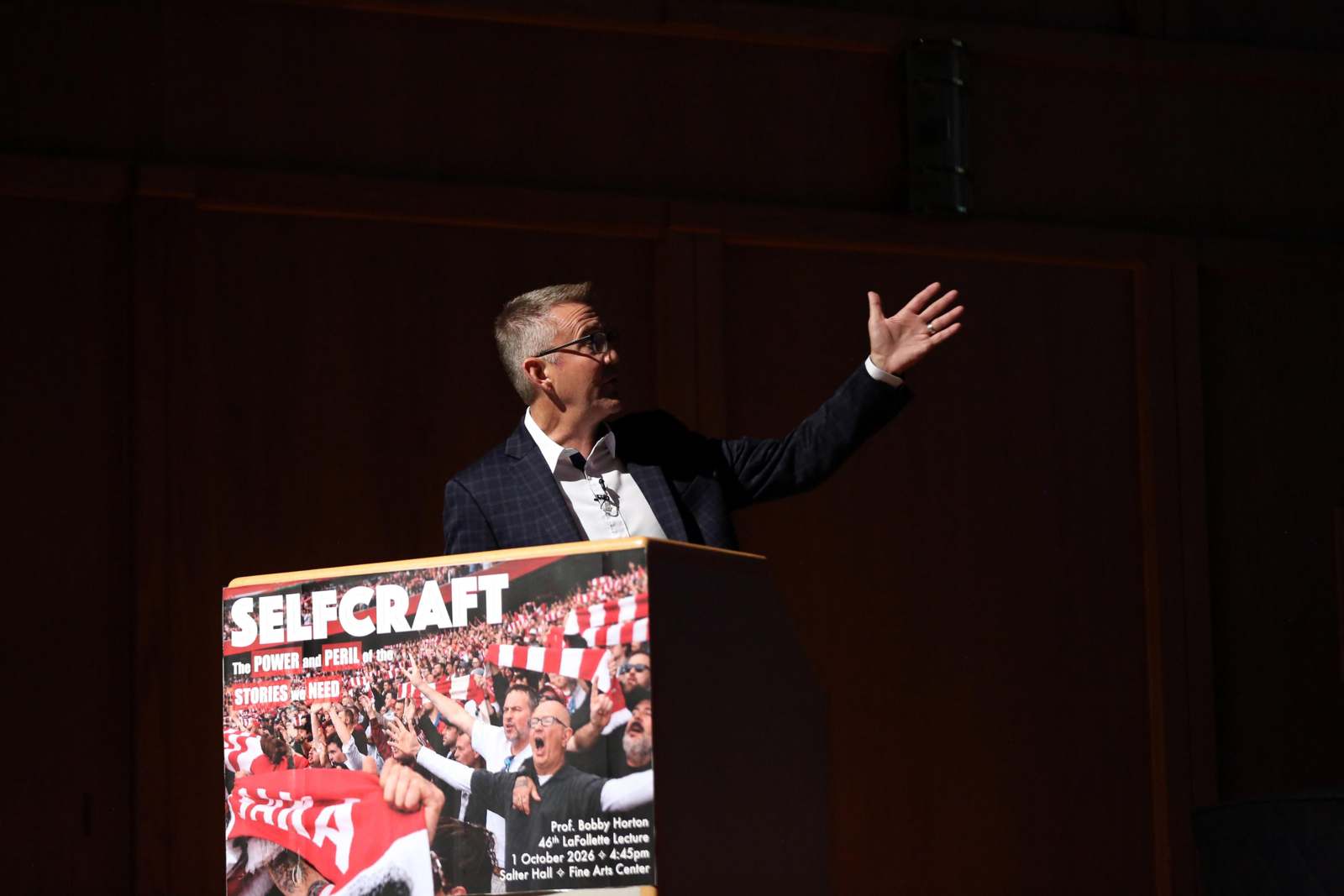
The LaFollette Lecture series was established in 1982 by the Wabash College Board of Trustees to honor Charles D. LaFollette [W1920], their longtime Board colleague. The lecture is given annually by a Wabash College faculty member who is asked to address the relation of their discipline to the humanities, broadly conceived. This year's lecture, “Selfcraft: The Power and Peril of the Stories We Need,” was delivered by Bobby Horton, Professor of Psychology and Klingaman Chair for the First Year Experience. Presented with the accompanying photos are excerpts from his presentation.
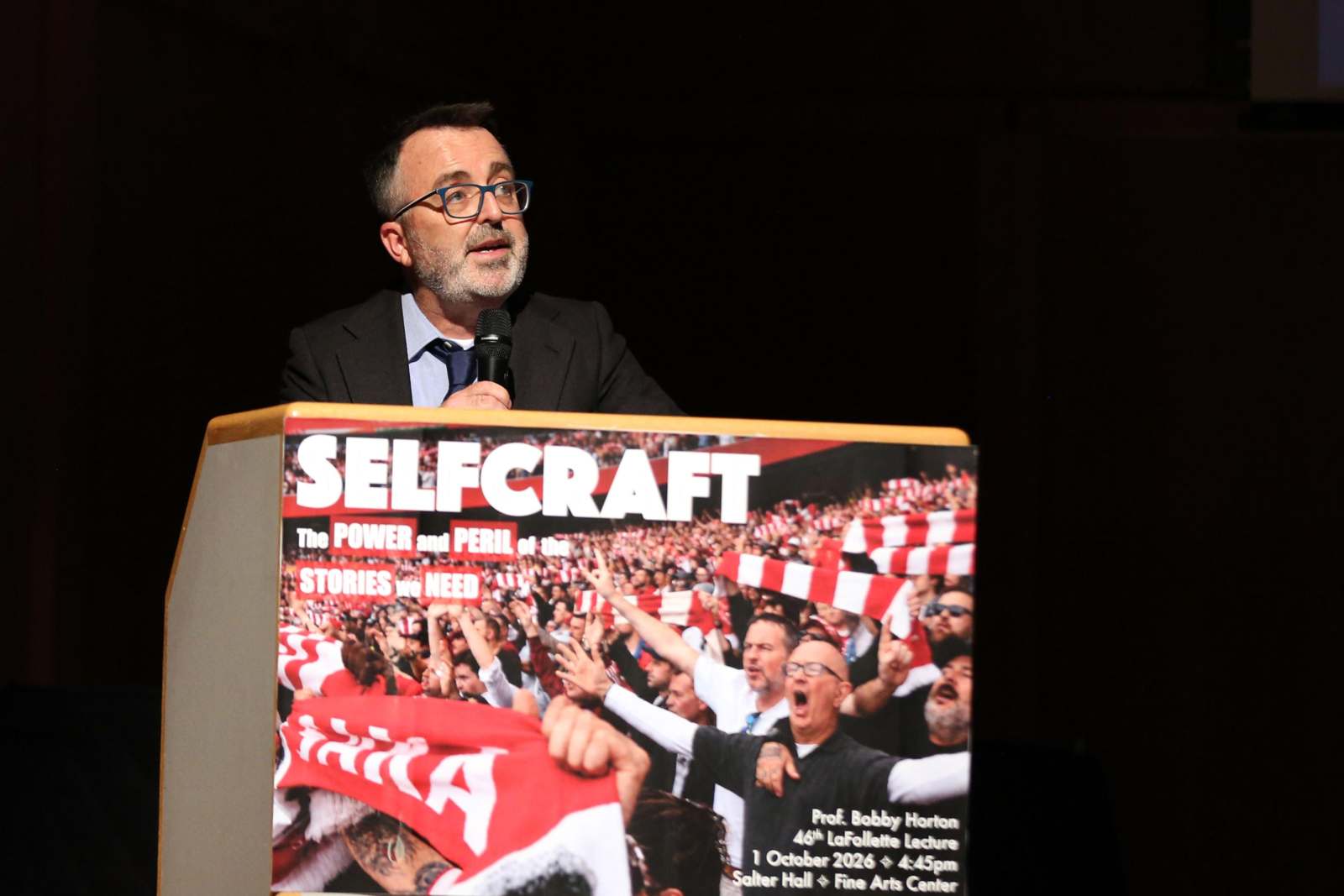
Before getting to the featured speakers, Hartnett introduced attendees to the lecture's namesake, Charles D. LaFollette [W1920].
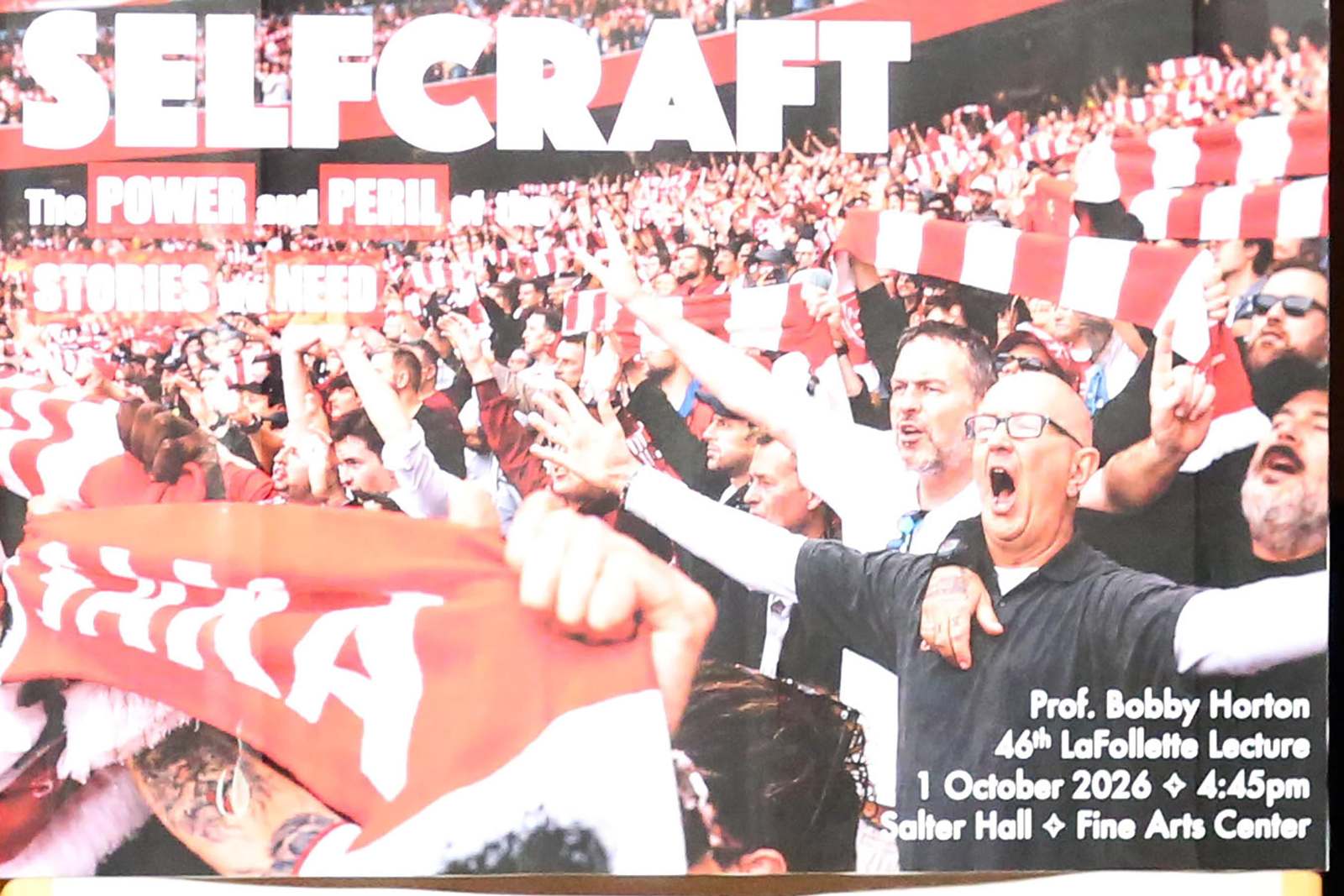
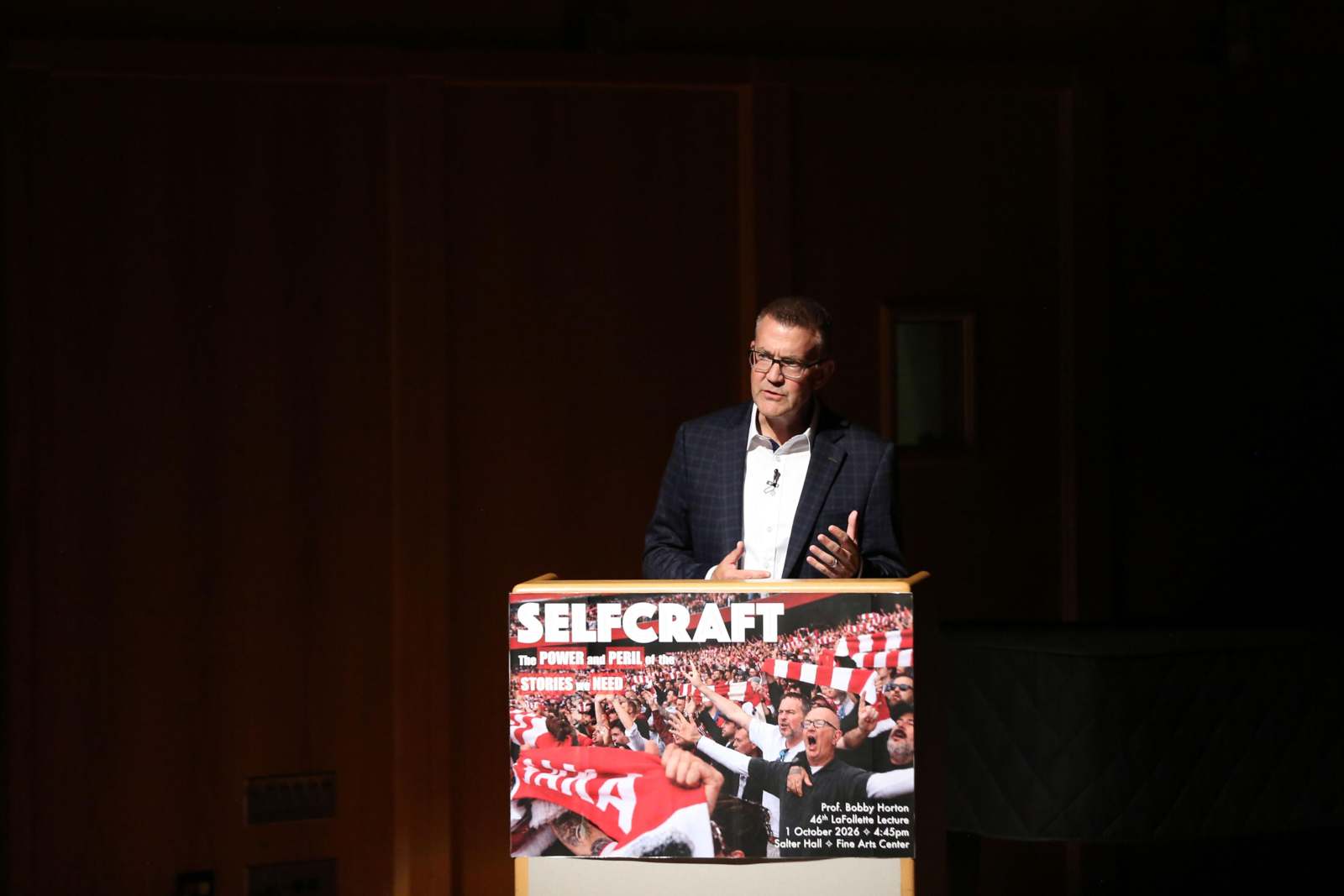
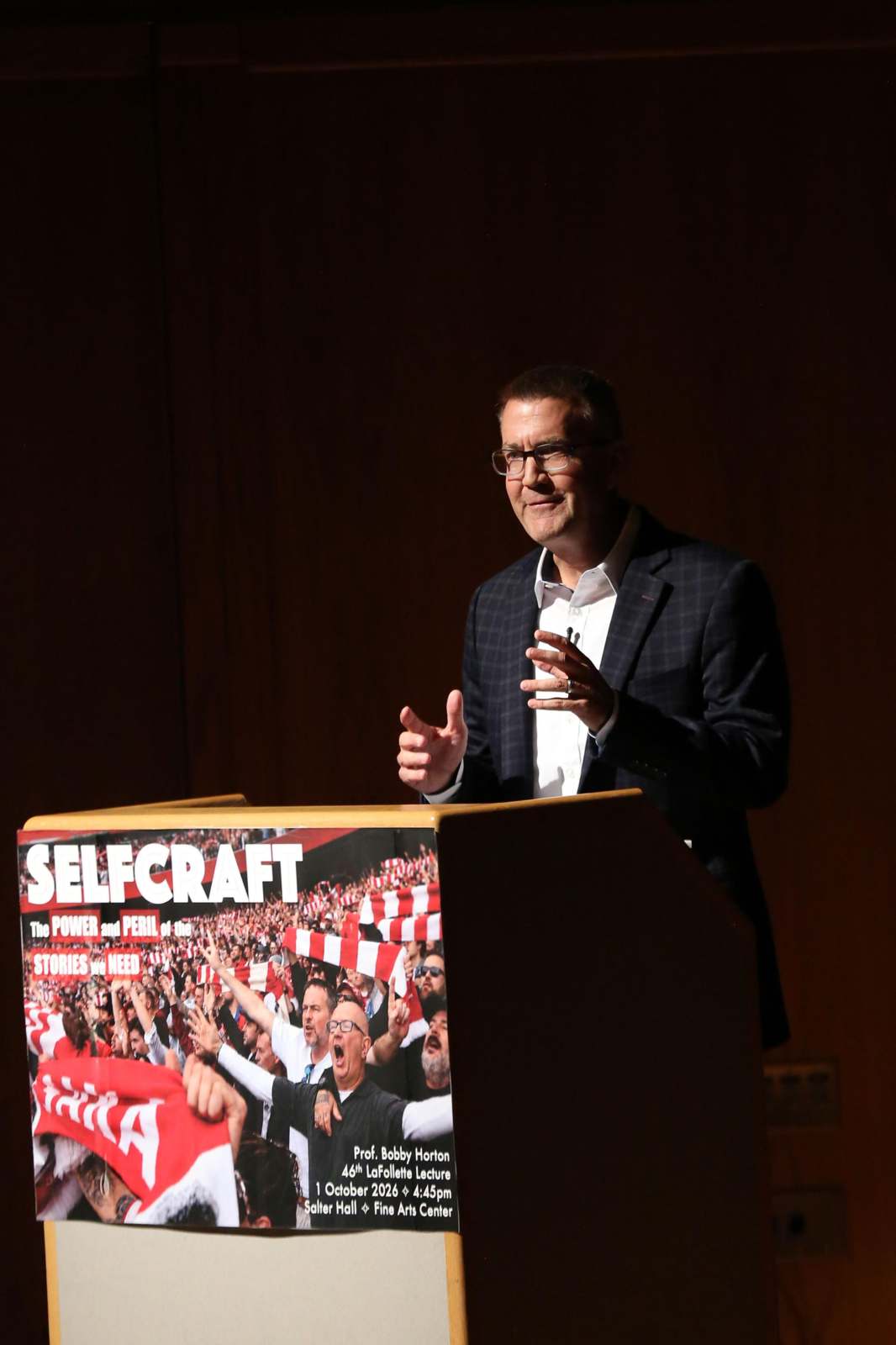
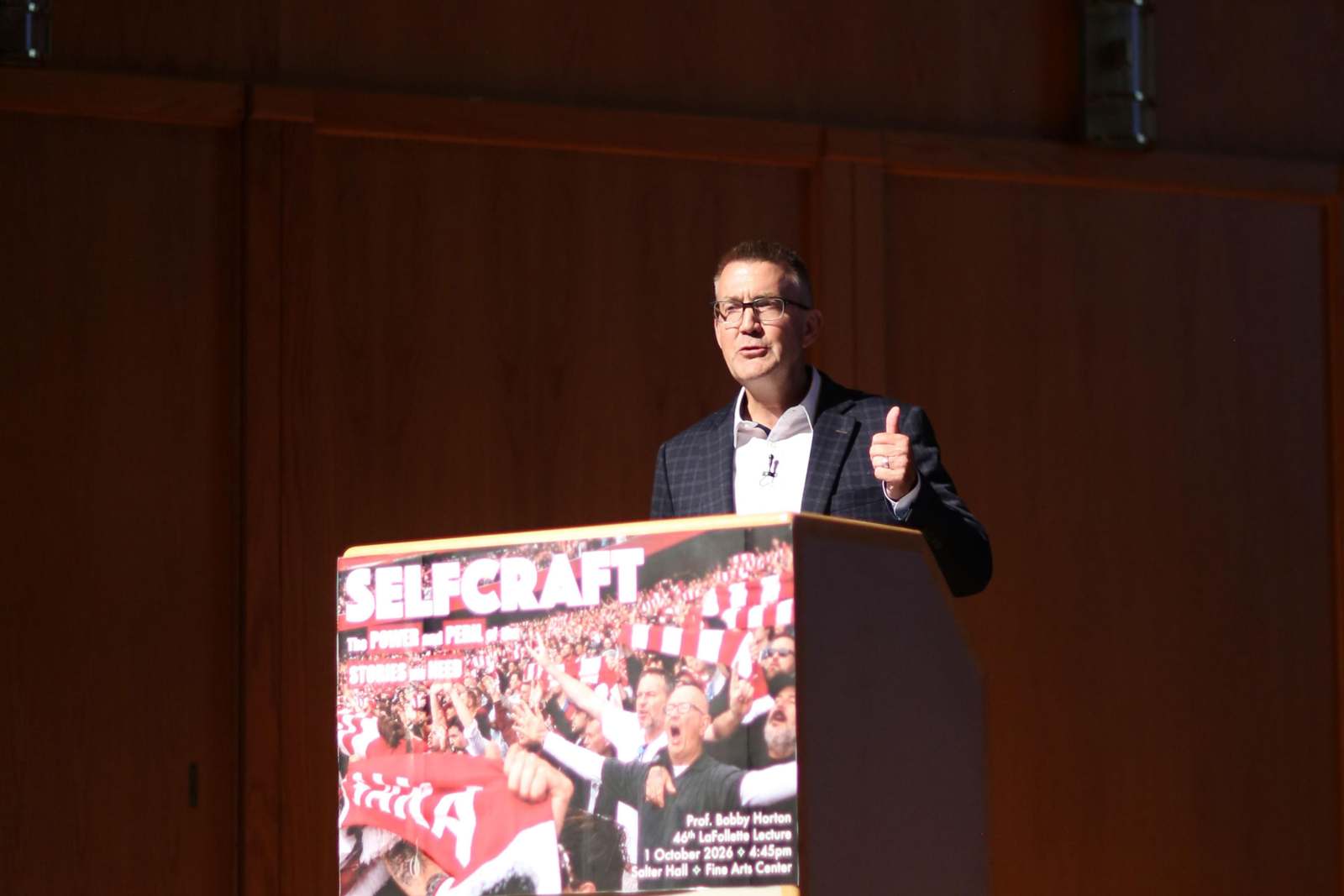
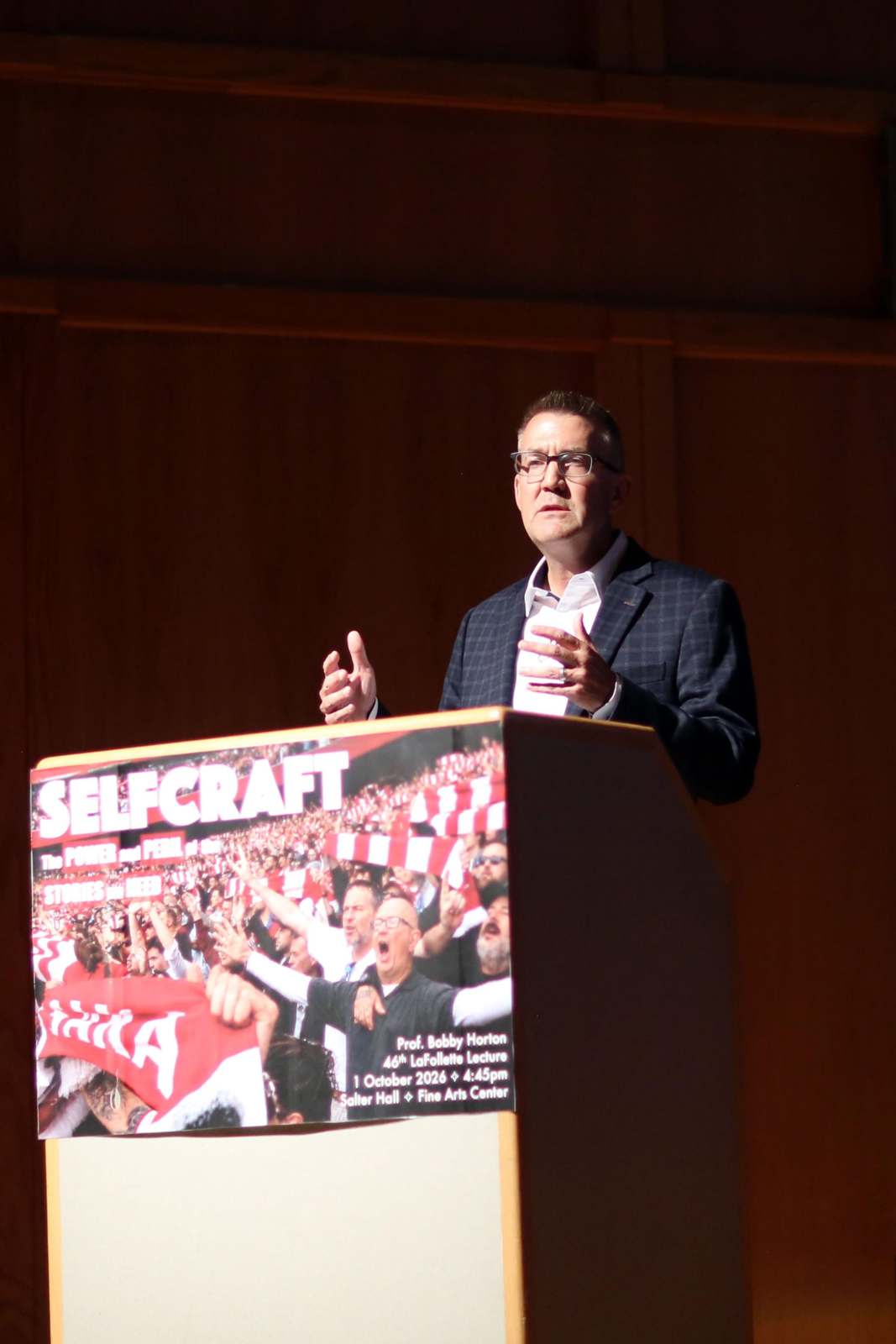
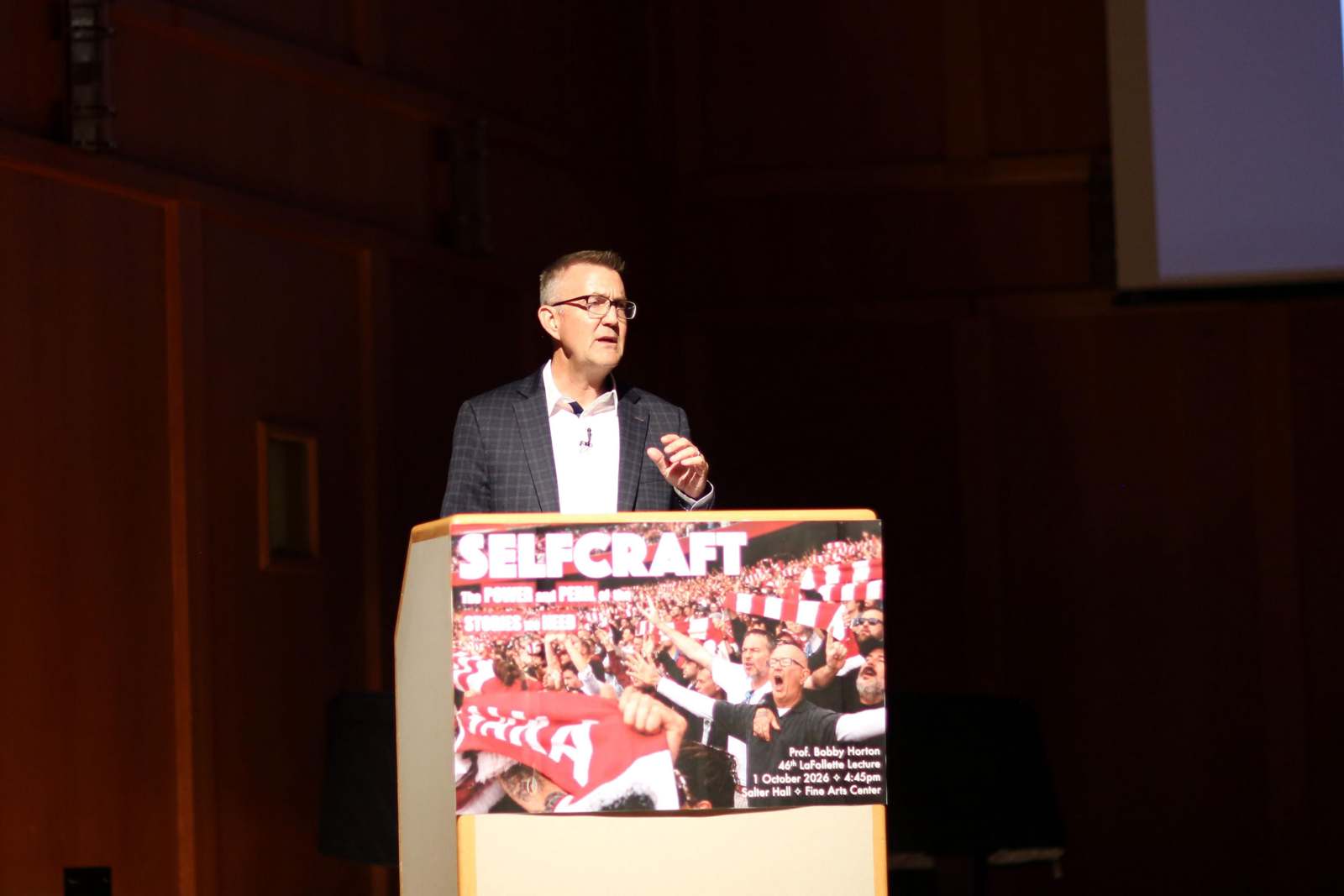
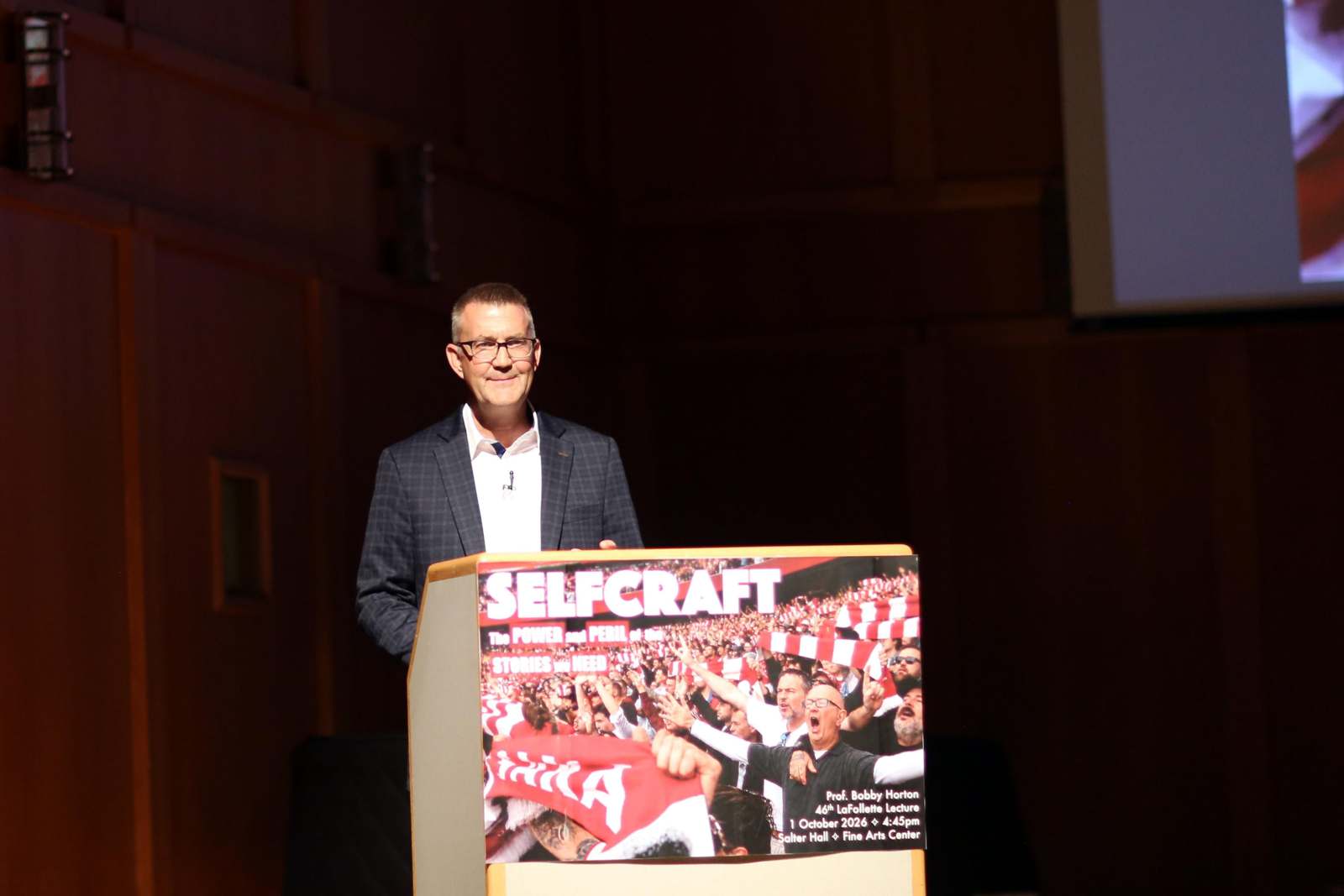
Bobby Horton, professor of psychology and Klingaman chair for the first year experience, delivered "Selfcraft: The Power and Peril of the Stories We Need,"
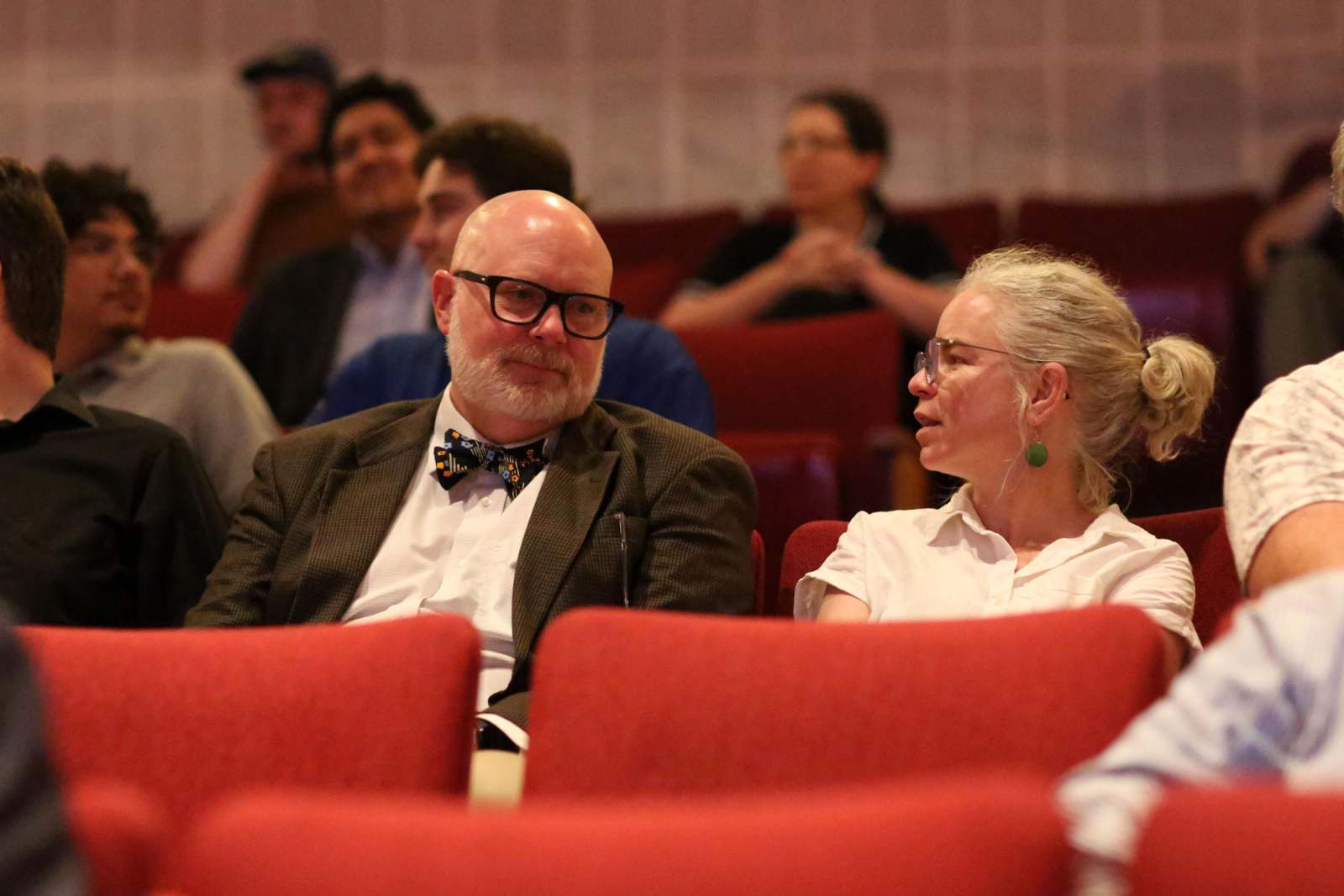
Amanda Ingram, professor of biology (right) chats with Daniel Rogers, professor of Spanish.
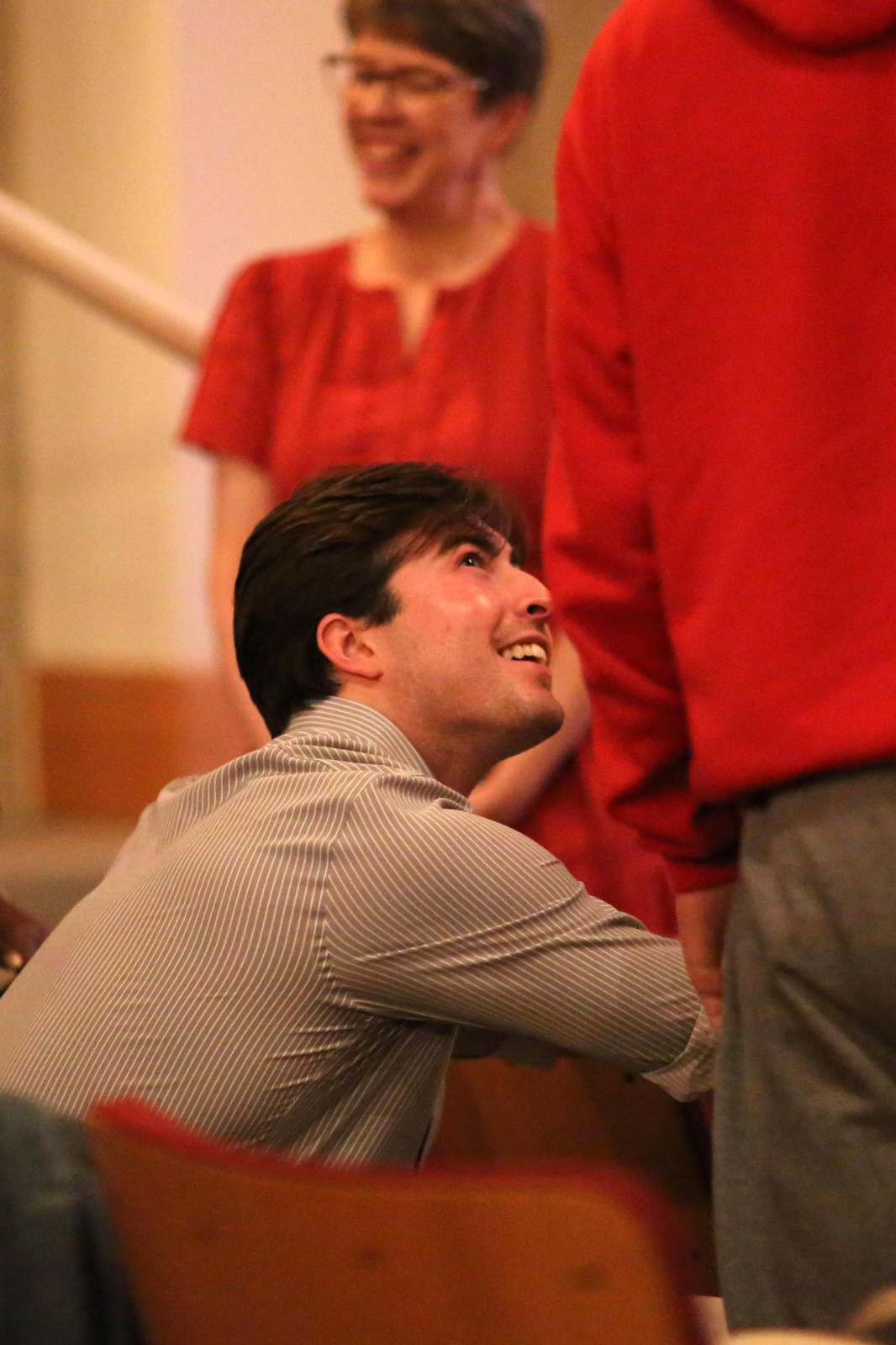
Horton's oldest child, Marshall, enjoys some pre-lecture conversation.
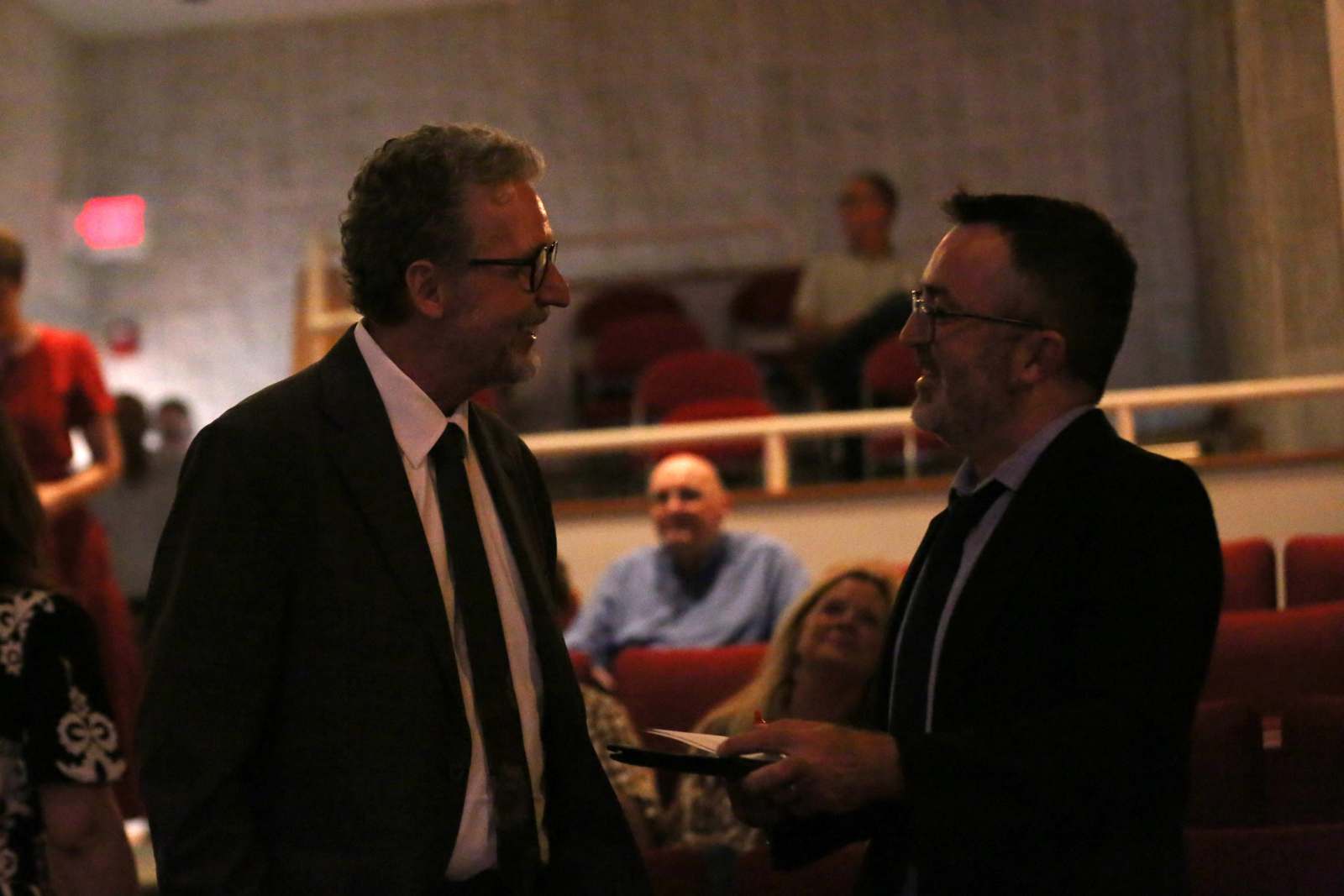
Michael Abbott (left) talks with Jeremy Hartnett.
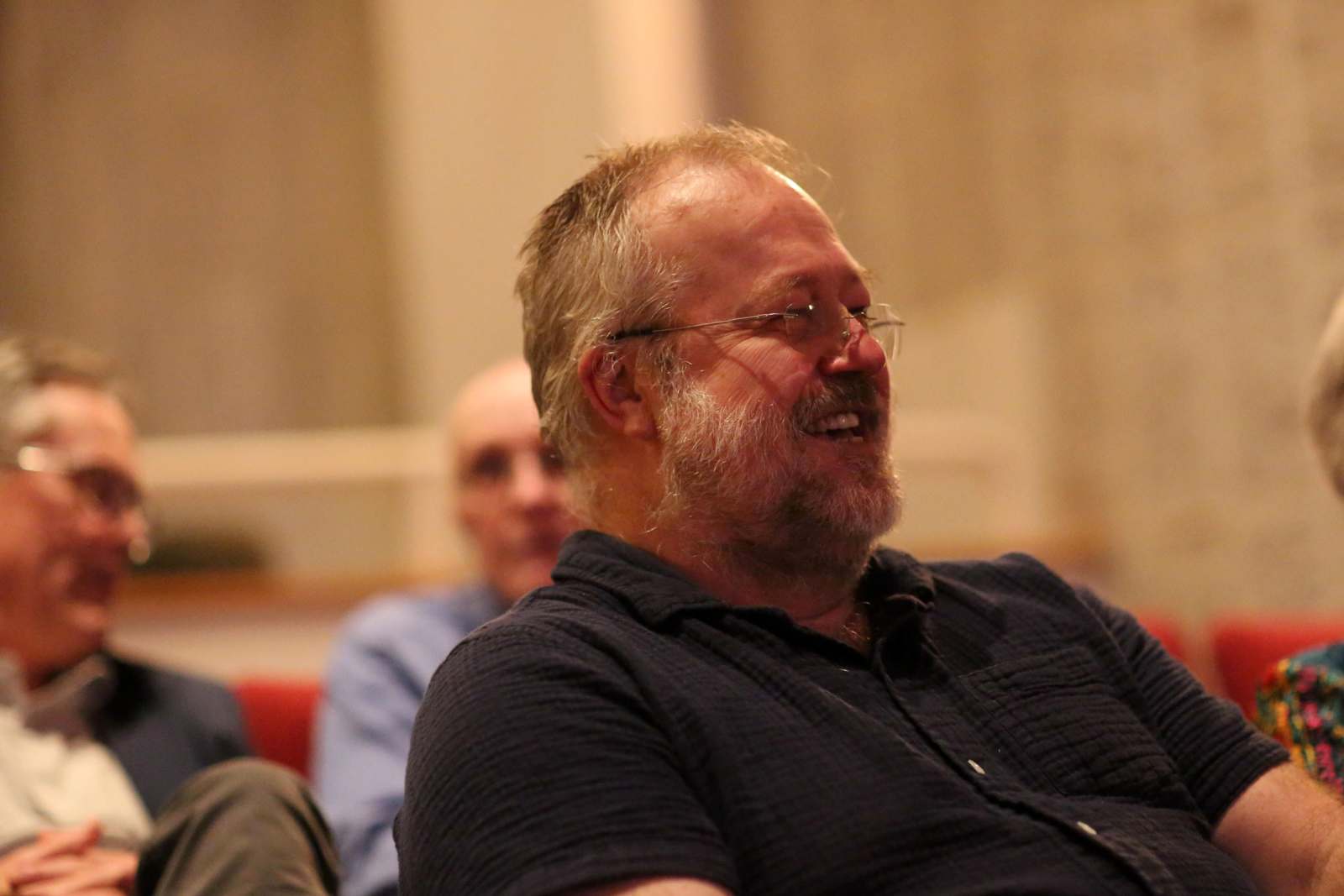
Peter Mikek, professor of economics, enjoys a light moment.
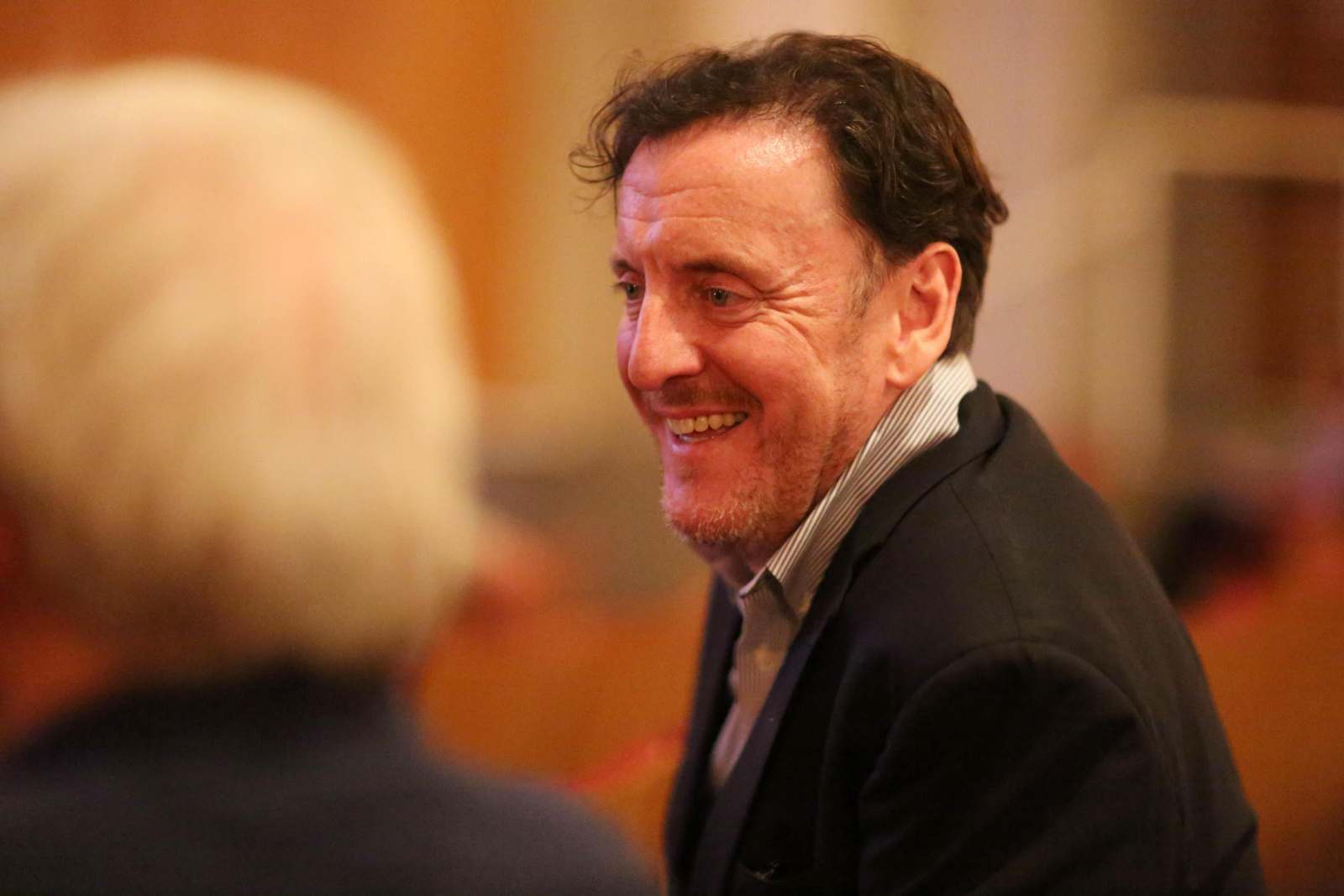
Jim Cherry, associate professor of theater, talks with colleagues.
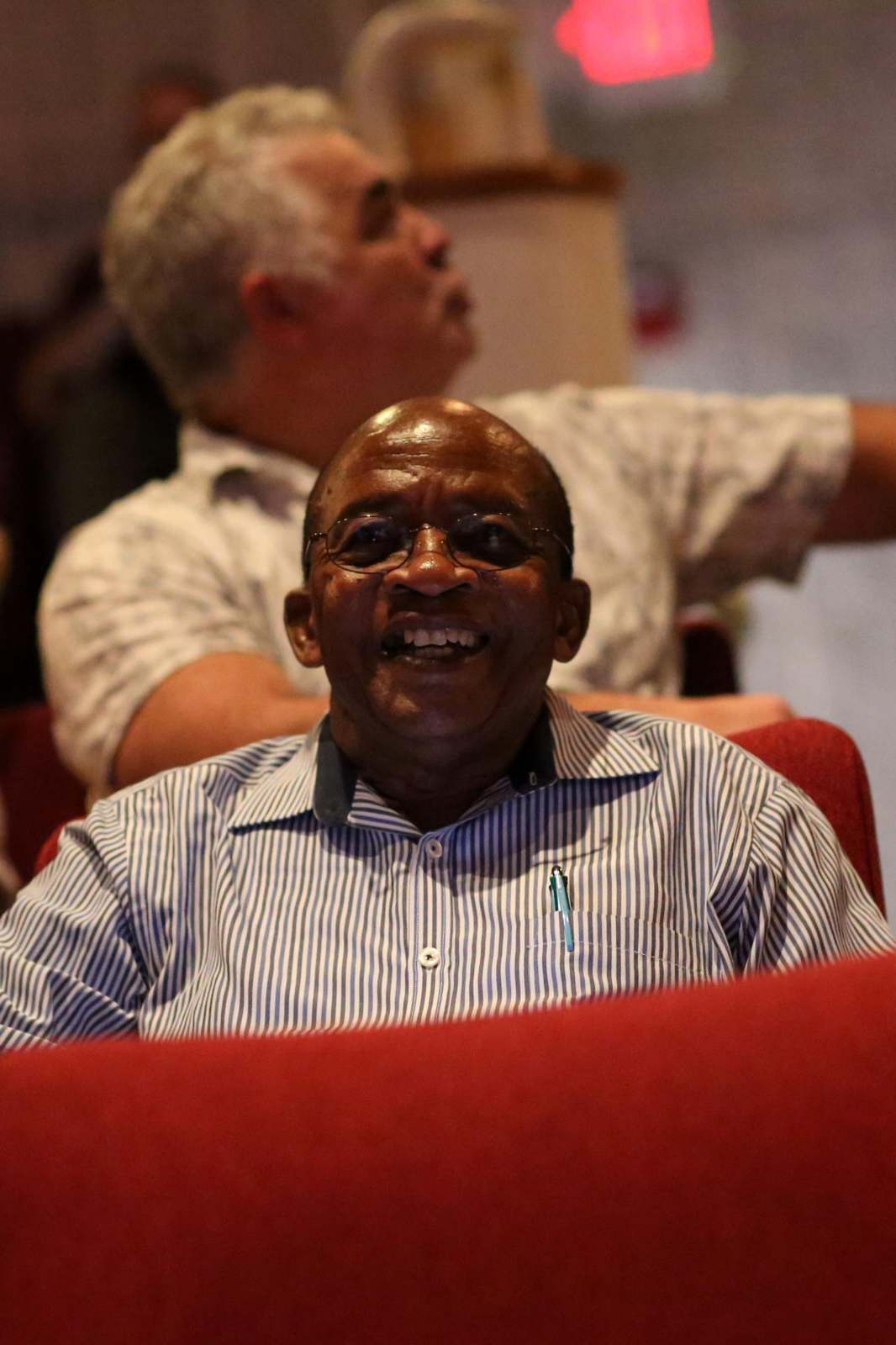
James Makubuya, emeritus professor of music, is all smiles. Makubuya delivered the LaFollette Lecture in 2019.

Abbott reviews his text before the program begins.
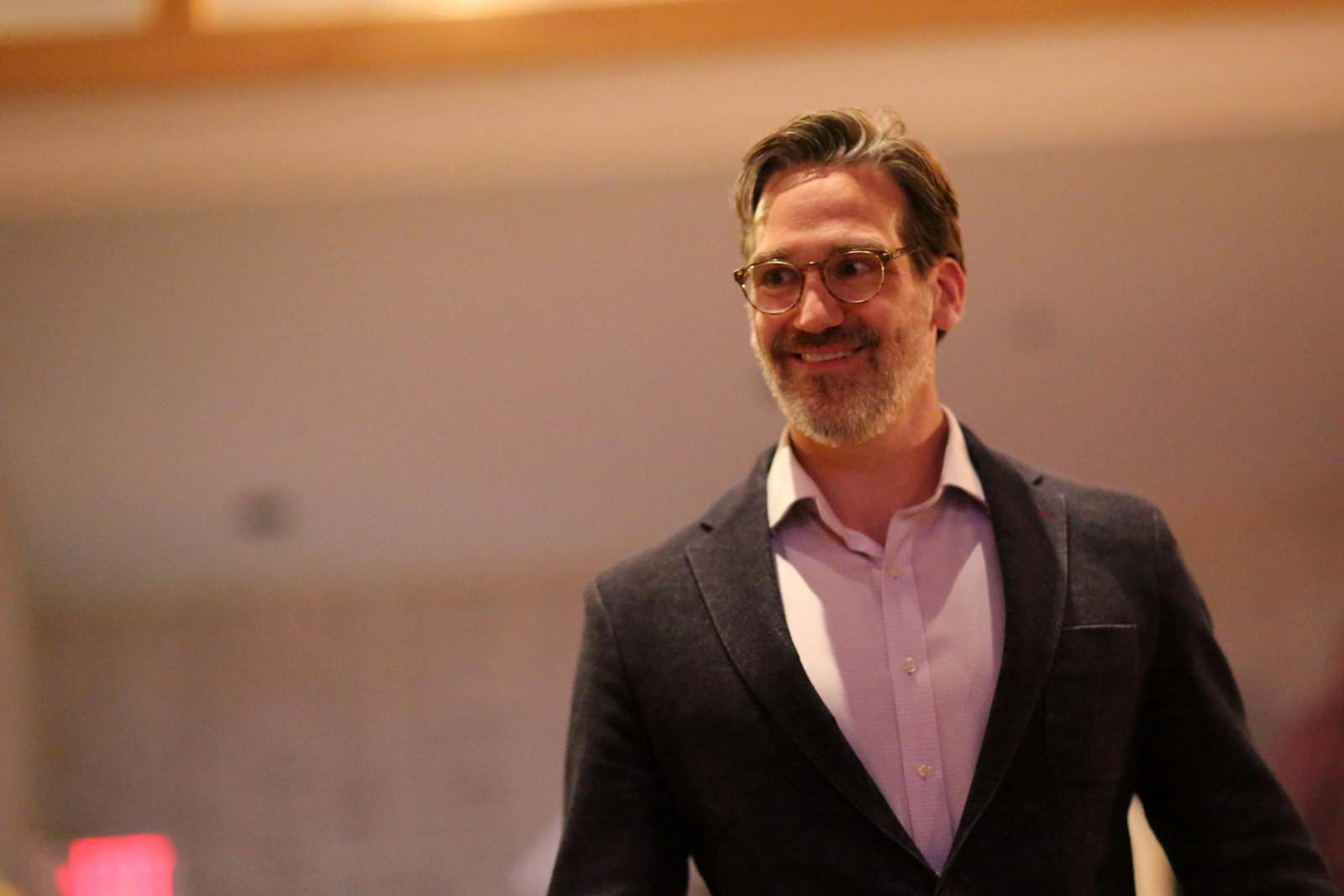
Matthew Carlson, associate professor of philosophy, cheerfully greets a colleague.
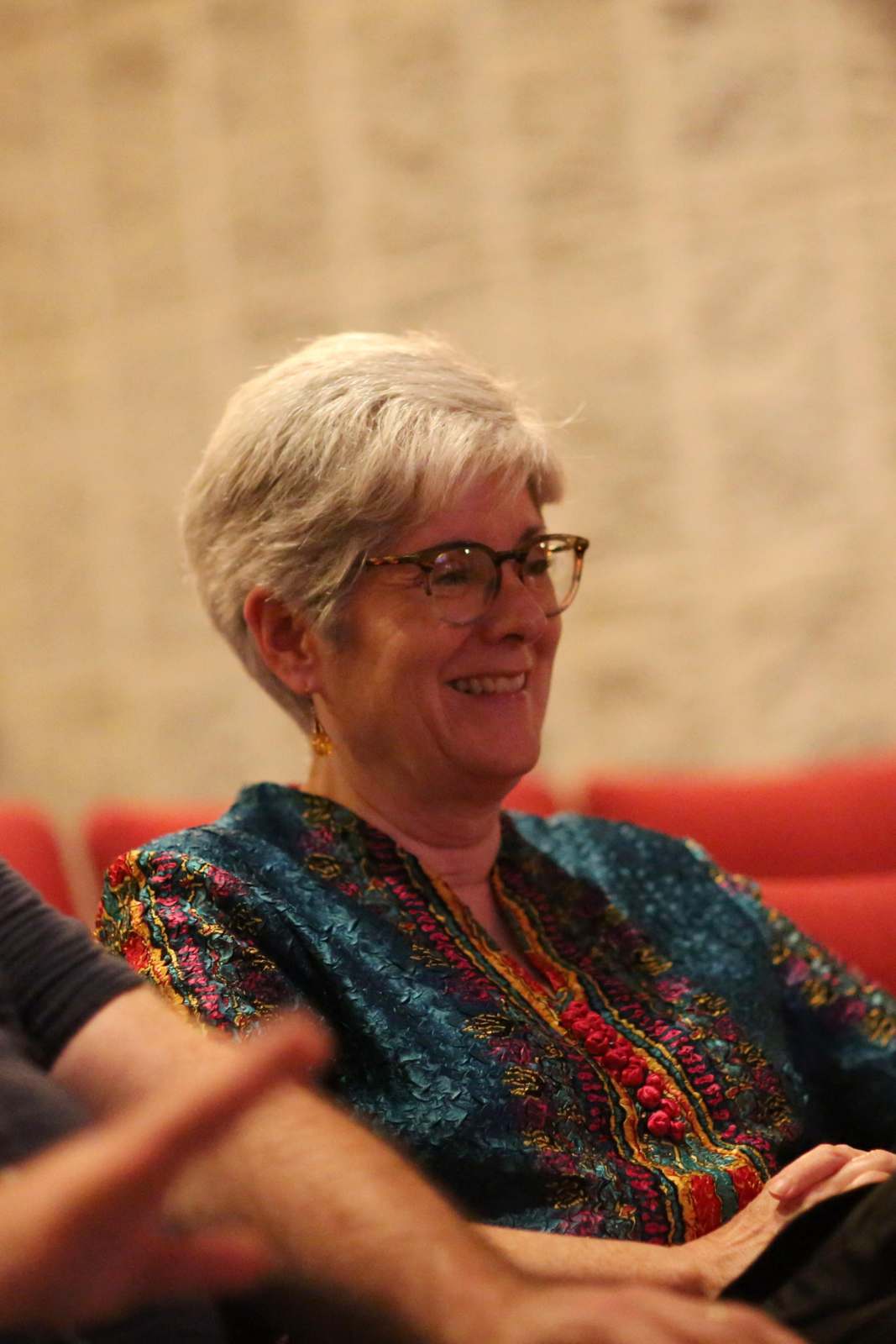
Jane Hardy, associate professor of Spanish, engages with a colleague.
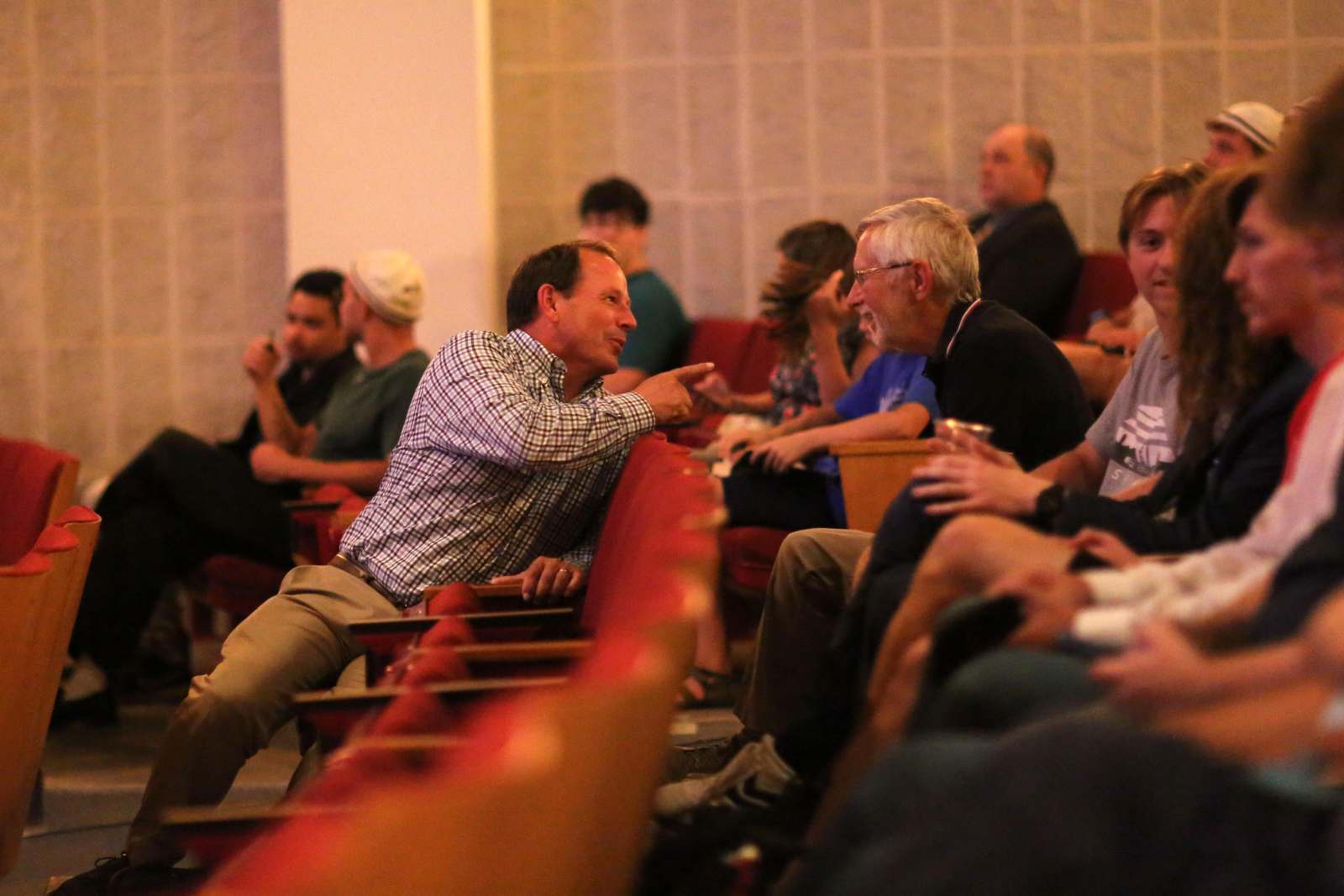
President Scott Feller (left) makes a point to David Hadley, emeritus professor of political science, prior ot the lecture.
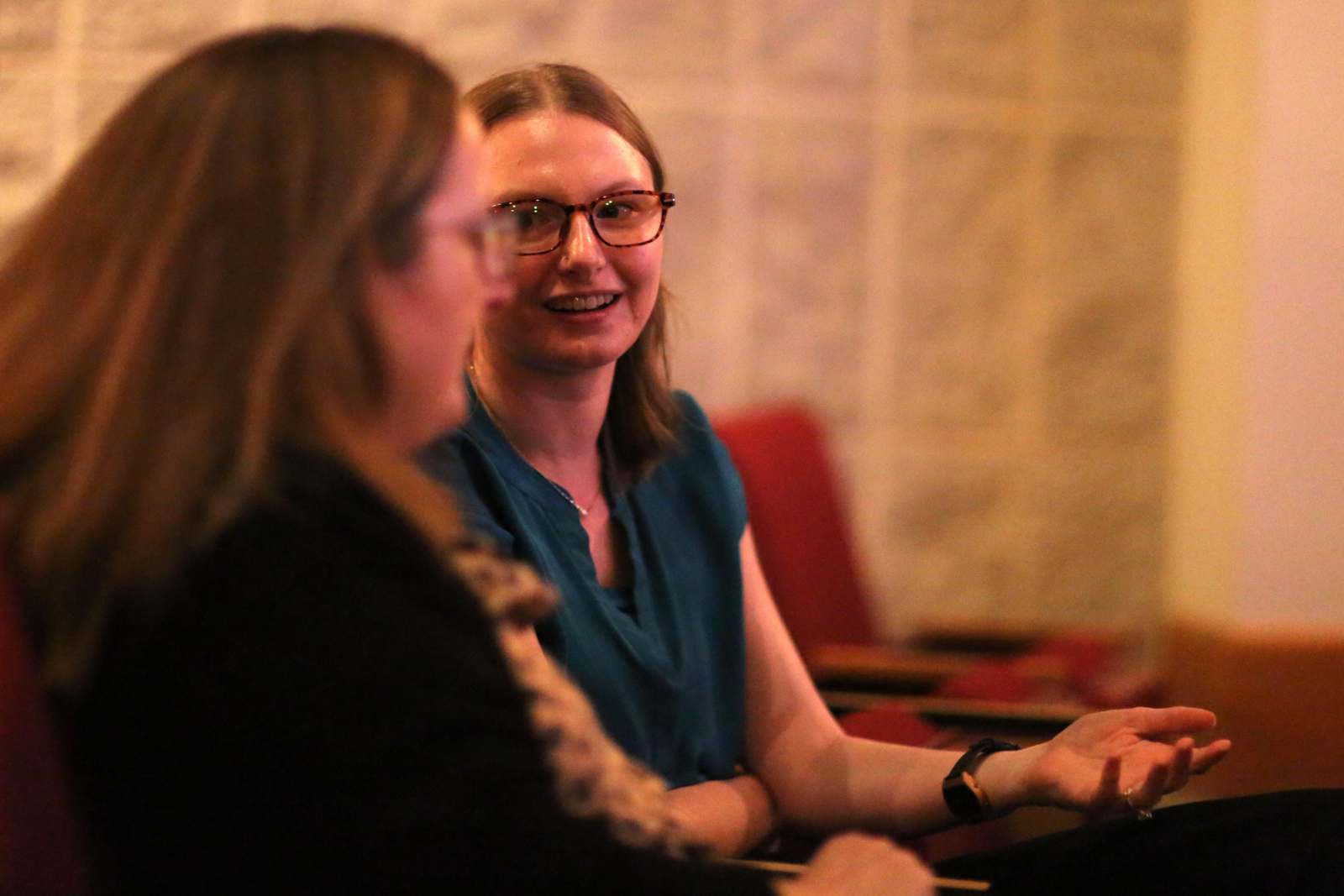
Claire Fouchereaux, (right) postdoctoral fellow and visiting assistant professor of French, enjoys a light moment with colleague Karen Quandt, associate professor of French.
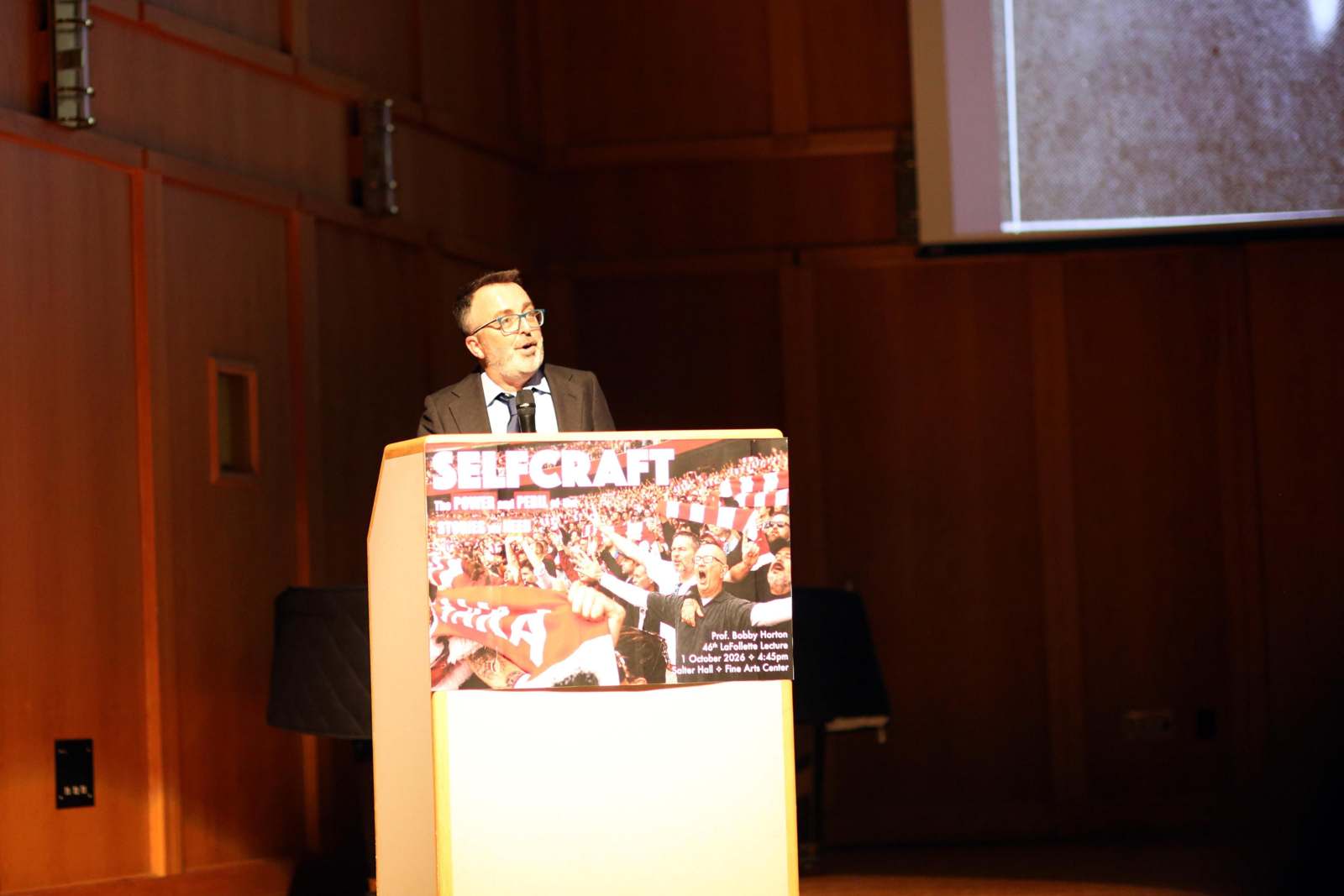
Jeremy Hartnett, professor of Classics and Charles D. and Elizabeth S. LaFollette Distinguished Professor in the Humanities, opened the festivities.
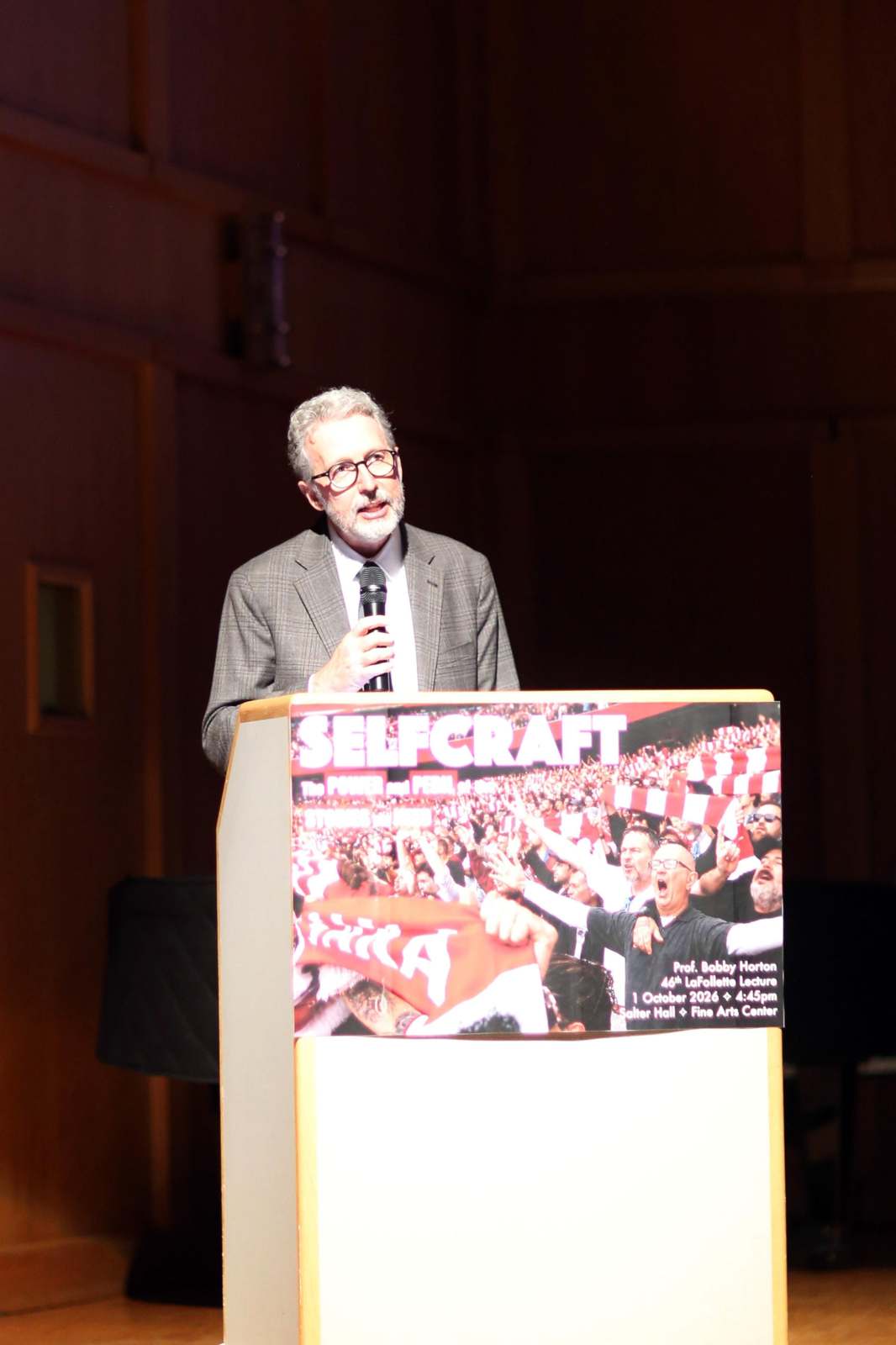
According to LaFollette tradition, the previous year's speaker introdunces this year's lecturer. Michael Abbott '85, emeritus professor of theater, introduced Bobby Horton.
He started by saying, "Let me begin with an observation. If you set out to design the most Wabash man imaginable, you'd end up with someone very like Bobby Horton. Tall. Athletic. A little homespun. A scholarship soccer player at the University of Richmond, and a National Merit Scholar, though you would have to drag those facts out of him..."
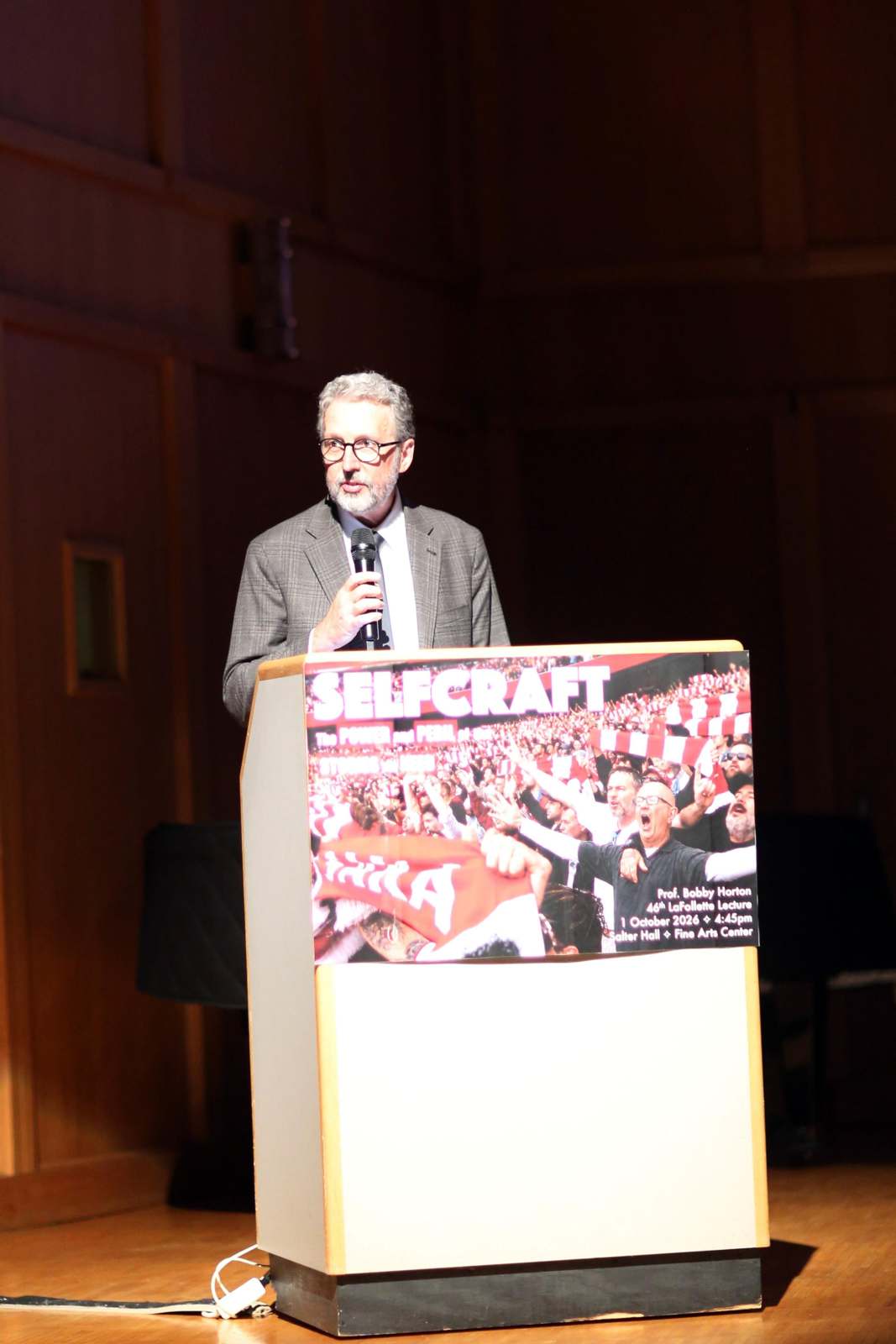
"Bobby loves tradition," Abbott continued. "He loves Chapel Sing. He loves the Notre Dame fight song. When his graduate advisor at North Carolina saw a job posting from a small men's college in Indiana, he handed it to him and said, more or less, "I think you might really like this." He was right. Though Bobby will cheerfully tell you he was the fourth candidate brought to campus for that job. As he put it to me, it was "me or nobody." Twenty-five years later, I think we can agree they chose wisely..."
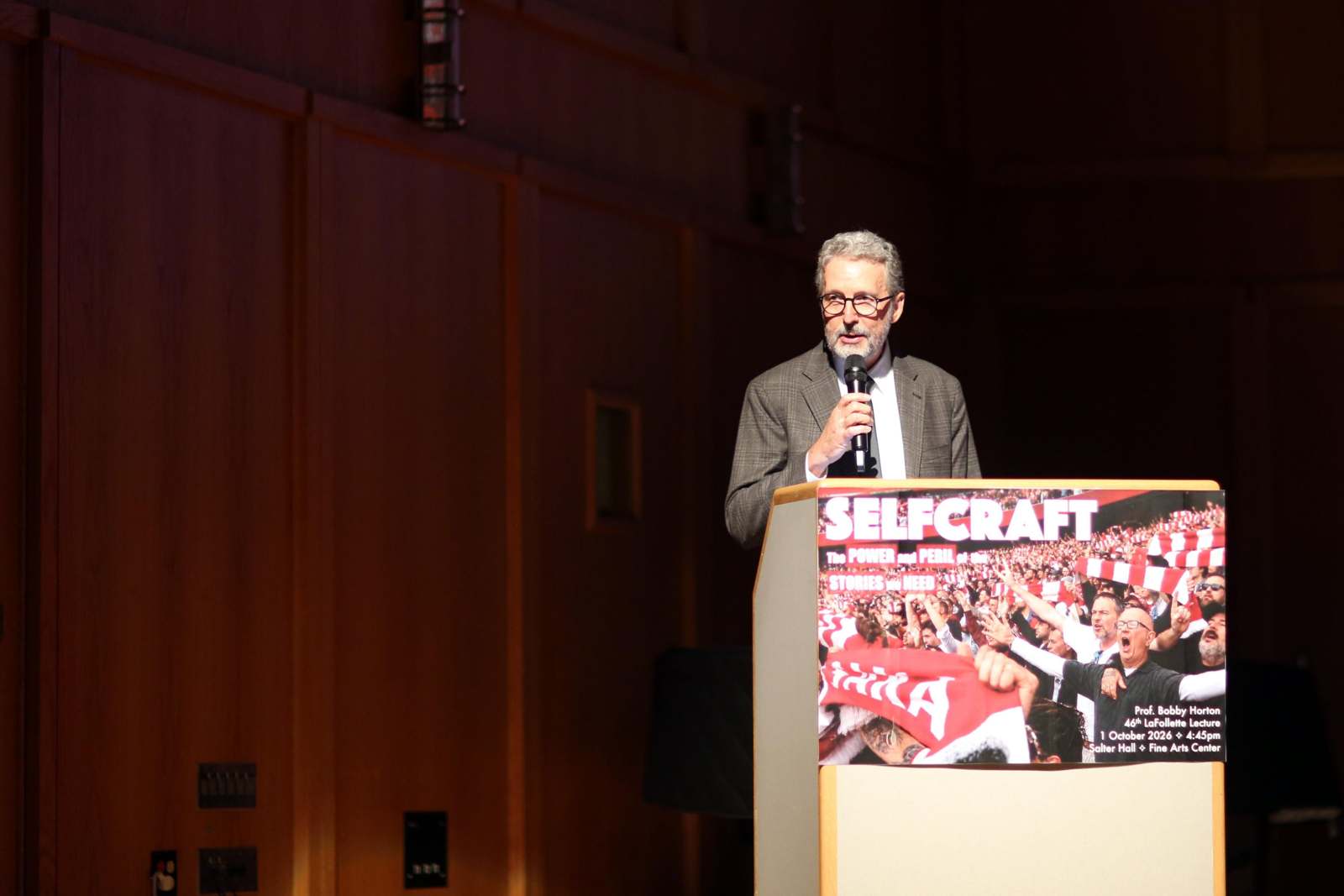
"Bobby holds a doctorate in social psychology from North Carolina, and his research ranges across attraction, the self-concept, and, most memorably, narcissism: where it comes from, how parenting shapes it, whether social media feeds it," he said. "I find it deeply satisfying that our leading expert on narcissism is a man constitutionally incapable of bragging. Not even humble-bragging. When people in town ask what he does, he never says, 'I'm a professor.' He says, 'I'm a teacher.'
"When I asked Bobby where his temperament comes from, he pointed straight to his mother. She was so relentlessly optimistic that the family once marked an occasion by all wearing rose-colored glasses. She had been a homecoming queen, and she told Bobby the reason was that she said hello to everyone, not just the popular kids. If you see a kid sitting by himself, she taught him, you go find out why..."
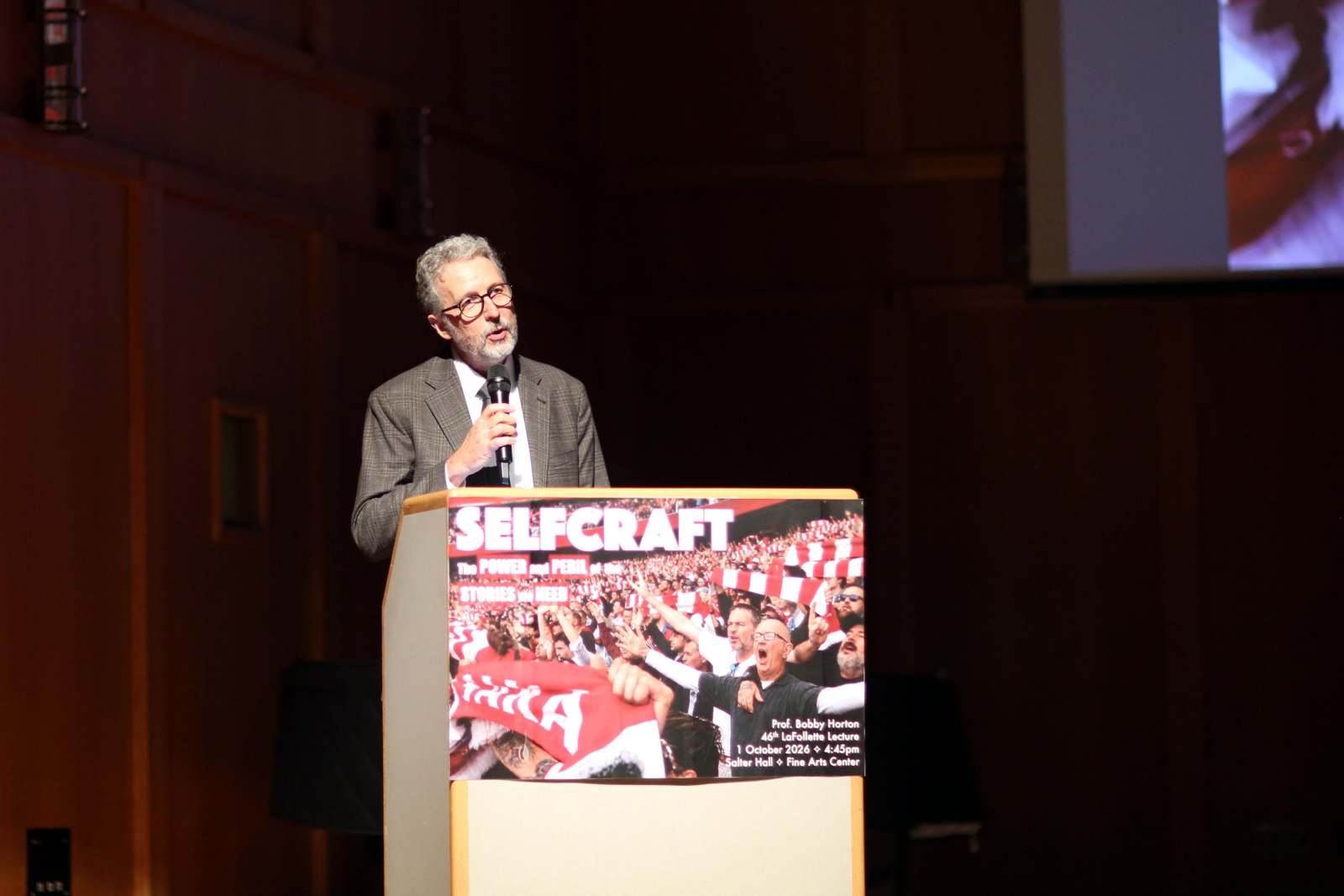
"Here is the beautiful irony of Bobby's career," Abbott continued. "The man who seemed built for Wabash has spent much of his time here making Wabash a place for students who don't see themselves fitting at all. He directs WLAIP, our summer program for incoming students, many of them the first in their families to attend college. He holds the Klingamann Chair for the First-Year Experience, co-chairs our retention work, has more advisees than anyone, and has made more four-a.m. airport runs for students without a ride than anyone can count. When his own son left for college, he told me, he suddenly imagined what it must feel like for a family to send their child thousands of miles away, to people they've never met, in a place where their language isn't spoken. That thought has never left him."
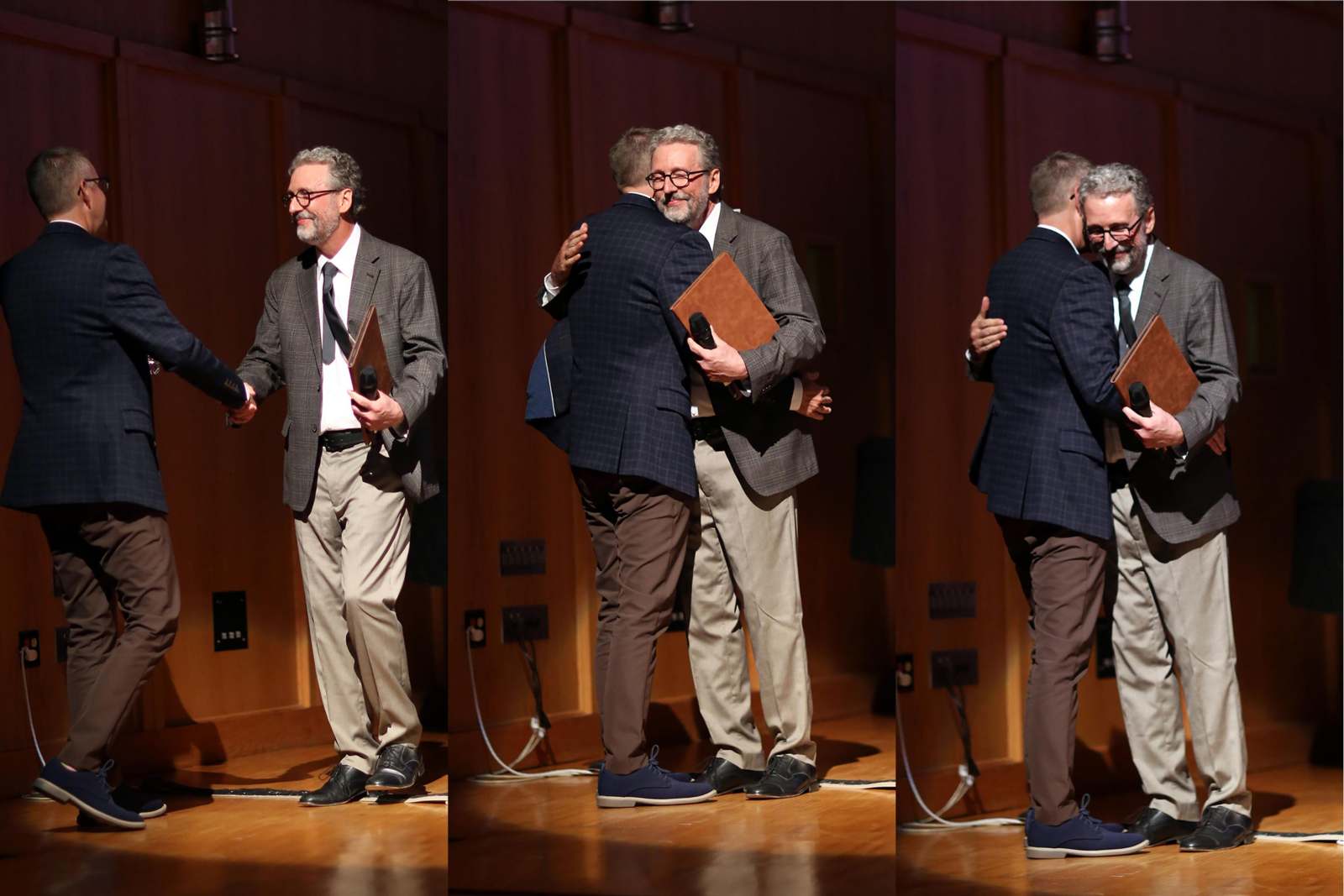
"Just yesterday, after I thought I'd finished writing this, a former colleague pulled me aside to say that when it matters most, Bobby is there. Bobby is the one who listens. They just wanted me to know."
He concluded, "His mother told him that when you see a kid sitting alone, you go find out why. At Wabash, Bobby Horton has turned that into a job description, a summer program, a curriculum, and a great many students who are no longer sitting alone."
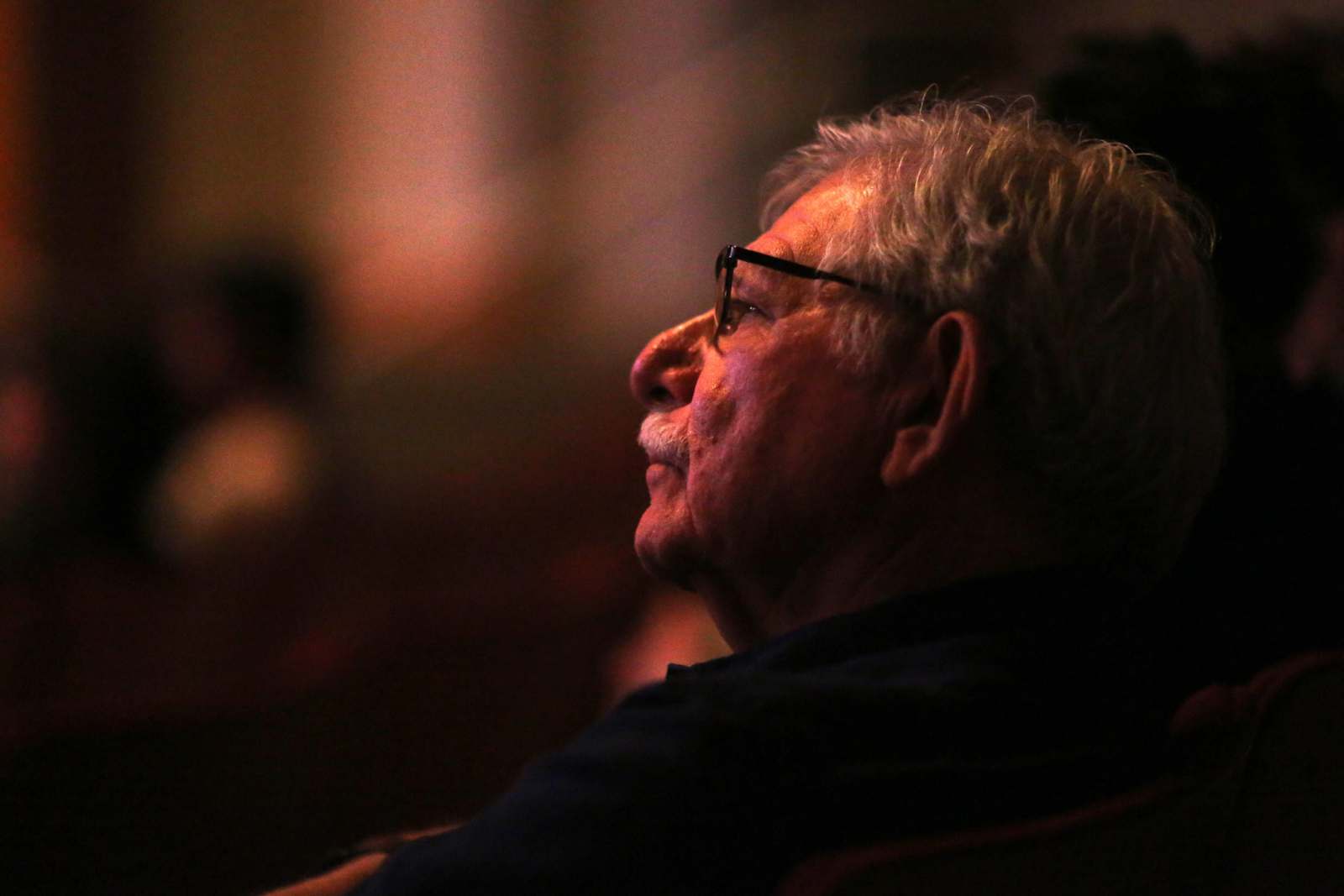
Warren Rosenberg, emeritus professor of English, listens to Abbott's introduction.
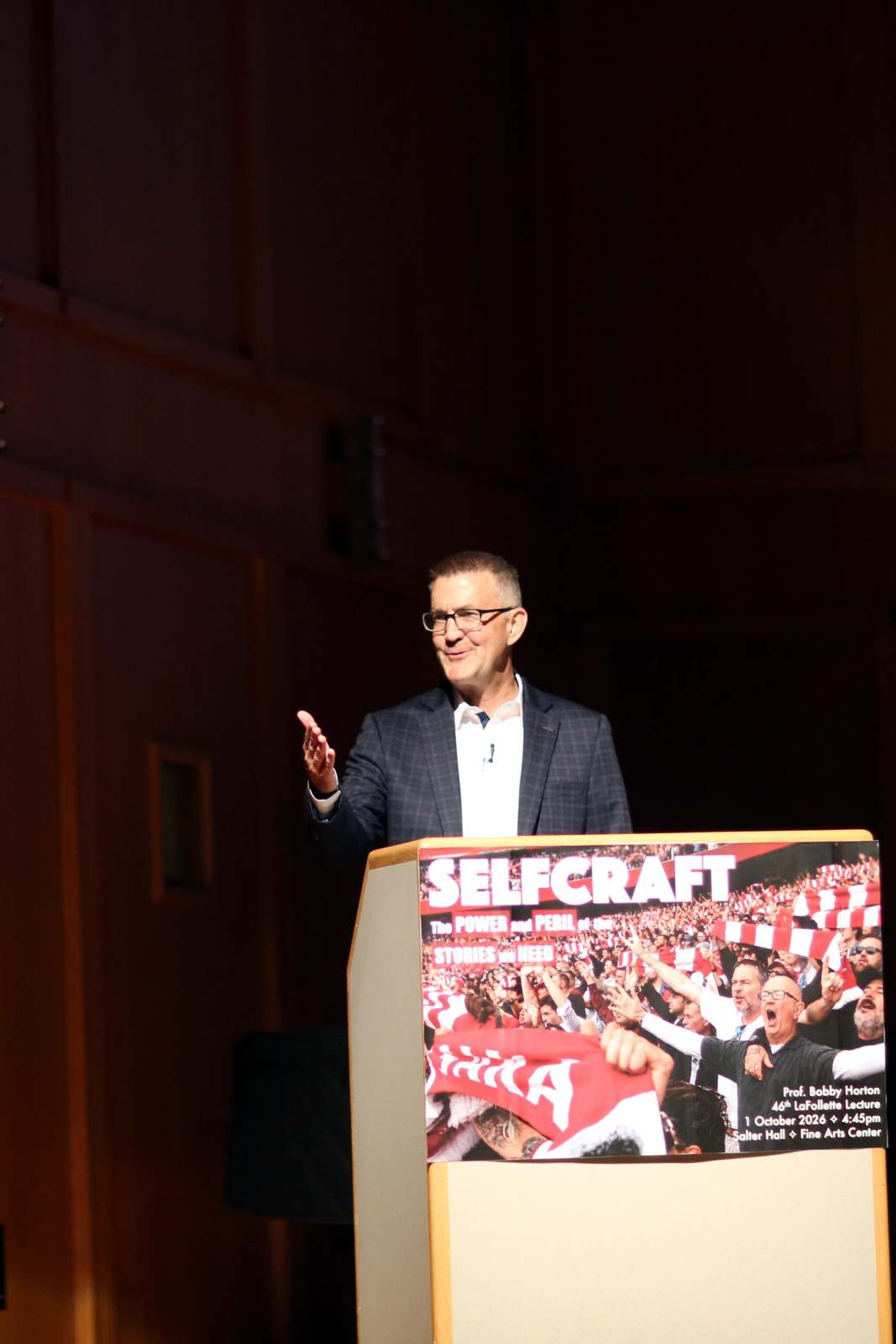
Horton began, "I want to start with a story about this woman, who some of you may know, Dr. Jill Bolte Taylor: On December, 10, 1996. Dr. Taylor’s life was altered forever by an acute experience that reshaped her thinking about herself, her body, and the world around her. In describing her perceptions on that day, she said, 'I felt enfolded by a blanket of tranquil euphoria.....My consciousness soared into an all knowingness, a being at one with the universe.
.....I had stepped beyond my perception of myself as an individual....and my consciousness ventured into the peaceful bliss of my divine right mind....'”
"Many years later," Horton added, "Dr. Taylor would spend significant time and effort to recreate, in different ways, the feelings that she had on that day and would even write a book in which she encouraged others to do the same. Humanistic psychologist Abraham Maslow would have called what Dr. Taylor had a “peak experience”....She called it a moment of insight. Her doctors called it a hemorrhagic stroke.
At the time that she was experiencing near limitless connection to the universe around her and a blurring of the boundaries between herself and others, blood was seeping through the left hemisphere of her brain.It would take 8 years and countless hours of therapy to restore fully her physical and mental abilities. She continues to identify that day as a positive, transformative moment in her life. My lecture this afternoon is not about Dr. Taylor, per se, or about hemorrhagic stroke, but it is about a unique aspect of human consciousness that for all of its benefits, sometimes impedes us from the kind of connectedness and inspiration that she felt that day. Psychologists call it 'The Self.'”
"In psychological terms," Horton explained, "'the self' refers to the thoughts people have about who we are - what we’re good at, what we’re bad at, where we’ve been and where we’re going, who our people are - along with the attentional, emotional, and importantly, motivational forces that help us craft, curate, and revise that self-story. what I want to do tonight is to talk about a few of the more interesting things that psychologists like me have learned about the self, while I also step squarely out of my intellectual lane and into the world of the humanities, to discuss how the self may be reflected in topics there. As I hope you’ll see, the story of the self is, certainly, one of psychology, of cognition, the brain, and desire, but it’s also one of culture, religion, and the arts. And it is, I think, a story about balancing aspects of our humanness so that we can release the best of our humanity."
Horton said, "So I study 'the self,' which is a sub-topic within social cognition, which is a subfield of social psychology, which is a type of psychological science, and all of that means a few important things. To start, I can't diagnose you with anything, and no offense, but I'm not all that interested in interpreting your dreams. What I am interested in is using scientific methods to test and develop theories that lie at the edge of our understanding of the nature and causes of human thought and behavior."
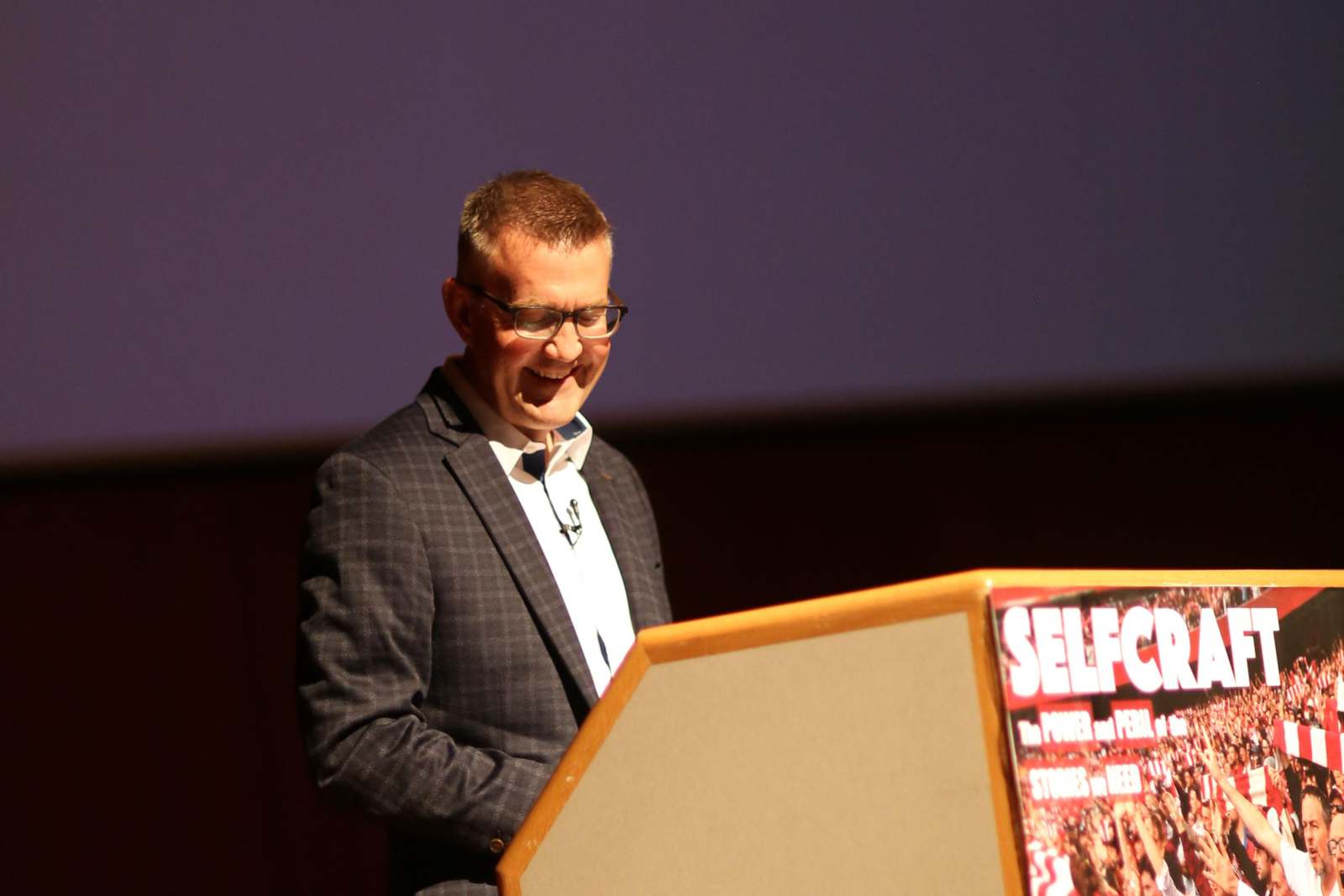
"And it also means that I am trained to have a strangely comfortable relationship with being wrong," he said. "Now, it is pretty commonly accepted that 'I am wrong' is among the most difficult things for people to say, along with 'I need help,' 'I am sorry,' and if you like internet humor, Worcesteshire sauce, but for psychological scientists, admitting we’re wrong is just part of the job, maybe not our favorite part, but an important part of what it means to be a good scientist."
"Psychological scientists are constantly reminded that the conclusions we draw from our work are limited, narrow, and temporary, and in fact, wrong, in an absolute sense," he said. "That work, after all, involves observing narrow slices of behavior and using such observations to generalize to broad populations and constructs. A process that, in isolation, probably seems doomed to uselessness, given the diversity of people and their lived experiences, but luckily, science never happens in isolation.
"Consider as an example, this paper that a couple of Wabash students and I published in 2006 about the link between parenting and child narcissism. It is a perfectly reasonable effort, one that is among my most cited papers, and that observed that reports of controlling, manipulative parenting were linked to higher levels of narcissism. But the work was limited in important ways: it included only a couple of hundred participants in each study, from just a couple of areas of the country, included only one self-report measure of narcissism, and in one study, relied on participants’ memories of their parents’ behavior...each detail limiting the scope and implications of the work, assuring that it was, in fact, wrong: an incomplete look at what was 'true' about parenting and narcissism."
"The paper was also important, and is heavily cited, I think, not because it is any good, per se, but because it was early…an early foundation on which other researchers could build as the field matured and developed. And so they have, with projects like these sampling larger, more diverse groups, using different, more powerful, methods, and measuring new dimensions of narcissism and parenting, creating a web of projects whose idiosyncratic strengths and weaknesses account for one another, filling in the gaps that others leave and moving together towards 'truth,' never to fully arrive, but revealing an ever more nuanced understanding of the topic, one that nearly always qualifies simplistic conclusions with the moderating questions of 'for whom,' 'at what dose,' and 'in what context.' This recent meta-analysis statistically combined 38 papers that focused on this same question, collectively sampled more than 6,000 families from multiple countries, and reached conclusions that were similar to but more complex than what we described by noting, for instance, that manipulative parenting is associated with narcissistic vulnerability, rather than grandiosity, and particularly in Western rather than Eastern countries. And of course, this paper won’t be the final word either…it will be supplanted by subsequent efforts that get the field closer to the truth, not by being right, but by being progressively less wrong."
"Overall," he continued, "this science stuff is a wonderfully communal enterprise, embedding individual efforts in a collective commitment to truth, but it is also a little bit like cognitive therapy whose goal is to sow doubt in one’s own perspective, asking scientists to entertain simultaneously the merits and weaknesses of our work and to hold beliefs and make arguments based on imperfect information and thus, levels of confidence. As difficult as this mindset can be, I find the intellectual honesty and flexibility that it requires quite liberating, freeing any particular project from the burden of being the definitive answer to any particular scientific question.
"But it is also, I think, part of why I bristle, a bit, in the face of language that suggests that a particular answer is 'right,' why I was rendered speechless when a former Biology colleague of ours, whom many of you know, used to greet me with a cheery 'hey Horton, whadda ya know?' rather than a more conventional welcome, and why I tell my students that I die a little inside every time they use the term 'prove,' imploring them to use less dogmatic phrases like 'is consistent with,' or even better, 'suggests.'"
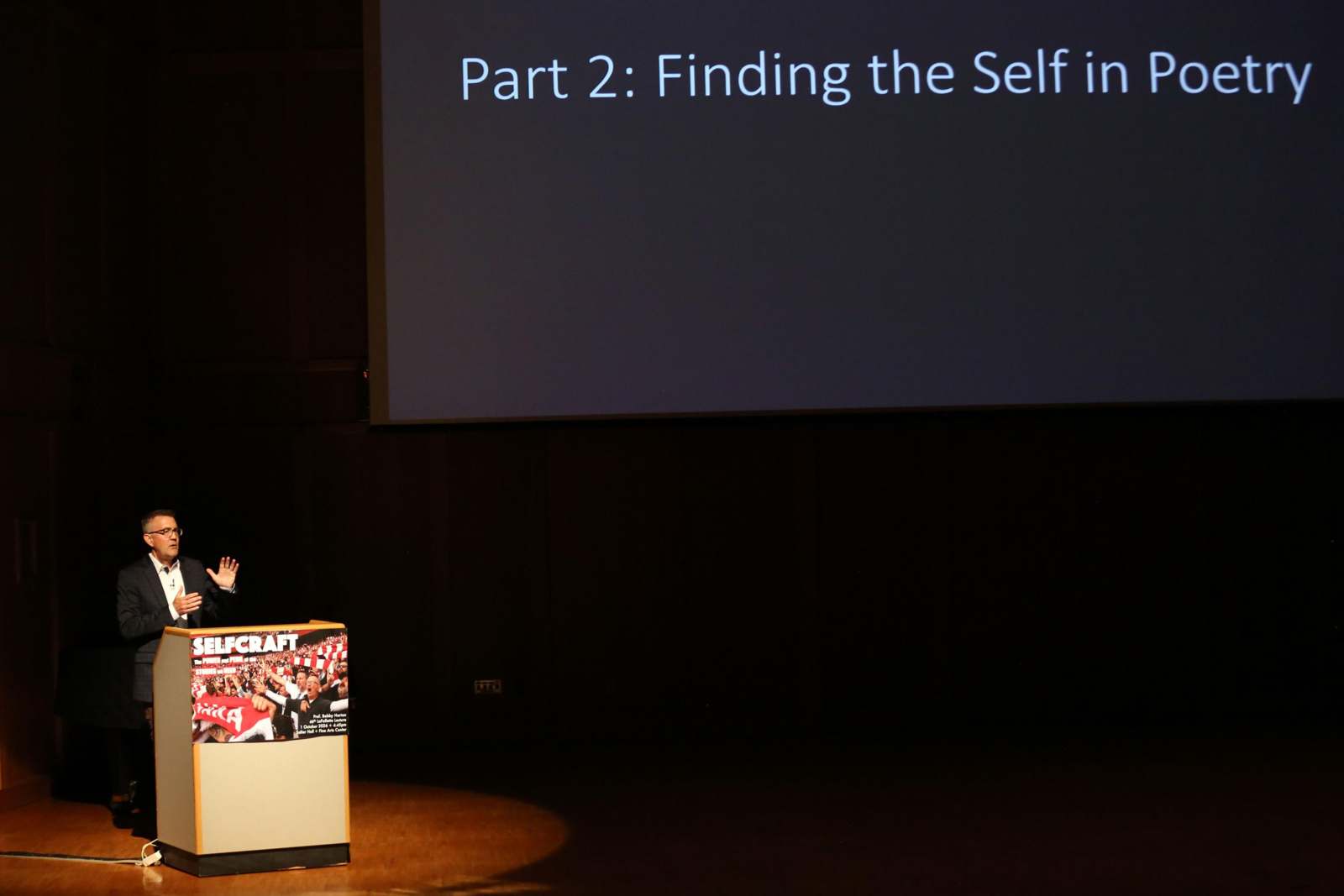
"Now, this probably seems like quite a digression, coming a bit out of nowhere, but I have always loved poetry, gaining a lot of wisdom and comfort from the likes of Emily Dickinson, Rudyard Kipling, Walt Whitman, among others, so much so that I actually went to college hoping to be an English professor, until the siren call of psychology’s probabilistic thinking became just too much to resist.
He added, "And it turns out that one of Robert Frost’s poems, the Road Not Taken, provides me an entry point into what I think is some pretty interesting work on the self and self-enhancement. And so, my goal here is to unpack the poem with you, from a self-psychology lens."
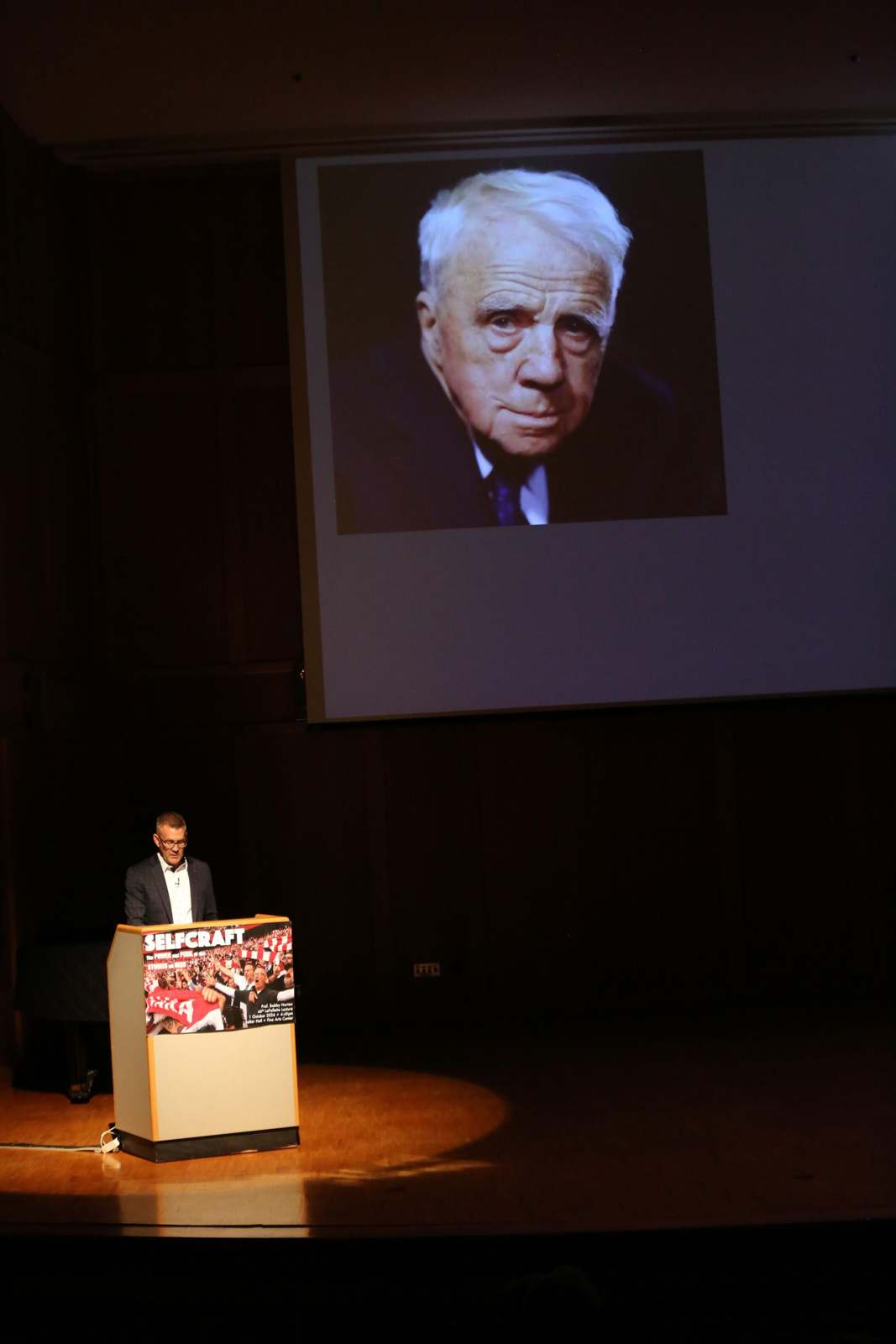
"Robert Frost was born in California, spent much of his life in New England, and rose, somewhat slowly, to being among the country’s most famous poets. He served as Poet Laureate in the 1950s, performed a reading at JFK’s inauguration, and even accompanied U.S. officials to the Soviet Union in hopes of promoting peaceful relations with Nikita Krushchev.
"He published 'The Road Not Taken' in 1915, reportedly, as a good-natured jab at a friend and editor he spent time with while living in England. According to some accounts, it is the most popular U.S. poem of all time, topping the Favorite Poem Project in 1998, and weighing in as possibly the most Google-searched poem in the world."
"On the face of it," Horton continued, "the context of choosing the road 'less traveled' in a way that made 'all the difference' seems like a pretty straightforward celebration of the independence and non-conformity that transcendentalists like Emerson celebrated and that are a critical part of the U.S. origin story.
And it is that interpretation that has made the poem a favorite of graduation speeches, best-selling books, songs by artists of various genres, marketing campaigns for products as diverse as Ford motorcars and a video game about the zombie apocalypse, and the Oscar-nominated movie Dead Poet Society, where the poem is explicitly marked as one about the ‘dangers of conformity.’"
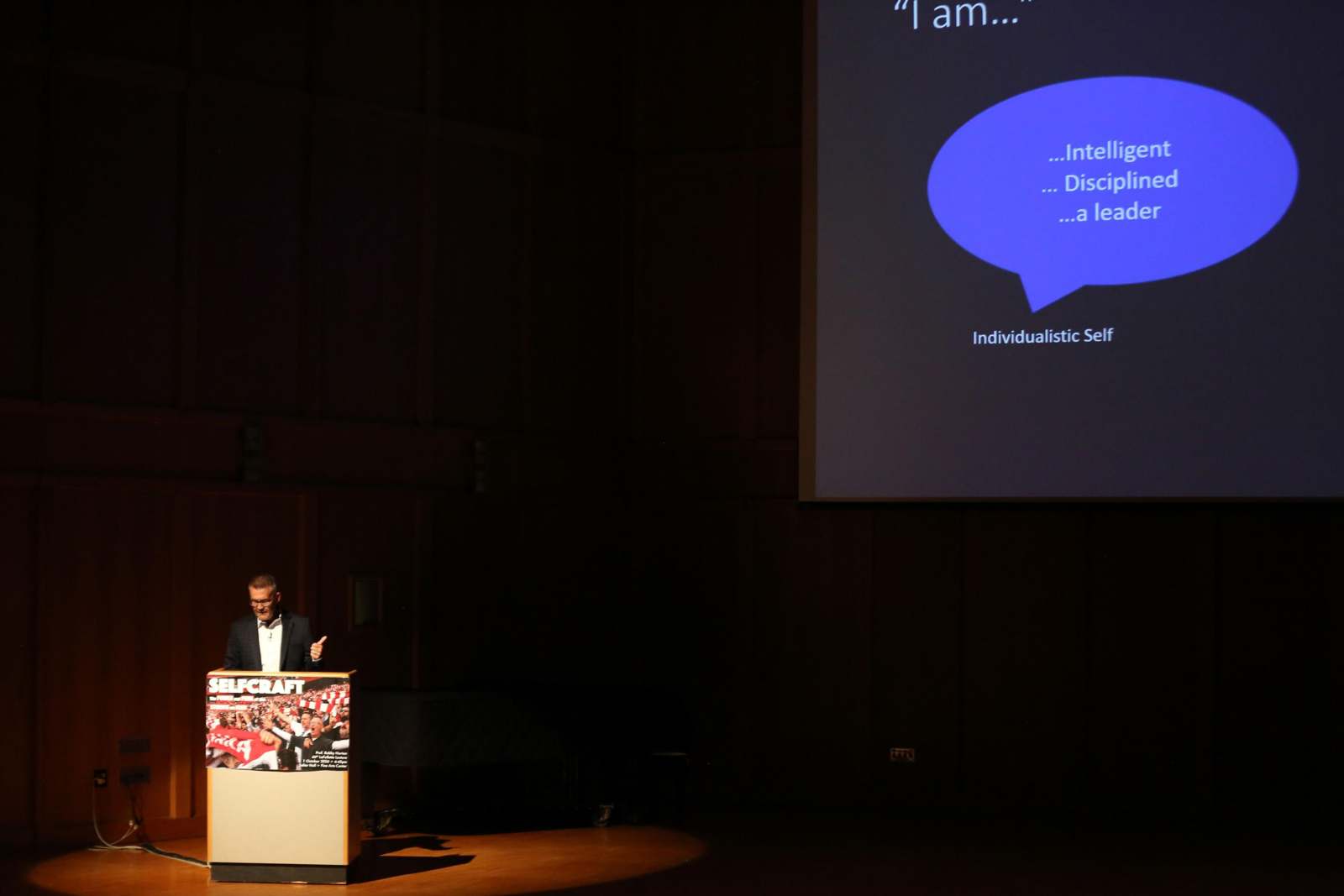
"And it is also clear that this interpretation is consistent with the psychology of the nation.," he said "The U.S. is, in fact, the most individualistic place on the planet, with a focus on the protection and promotion of individual rights dominating culture like no other place in the world. I trust that you don’t need a lot of convincing of this, but just in case, here are a couple of examples. Cross-cultural psychologists observe that U.S. parents, particularly those of European descent, are more likely to encourage in their children self-reliance, rather than cooperativeness, following your own standards, rather than fitting in with others, and being independent-minded, rather than loyal, encouragements that are reversed in many East Asian and African countries, where connectedness and community prevail. In terms of behavior, U.S. adults are less likely to live with their aging parents, are more likely to live and ride to work alone, and generally, spend more of their day alone than do people in more collectivistic countries."
"As you might have noticed, as recent scholars have, the narrator admits early when discussing the two roads that '...the passing there had worn them really about the same' and 'both that morning equally lay in leaves no step had trodden black.' And so...when the narrator says, 'I took the one less traveled by,'...they are clearly telling an untruth...or at least one that is inconsistent with things they said before.
"Why, then, we might wonder, have so many people read this poem in ways that seem to ignore basic elements of the text? It is certainly possible that such uses reflect strategic, conscious neglect in the service of a particular agenda, but that’s sort of boring and doesn’t fit so well with our story of the self. And, there actually could be more to it than that. In this common misreading of Frost, I think we can find evidence of the self, of selfcraft, at work."
"The confirmation bias, defined there, is probably best known as related to the echo-chambers that people select for their news coverage, like FOX or MSNow, by which they receive information that confirms what they already think. But the bias is more potent than that…also coloring the way we interpret and remember the information we receive. In one of the first and most poignant demonstrations of this, researchers at Stanford asked participants who disagreed about the deterrent effects of capital punishment to read articles that included both strong and weak arguments on both sides of that debate. From a purely rational perspective, the arguments should have led these disagreeing groups, whose pre-study attitudes you see represented simplistically there, to become more similar in their beliefs. As you might guess though, that is not what happened. After reading the balanced articles, participants became more polarized, not less, at least partially because they remembered best the strong arguments for their own side and the weak arguments for the other. And they were also less critical of the weak arguments for their own position, effectively 'moving the goal posts' to make it easier for their perspective to garner support. Such findings have been documented in a variety of different domains, and they are strongest when people feel most psychologically vulnerable, like after they have been insulted, or when the topics in play are particularly important to the self-story.
"Which may be part of why U.S. readers, ripe with individualistic national and personal self-stories, have spent more than 100 years misinterpreting Frost’s poem, including why, even now, we read the last line of the poem positively, having a difficult time considering that the difference the narrator identifies could be negative."
"If the 'Road Not Taken' is not celebrating individualism, what is it doing? One of the things I have always loved about poetry is that it seems ok to play with it a bit, worrying less about what might be true and focusing more on what feels right. And since Frost was pretty coy about his intention and I’m a poet nor a literary scholar, let’s play with this a bit, from a social psychological lens.
"If I were a good, traditional social psychologist, I might focus on the fact that our narrator is anticipating a social situation, one in which they will talk to folks who might be impressed by taking the 'road less traveled.' And that, in such a context, people are apt to say just about anything to gain favor...
"But, despite how delicious it is to link Frost’s poem to conformity, rather than the anti-conformity that people so often presume, no one ever accused me of being a traditional, or a good, social psychologist, and social deception is not a preferred explanation for those of us who study the self."
"Our already socialized tendency to see behavior as reflecting character has become accelerated…with more and more of what we do seen as who we are…progressive or conservative, smart or dumb, feckless or engaged…rather than, maybe more appropriately and generously, as narrow slices of behavior that flow from a combination of personal and situational forces.
"And in the face the pressure that such self-focus puts on each moment, each decision, each performance, I worry that many of us, including our students, spend substantial energy defending ourselves and worrying about whether we measure up, whether we matter enough to the people around us...concerns that are particularly loud when we are young or in times of transition, when we are unmoored from the people and places that provide psychological safety…concerns that can motivate but that can also lead to a spiral of anxiety and deflation.
"It has left me wondering what might happen if we could dial down the self just a bit, relax the vigor with which it tries to craft its own story."
"Louis Dunford was a little-known musical artist, playing primarily small gigs near his home in Islington, North London. But in February of that year, things changed. He wrote and recorded a song that he called 'The Angel,' the chorus of which you see there, as a love letter to his hometown, one that celebrates the struggles and successes of its people. By the spring of this year, that song was the third most downloaded song in the United Kingdom.
"Now, it's an endearing enough tune, but as Dunford himself noted, it really wasn’t the song, per se, that drove its popularity. In February of 2022, Dunford played the song at a live show, where an inebriated and zealous Arsenal Football Club fan recorded the song and the crowd’s collective singing of the chorus and posted them on social media. Three weeks later, after the post went viral, along with videos that paired the song with great Arsenal moments, the club’s manager invited Dunford to their stadium, where he played the song for the team and its coaches. And then this happened: it became the team anthem, to be played before every home game."
"What is it that a pre-game anthem adds to the Arsenal experience, something that the manager thought could benefit his team enough that he manufactured this 'tradition,' one with which the fans have been so eager to comply.
"After all, even without an anthem, Arsenal’s fans and other sports, celebrity, and political fandoms, from Liverpool to Taylor Swift, from Barca to Beyonce, are powerful enough collective experiences to have attracted serious scholarly attention as the new religions of the 21st century: secular communities that meet fundamental human needs with the rituals, adornments, sense of purpose, and idols that once were largely the domain of the world’s formal religions."
"Indeed, the shared dress and coordinated behaviors of fans, almost certainly initiate what social psychologists call 'deindividuation,' a cognitive shift in the self, in which the salience of the individual self-story is reduced and the group identity becomes paramount...a shift that promotes a sense of acceptance and safety as concerns with individual superiority recede.
"And certainly, fans’ reports of their experiences at football matches and concerts include a healthy dose of such a cognitive shift...as you can see in this quote from an Arsenal fan, but when collective singing is involved, there seems to be more going on, something visceral, emotional as well, as evidenced clearly in this illustrative, but certainly not unique, sentiment from a Taylor Swift fan after her Eras experience…
“'I felt more connected to humanity…than I had in years. With tears streaming down my face, I experienced a freedom that felt distinctly physical, as though emotions long stored in my body had finally been given permission to move.' It’s that emotionality, physicality that links these moments to the Doctor’s stroke-induced transcendence and to thousands of years of religious and community rituals that have harnessed the power of anthems, of collective vocalizations."
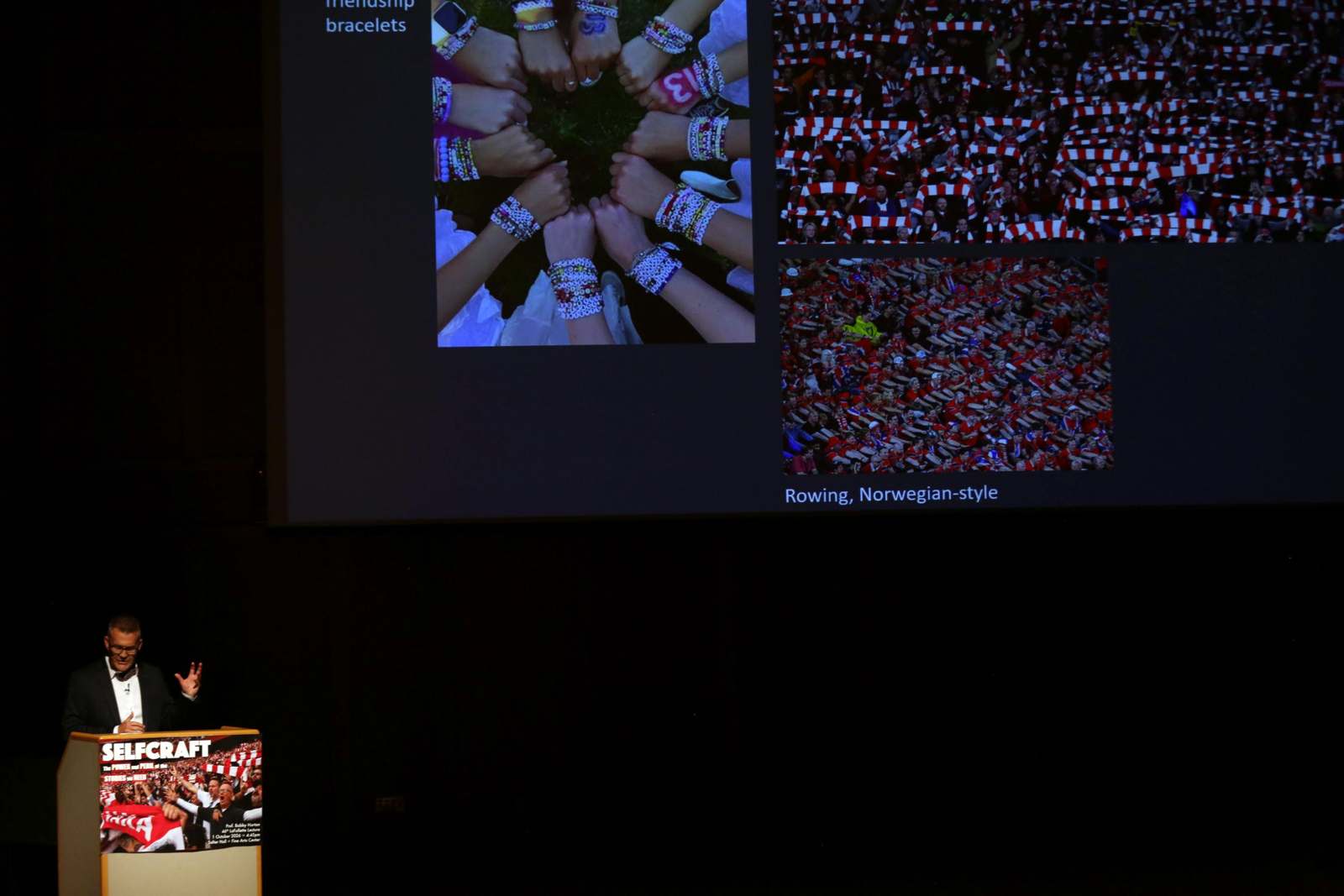
"Sociologist Emile Durkheim called that something 'Collective Effervescence.' More broadly, Abraham Maslow called them 'peak experiences,' moments of emotional intensity, of awe, grandeur, and humility that don't just redirect but also quiet the self as attention becomes focused on the demands of a task or on the splendor and spectre of the external world. In his work, Maslow identified a variety of situations that can lead to such emotional, transcendent effects…many of which, in yellow, overlap with collective singing experiences. And whatever the source, Maslow believed that the resultant loosening of the self’s reins, the emergence of a sense of connection to the world, and a tendency to lose track of boundaries between self and others reflect humans at our best, what he called being 'self-actualized,' the pinnacle need in his famous, if simplistic, hierarchy.
"And this actualizing effect of collective singing is not just evidenced by what people say; social neuroscientists have also tracked it biologically."
"The neural architecture that underlies the self is certainly complex, but a group of brain structures called the 'default mode network...seems to be particularly important to the nature and needs of our self-story.
"When our focus turns inward, to who we are, whether we are enough, or to the implications of decisions we make, the default network is ramped up. And the more active it is, the more our self-protective mechanisms kick in. But in the face of an immersive environment these same structures are downregulated, getting us effectively “out of our heads” and releasing us from selfish concerns."
"As I close, I want to say how fortunate I feel to be a part of this Wabash community, where it’s easy to ease past my individualized, selfish concerns and feel part of something more important than myself…where I get to do meaningful work with and for wonderful people. And I want to thank you all again for being here tonight. I am deeply honored to have talked with you about some things I think about and how I think about them. I’m not sure I’ve said anything particularly profound or unique, but maybe I’ve made some connections that you didn’t see coming. At the very least, I hope that I’ve left the LaFollette legacy intact and that you’ve found something that piqued your interest, that helped you feel like your time was well-spent.
"And if you didn’t like or disagreed with something I said, no worries. I’m probably wrong."