
2010 Wabash Summer Institute in Mathematics
The Wabash Summer Institute in Mathematics offers 12 undergraduates an excellent opportunity to conduct mathematical research with top faculty on the campus of a private college.
WHAT: The Wabash Summer Institute in Mathematics (WSIM) is an eight-week research experience in abstract algebra and applied mathematics for undergraduates. Participants will explore areas in abstract algebra or applied mathematics and conduct original research in small teams in one of these areas. In addition, participants will engage in seminars designed to investigate the ethics of research. Select participants will present their results at the Joint Mathematical Meetings in January of 2011.
WHO: WSIM is open to undergraduates who have coursework in mathematics compatible with the project area of their choice. Students wishing to work in the abstract algebra group ought to have at least one course in Abstract Algebra as well as some knowledge of Ring Theory. Students wishing to work in the applied mathematics group ought to have taken a course in Differential Equations and a beginning course in programming and/or computer science. Participants must be a citizens or permanent residents of the United States or its possessions. WSIM is interested in attracting a broad and diverse group of participants with an emphasis on students from smaller colleges and universities. Female, minority and disabled students are especially encouraged to apply.
WHEN: WSIM will run from June 6 to July 30 in 2010.
WHERE: WSIM is hosted by Wabash College located in Crawfordsville, Indiana. Wabash College is located within an hour of downtown Indianapolis and within 30 minutes of Purdue University.
PURPOSE: The Wabash Summer Institute in Mathematics is designed to introduce participants to the world of research mathematics in a collegial and cooperative environment and to encourage participants to explore the possibilities afforded by graduate studies in the mathematical sciences. In addition, WSIM seeks to provide the opportunity for participants to carefully examine and discuss the ethical considerations involved in conducting scientific research.
FORMAT: Participants will spend the first two weeks working together to explore the two topic areas of research available for them to work in. During the remaining six weeks, participants will be divided into small teams that will conduct original research into one of the research areas. Each team will be guided by an experienced research leader, and teams will meet regularly to discuss their results. Weekly seminars focusing on the ethics of scientific inquiry will also be held.
STIPEND: Participants will receive a stipend of $3600 for the eight weeks and free lodging. In addition, travel expenses to and from Wabash College will be provided. Funding is provided by the National Science Foundation. Some funding is available to fund select students to attend the Joint Mathematical Meetings in January of 2011.
RESEARCH LEADERS:
 |
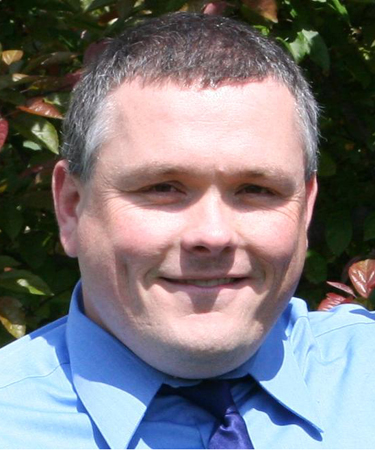
Mike Axtell is an Assistant Professor of Mathematics at the University of St. Thomas. Prof. Axtell’s area of research is Commutative Ring Theory with a focus on the role played by zero divisors within the structure of rings. Prof. Axtell will focus on a structure that blends elementary graph theory with the study of zero divisors – namely the graph of zero divisors. This remarkably elegant structure has recently become a topic of active investigation within the Commutative Ring community. The broad goal of the investigation will be to learn more about the behavior of zero divisors in a ring by examining the structure of the zero divisor graph. |
 |
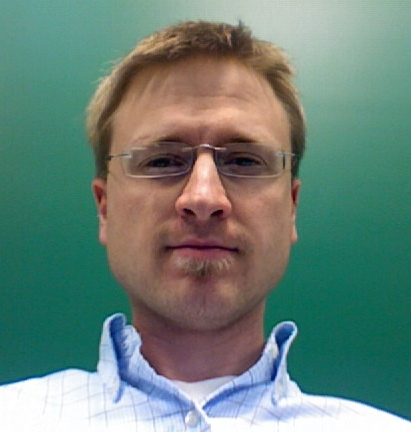
Joe Stickles is an Associate Professor of Mathematics at Millikin University. Prof. Stickles’ area of research is abstract algebra, more specifically Commutative Ring Theory. In particular, Prof. Stickles examines how ring elements factor into irreducible elements and how a newer graph-theoretic construction can help shed light on various factoring ‘problems’. Thus, this area also blends algebra with graph theory. Factoring has long been an active area of research in both number theory and abstract algebra, and now it appears that graph theory can also play a role in investigating the ways in which ring elements factor. For more info see his homepage. |
 |
Chad Westphal is an Assistant Professor of Mathematics and Computer Science at Wabash College. Prof. Westphal works in numerical methods for differential equations. His research focuses on formulation of partial differential equation (PDE) models for problems that have nonlinear and/or singular behavior. Past WSIM groups have developed models and solution techniques for viscoelastic fluids, blood flow, capillary rise of fluids, convection-dominated problems and problems with singularities at corners of domains. If you are interested in applied math with emphasis in modeling with a variety of analytical and computational tools, you should apply for WSIM 2010. For more info see his homepage. |
APPLICATION INFORMATION
(Open to U.S. citizens only.)
A complete application will consist of:
1. A current undergraduate transcript,
2. Two letters of recommendation.
3. A document containing your name, email, home address, college address, expected graduation date, and a list of honors and awards (i.e., a resume or cv).
4. A cover letter that briefly describes your interest in this program and indicates which of the two topics you find most interesting (commutative ring theory or applied mathematics).
If your interest is in ring theory, please also include a description of topics covered in your Abstract Algebra course(s).
If your interest is in applied mathematics, please also include a short description of your experience with computer programing and/or courses in differential equations.
Please send your application by February 15 to:
WSIM c/o Ms. Pam Sacco
Dept. of Mathematics and Computer Science
Wabash College
P.O. Box 352
Crawfordsville, IN 47933-0352
For additional information, please contact Mike Axtell at (651) 962-5495 or maxtell@stthomas.edu.
 Funding provided by the National Science Foundation